
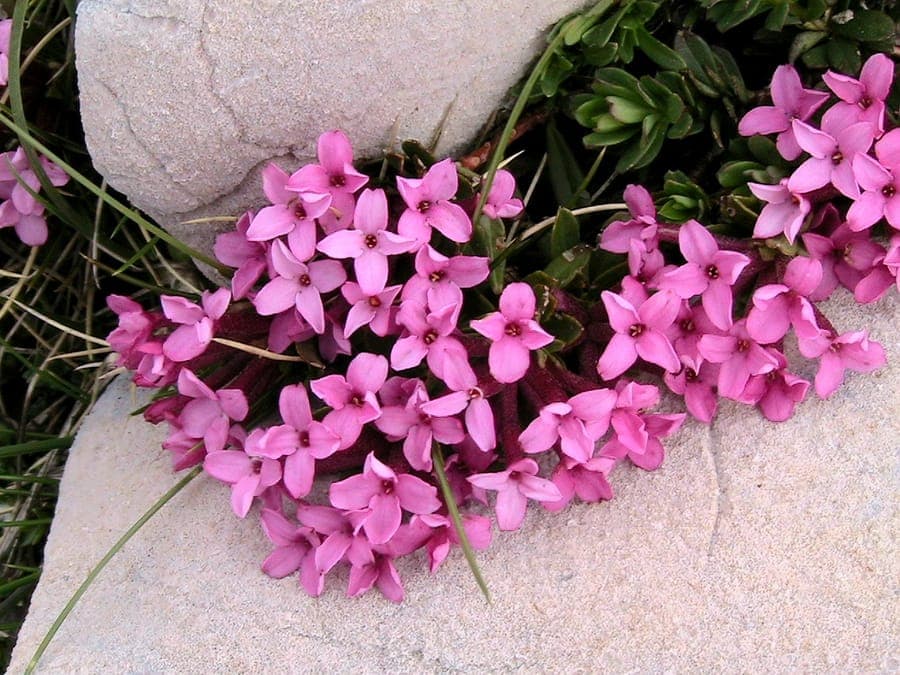
Isidre blanc / CC BY-SA 4.0, via Wikimedia Commons
Garland-flower: complete guide
Daphne cneorum
Want to see Garland-flower: complete guide in your garden?
1 minute, no credit card
Overview
Garland-flower (Daphne cneorum) is a semi-evergreen low shrub native to European mountains from the Alps to the Pyrenees. This delicate shrub is cultivated for its beautiful purple flowers and strong honey-like fragrance. It is a classic alpine plant that adds elegance to rock gardens and borders.
Appearance and Bloom
Garland-flower forms compact, spreading shrubs 30-60 cm tall. Needle-like leaves are small, elongated, and dark green. Purple-pink flowers appear in April-May and often rebloom in fall on favorable years. The fragrance is intense and pleasant.
Ideal Location
Plant in full sun to light shade in cool Alpine locations. In warm regions, afternoon shade is preferred. Protect from intense midday sun in hot climates. Excellent for rock gardens, alpine troughs, and terraces.
Soil Requirements
Garland-flower requires well-draining soil. Heavy clay or waterlogged soil is fatal. Mix sand, grit, and humus for perfect drainage. pH of 6.0-7.0 is ideal. Add grit for long lifespan.
Watering
Water moderately, especially during growth period. Ensure soil never becomes waterlogged. In wet winters, it is susceptible to root rot. Reduce water in winter. Established plants are relatively drought-tolerant.
Free design
Want to see Garland-flower: complete guide in your garden? Make a free design now.
Pruning
Pruning is virtually unnecessary. Remove dead flowers to encourage more blooming. Remove dead branches in spring. Leave the natural form intact.
Maintenance Calendar
March: Add grit around plant for drainage. April-May: Flowering peaks, enjoy the fragrance. June-August: Summer rest, minimal care. September-October: Possible autumn rebloom. November-February: Winter dormancy, protect from frost.
Winter Hardiness
Garland-flower is hardy to USDA zones 5-6. In very cold areas, mulch around plant with grit in winter. In warmer regions, it can grow year-round.
Companion Plants
Other Daphne species grow well together. Lavandula and rosemary complement ornamental value. Small rock roses and alpine saxifrages are ideal partners.
Closing
Garland-flower adds elegant beauty and intoxicating fragrance to any garden. Though it demands particular care for successful growth, it rewards with years of blooms. Plan your alpine garden on gardenworld.app with complementary mountain plants. Find more inspiration on gardenworld.app.
Want to see Garland-flower: complete guide in your garden? Make a free design now.
Upload a photo, pick a style, and get a photorealistic design with plant list in under a minute.
No credit card required


Similar plants
Thymelaea sanamunda: complete guide
Thymelaea sanamunda
Full guide to growing Thymelaea sanamunda, a rare Mediterranean subshrub from southern France and Spain. Care, soil and location tips.
Daphne pontica: complete guide to Pontic daphne
Daphne pontica
Pontic daphne from southeast Europe: compact evergreen shrub, intensely fragrant spring flowers, toxic. Prefers partial shade and well-drained soil.
Winter daphne (Daphne odora): complete guide
Daphne odora
Learn how to grow fragrant winter daphne for year-round garden interest. This cold-hardy shrub blooms in winter and fills gardens with intoxicating perfume.