
Miya / CC BY-SA 3.0, via Wikimedia Commons
Winter daphne (Daphne odora): complete guide
Daphne odora
Want to see Winter daphne (Daphne odora): complete guide in your garden?
1 minute, no credit card
Overview
Winter daphne, scientifically known as Daphne odora, is a cold-hardy evergreen shrub native to southern China, Taiwan, and Vietnam. This compact plant, reaching just 1-1.5 meters tall, is celebrated worldwide for its powerfully fragrant flowers that bloom during the coldest months, bringing sweet, intoxicating scent to winter gardens. The flowers appear from February to April and emit a full, rich fragrance reminiscent of honey, musk, and spring blossoms. Despite its Asian origins, winter daphne thrives in moderate climates and makes an excellent addition to UK and Northern European gardens, whether in borders or containers.
Appearance and bloom
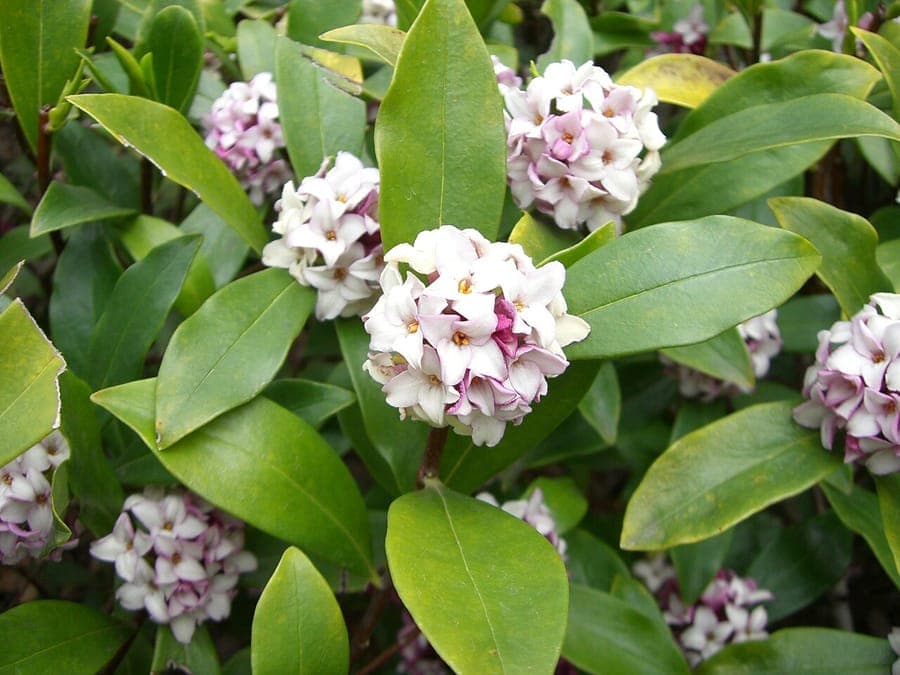
Winter daphne grows to 1-1.5 meters tall and forms a dense, rounded habit that remains compact without extensive pruning. The small, characteristically tubular flowers appear in dense clusters along the branches. They are typically deep rose-pink on the exterior and white within, though pure white forms such as Daphne odora f. alba and variegated varieties exist. The fragrance is intensely sweet, especially pronounced on warmer, sunny days and during morning and evening hours. Narrow, dark green leaves provide year-round structure and contrast beautifully with the delicate flowers. Small red berries develop after flowering, providing food for birds. The plant retains its foliage year-round, adding winter interest to garden compositions. Leaf shapes range from linear to elliptic, depending on cultivar.
Ideal location
Winter daphne prefers a sheltered position with excellent conditions including:
- Full sun to partial shade, with minimum 4-6 hours direct sunlight daily
- Protection from strong, drying winds that can cause leaf damage
- Good air circulation around the plant to prevent fungal diseases
- In warmer regions, afternoon shade is even beneficial
- Placement against south- or west-facing walls captures additional warmth
As a container plant, winter daphne performs exceptionally well against sheltered walls where fragrance can be fully appreciated and concentrated.
Soil requirements
Plant winter daphne in nutrient-rich, well-draining soil. The plant is not particularly fussy about pH but thrives best in neutral to slightly acidic soils (pH 6.5-7.5). Add compost or perlite to improve drainage in heavy clay soils. Winter daphne develops relatively shallow roots, so ensure soil remains moderately moist but never waterlogged. Gravel or mulch around the base helps regulate moisture balance and provides insulation in winter.
Watering
Winter daphne requires moderately moist soil without waterlogging. During the growing season of spring and summer:
- Water when the top 2-3 cm of soil feels dry
- Container plants need much more frequent watering, especially during dry spells and heat waves
- Gradually reduce watering in autumn and winter
- In winter, minimal supplemental watering is needed from rainfall
Overwatering causes root rot and fungal issues, so excellent drainage is essential. If leaves yellow and the plant weakens, check drainage first. Soggy soil is the primary cause of plant failure.
Free design
Want to see Winter daphne (Daphne odora): complete guide in your garden? Make a free design now.
Pruning
Winter daphne responds well to light pruning after flowering, usually in April or May. This stimulates bushier growth and promotes additional flowers next season. Remove dead or crossing branches, maintaining the plant's natural form. For container specimens, light pruning in July maintains desired height and density. Always use clean tools to prevent disease transmission between plants.
Maintenance calendar
- October-December: Prepare for winter; ensure excellent drainage and frost protection
- January-March: Peak flowering; enjoy the intense fragrance
- April-May: Post-bloom pruning and deadheading
- June-August: Active growth; monitor for pests and water needs
- September-October: Apply potassium-rich fertilizer before winter dormancy
Winter hardiness
Winter daphne is moderately hardy to USDA Zone 7-8 (-12 to -18 degrees C). In Northern Europe, young plants and container specimens benefit from winter protection such as horticultural fleece or mulch. Established plants usually tolerate UK winters without protection, though young shoots may sustain frost damage in severe winters. The plant typically recovers in spring.
Special characteristics
The powerfully scented flowers attract bees and butterflies, making winter daphne valuable for pollinators during a season when few plants bloom. All parts of the plant are toxic and should never be ingested or handled by those with sensitive skin. The cut flowers are prized for indoor arrangements.
Companion plants
Plants that pair well with winter daphne:
- Helleborus (winter rose): for structure and additional winter interest
- Hedera helix (ivy): for evergreen backdrop and green base
- Viburnum bodnantense: for complementary bloom and different fragrance
- Bergenia: for textural contrast and year-round foliage
- Sarcococca: for additional winter fragrance
Propagation
Winter daphne can be propagated from seed in autumn or from semi-ripe cuttings in summer. Seed requires stratification and is not always reliable. Cuttings require patience but are more dependable for preserving specific cultivar characteristics.
Closing thoughts
Winter daphne brings both fragrance and early-season color when gardens need it most. With basic care, proper drainage, light pruning, and winter protection in cold regions, this Asian treasure will reward you with decades of winter scent. Garden centers stock quality plants in autumn. Consider growing daphne in containers to move them close to doors and windows, allowing you to fully appreciate their remarkable fragrance throughout winter. On cold February mornings, the scent of blooming winter daphne is a precious gift to any garden visitor.
Want to see Winter daphne (Daphne odora): complete guide in your garden? Make a free design now.
Upload a photo, pick a style, and get a photorealistic design with plant list in under a minute.
No credit card required


Similar plants
Thymelaea sanamunda: complete guide
Thymelaea sanamunda
Full guide to growing Thymelaea sanamunda, a rare Mediterranean subshrub from southern France and Spain. Care, soil and location tips.
Daphne pontica: complete guide to Pontic daphne
Daphne pontica
Pontic daphne from southeast Europe: compact evergreen shrub, intensely fragrant spring flowers, toxic. Prefers partial shade and well-drained soil.
Balkan daphne: complete guide
Daphne blagayana Freyer
Discover the elegant Balkan daphne (Daphne blagayana). Learn everything about cultivation, care, hardiness and companion planting.