
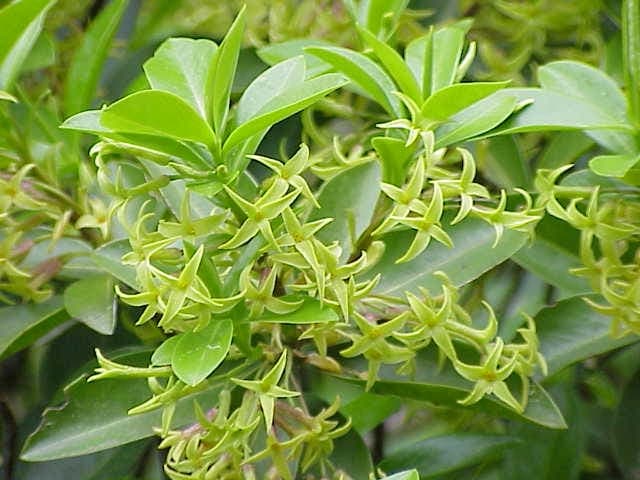
Kurt Stüber [1] / CC BY-SA 3.0, via Wikimedia Commons
Daphne pontica: complete guide to Pontic daphne
Daphne pontica
Want to see Daphne pontica: complete guide to Pontic daphne in your garden?
1 minute, no credit card
Overview
Daphne pontica, known as Pontic daphne or Pontic daphne, is an elegant evergreen shrub from southeastern Europe. This daphne is renowned for its intoxicating early spring fragrance and compact, neat form. However, this is a toxic plant in all parts - careful handling and placement are required.
Appearance and Bloom
The Pontic daphne grows as a dense, rounded shrub, typically 1 to 2 meters tall and wide. Leaves are lance-shaped, dark green, and persist year-round on the plant. The growth is compact and very orderly - appearing almost sculpted.
In early spring (March-April), the shrub bears abundant trusses of small, pale greenish-yellow flowers. These flowers are undoubtedly the highlight: their fragrance is intoxicating and detectable from considerable distance. The scent is sweet and highly refined. After flowering, small red or black fruits appear, which are toxic.
Ideal Location
Position Pontic daphne in partial shade to light shade conditions. Full sun can cause scorch. This is not a sun-lover; quite the opposite. It thrives in shaded garden corners beneath trees.
The plant is excellent for formal gardens, border plantings along walls, and structured designs. Its compact form makes it ideal for small to medium gardens. Ensure adequate distance from play areas due to toxicity.
Soil
Pontic daphne favors well-draining soil with excellent drainage. Heavy, wet clay soils can lead to root rot. Ensure sandy or gravelly soil amendments if drainage is problematic.
The plant loves rich soil with organic matter. Incorporate compost. Neutral to alkaline pH is ideal. This is not suited to acidic sandy soils.
Watering
Regular watering in the first year helps the plant establish. Subsequently, this daphne is reasonably self-sufficient. During dry periods, regular watering is appreciated, but don't overdo it.
Water stagnation is dangerous - it causes root rot. A well-drained soil helps greatly. During very hot summers, supplemental water may help, but normally this plant thrives on limited water.
Free design
Want to see Daphne pontica: complete guide to Pontic daphne in your garden? Make a free design now.
Pruning
Pontic daphne requires minimal pruning. The plant naturally grows compact and neat. After flowering, you may perform light pruning to maintain form.
Avoid heavy pruning: the plant heals poorly. Dead branches may be gently removed. Many gardeners allow the plant to grow naturally.
Maintenance Calendar
Winter-Spring: Enjoy the blooming and fragrance. After bloom: Perform light pruning if desired. Summer: Water during dry periods. Fall: Reduce watering; prepare plant for winter.
This is a low-maintenance plant. Once established, it requires virtually no attention.
Winter Hardiness
Daphne pontica is fairly winter hardy. With its native southeastern European range, it tolerates Dutch winters. In very severe winters, some twigs may die, but the plant recovers.
Young plants may benefit from light protection. A thick mulch layer helps. In very cold regions (northern Europe), extra protection may be beneficial.
Companion Plants
Combine Pontic daphne with other spring-flowering plants. Skimmia, Mahonia, and other fragrant shrubs form beautiful groups. Early bulbs underneath create layering.
Evergreen shrubs such as box and holly combine well with the dark foliage. The elegant form of Pontic daphne pairs beautifully with structured plantings and formal gardens.
Conclusion
Daphne pontica is a perfect choice for fragrance lovers and formal gardens. Quality material is available through major garden suppliers. This is however a toxic plant - ensure careful placement, especially in gardens with children.
In gardenworld.app designs, this daphne helps create fragrant spring-flowering focal points. The combination of flowers, fragrance, and elegant form is unique. Let gardenworld.app design your garden with this refined daphne as a fragrant highlight!
Want to see Daphne pontica: complete guide to Pontic daphne in your garden? Make a free design now.
Upload a photo, pick a style, and get a photorealistic design with plant list in under a minute.
10,000+ gardens designed already
No credit card required


Similar plants
Thymelaea sanamunda: complete guide
Thymelaea sanamunda
Full guide to growing Thymelaea sanamunda, a rare Mediterranean subshrub from southern France and Spain. Care, soil and location tips.
Winter daphne (Daphne odora): complete guide
Daphne odora
Learn how to grow fragrant winter daphne for year-round garden interest. This cold-hardy shrub blooms in winter and fills gardens with intoxicating perfume.
Balkan daphne: complete guide
Daphne blagayana Freyer
Discover the elegant Balkan daphne (Daphne blagayana). Learn everything about cultivation, care, hardiness and companion planting.