
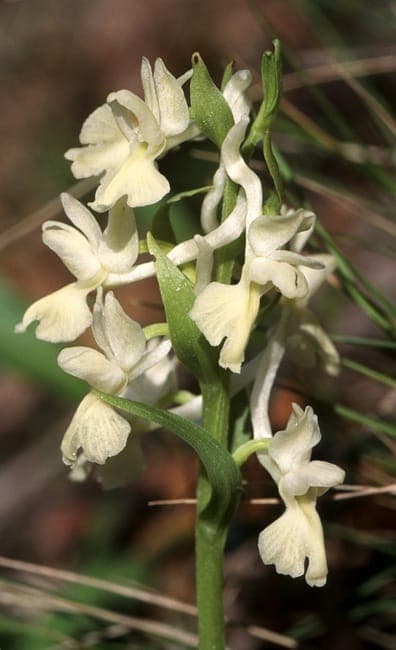
Mg-k / CC BY-SA 3.0, via Wikimedia Commons
Dactylorhiza romana: complete guide
Dactylorhiza romana
Want to see Dactylorhiza romana: complete guide in your garden?
1 minute, no credit card
Overview
Dactylorhiza romana, commonly called Roman Dactylorhiza or Roman Marsh Orchid, is a Mediterranean orchid from the Orchidaceae family. Native to Southern Europe and Mediterranean regions extending to Central Asia, this orchid exhibits distinctive yellow to purple flowers bridging two Dactylorhiza groups.
Appearance and Bloom
The plant forms tight leaf rosette with dark green foliage sometimes bearing spots. April through May produces stiff flower spikes with yellow to purple flowers in striking contrast. Plant achieves 20-40 centimeters height and grows in small clusters in dry marsh margins.
Ideal Location
Roman marsh orchid thrives in half-shade to full sun on moisture-retentive yet non-waterlogged soils. This Mediterranean orchid loves locations with summer drought and seasonal winter/spring flooding. Position on drought-resistant slopes or in Mediterranean gardens with fluctuating groundwater.
Soil
This orchid grows on lime-rich to neutral alkaline soils (pH 6.5-8). Moisture management critical - wet winter/spring, relatively dry summer. Well-drained yet humus-rich soils ideal. Artificial fertilization unnecessary.
Watering
Maintain high soil moisture during growing season (October-May). Water should remain 5-10 centimeters high. After flowering (June) reduce moisture rapidly for summer dormancy. Very dry summers may require no supplemental water.
Free design
Want to see Dactylorhiza romana: complete guide in your garden? Make a free design now.
Pruning
Pruning limited to removing faded flower spikes after blooming (May-June). Allow wild growth as extensive intervention damages the orchid. Remove only dead material.
Maintenance Calendar
October-November: Begin growing period, increase moisture. December-February: Full growth, water regularly (5-10cm). March-April: Flowering, peak water management. May-June: Reduce watering post-bloom, prepare dormancy. July-September: Summer rest, minimal to no water. September: Prepare growth restart, gradually increase moisture.
Winter Hardiness
Dactylorhiza romana hardy to approximately -8 degrees for temperate climates. Plant flowers better after mild winters. Severe frost (-15 degrees) may cause damage. Winter protection rarely needed in Netherlands/Flanders.
Companion Plants
Roman marsh orchid pairs beautifully with other Mediterranean orchids like Ophrys and Orchis species. Winter-growing plants like Sternbergia (autumn crocus) and Mediterranean tulips provide harmonious contrast. Include in dry marsh zones with silvery sage, lavender, and rosemary.
Final Thoughts
Roman dactylorhiza is unique Mediterranean orchid for dry marsh gardens. With minimal care requirements, distinctive flowers, and ecological value, this orchid offers singular natural beauty. Perfect for Mediterranean gardens, dry slopes, and ecological zones. Not available in regular garden centers; contact specialist growers. Visit gardenworld.app for Mediterranean plant inspiration.
Cultivate European wild orchids - discover more on gardenworld.app!
Want to see Dactylorhiza romana: complete guide in your garden? Make a free design now.
Upload a photo, pick a style, and get a photorealistic design with plant list in under a minute.
10,000+ gardens designed already
No credit card required


Similar plants
Ram's-head lady's slipper: complete guide
Cypripedium arietinum
Everything you need to know about growing Cypripedium arietinum, a rare woodland orchid for cool, moist garden settings. Soil, care and planting tips.
Sparrow's-egg lady's slipper: complete guide
Cypripedium passerinum
Everything about growing Cypripedium passerinum, a cold-hardy subarctic orchid suited to cool, moist, shaded garden spots. Soil, care and companion plants.
Algerian Butterfly-orchid: complete guide
Platanthera algeriensis
Everything about Platanthera algeriensis, the rare Mediterranean orchid with greenish flowers native to Algeria, Morocco, Corsica and Spain.