
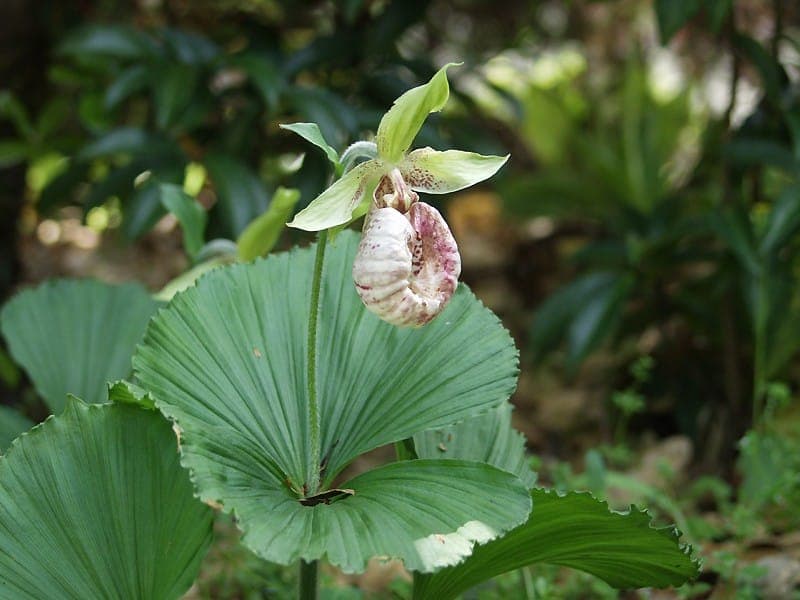
'Uncle Carl' (カールおじさん). / CC BY-SA 3.0, via Wikimedia Commons
Cypripedium japonicum: complete guide
Cypripedium japonicum
Want to see Cypripedium japonicum: complete guide in your garden?
1 minute, no credit card
Overview
Cypripedium japonicum, also known as the Japanese lady's slipper or Korean ladyslipper, is a rare and refined orchid native to China, Korea, and Japan. This is a terrestrial orchid (ground orchid) that grows in mountain forests in the wild. The plant is highly sought by orchid collectors for its exotic flowers and cultivation difficulty.
While cultivating Cypripedium japonicum is not for beginners, for the patient gardener this can be a rewarding challenge. The plant suits cool to temperate growing conditions.
Appearance & Bloom
Cypripedium japonicum grows to approximately 30-50 cm tall with two to three broad, wrinkled leaves emerging directly from the ground. The leaves are dark green with noticeable net-like markings. Flowers appear in May-June, one per plant, and are what make the plant famous: a unique "lady's slipper" or "pouch"-shaped flower in white to soft pink with red markings.
The flower consists of a unique pouch-shaped labellum (lower petal) where insects can venture, although in practice pollination is rare outside the plant's natural habitat.
Ideal Location
Cypripedium japonicum thrives best in moderate light, meaning filtered light or dappled shade. The plant is unsuitable for full sun, which can cause leaf scorch. Place the plant under shade cloth or beneath leafy trees where some light penetrates but direct sun is mitigated.
Cool to temperate climate is essential. Warm conditions can be problematic; this orchid thrives better in climates with cooler winters.
Soil
Cypripedium japonicum requires very well-draining growing medium, not potting soil or standard orchid bark. The plant grows in nature on mountainous slopes in humus-rich, well-draining soil. For container cultivation, use a mix of fine orchid bark, leaf mold, perlite, and fine sand (approximately 3:2:2:1 ratio).
The plant prefers pH between 6.5 and 7.0, thus slightly acidic to neutral. Regular repotting is necessary to keep growing medium fresh.
Free design
Want to see Cypripedium japonicum: complete guide in your garden? Make a free design now.
Watering
Cypripedium japonicum requires consistent moisture, but certainly no waterlogging. Water more thoroughly when the top inch of growing medium feels dry. Use lukewarm water without chloride; rainwater is preferred. Watering should decrease in winter when the plant rests.
High humidity (60-70%) is beneficial; misting can help in drier conditions.
Pruning
Minimal pruning is needed. Remove only dead leaves or damaged parts. After blooming, leave the faded flower stem in place until it naturally yellows.
Maintenance Calendar
February-March: Repotting if growing medium has deteriorated. Start moderate watering as growth begins. May-June: Observation of blooming. Maintain moderate watering. July-August: Continue watering, reduce humidity. No feeding needed. September-October: Gradually reduce feeding. November-January: Rest period. Minimal watering. Maintain cool conditions.
Winter Hardiness
Cypripedium japonicum is winter-hardy to zones 4-5 in well-draining soils in outdoor conditions. For garden cultivation in cooler climates, planting with mulch protection is beneficial. In moderate climates, container cultivation may be more practical.
Companion Planting
Cypripedium japonicum is best grown solo or in small groups, combined with other cold-tolerant orchids. Hakone grass or other shade-tolerant groundcovers can be complementary.
Closing Thoughts
Cypripedium japonicum is for the engaged gardener a rare jewel. Patience, attention to growing conditions, and regular care are essential. For more plant recommendations and garden inspiration, visit gardenworld.app for complete garden designs that also provide space for special orchids.
Want to see Cypripedium japonicum: complete guide in your garden? Make a free design now.
Upload a photo, pick a style, and get a photorealistic design with plant list in under a minute.
10,000+ gardens designed already
No credit card required


Similar plants
Ram's-head lady's slipper: complete guide
Cypripedium arietinum
Everything you need to know about growing Cypripedium arietinum, a rare woodland orchid for cool, moist garden settings. Soil, care and planting tips.
Sparrow's-egg lady's slipper: complete guide
Cypripedium passerinum
Everything about growing Cypripedium passerinum, a cold-hardy subarctic orchid suited to cool, moist, shaded garden spots. Soil, care and companion plants.
Algerian Butterfly-orchid: complete guide
Platanthera algeriensis
Everything about Platanthera algeriensis, the rare Mediterranean orchid with greenish flowers native to Algeria, Morocco, Corsica and Spain.