
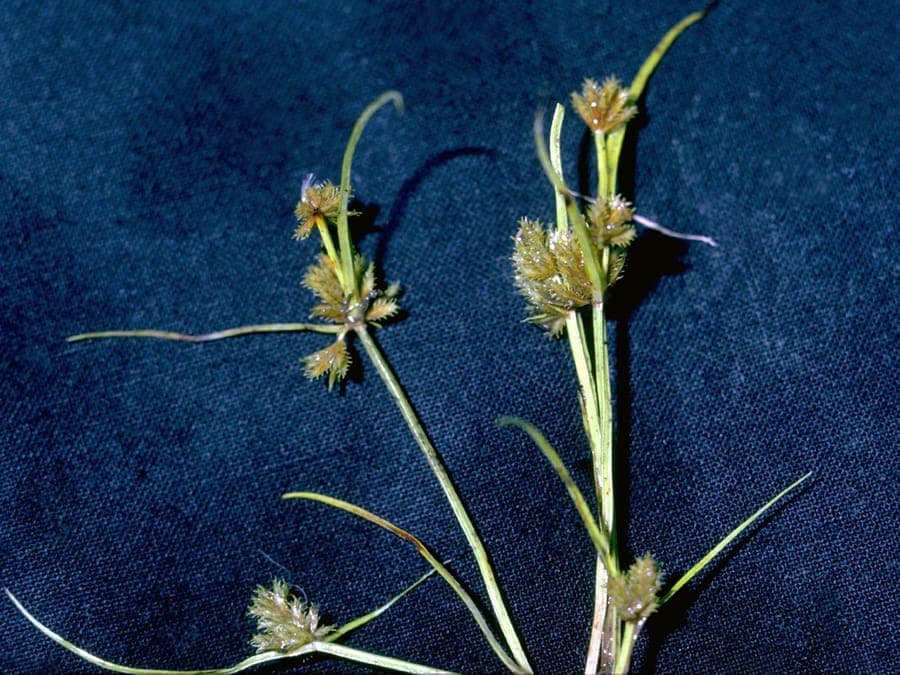
Robert H. Mohlenbrock. USDA NRCS. 1992. Western wetland flora: Field office guide to plant species. West Region, Sacramento. Provided by USDA NRCS Wetland Science Institute (WSI). / Public domain, via Wikimedia Commons
Bearded Flat Sedge: complete guide
Cyperus squarrosus
Want to see Bearded Flat Sedge: complete guide in your garden?
1 minute, no credit card
Overview
Cyperus squarrosus, known as Bearded Flat Sedge, is a fascinating grasslike plant from the Cyperaceae family. This species thrives in moist locations throughout tropical and subtropical regions, making it excellent for water gardens and wetland areas.
The plant is celebrated for its distinctly unusual upright, beard-like brown stems and extremely fine-textured foliage. It typically forms dense clumps and is highly valuable for erosion control and water filtration in aquatic gardens.
Appearance and Characteristics
Cyperus squarrosus grows to approximately 30 to 60 cm in height, forming rounded, densely packed clumps. The stems are notably striking with their characteristic beard-like structure, which explains its common name.
The leaves are extremely fine and grasslike, displaying a deep green color. Flowering structures appear at stem tips and consist of small, brownish spikelets. Blooming occurs during summer and autumn.
The plant grows continuously throughout the growing season, with maximum activity during summer and fall. The plant dies back in winter but regenerates from root systems in spring.
Ideal Location
Cyperus squarrosus thrives in moist to wet locations. This can be a pond margin, waterside planting area, or even partially submerged in water. The plant appreciates sunny to partially shaded positions.
Perfect for pond edge plantings, marshy areas, or even in containers watered regularly. The plant is robust and tolerates various soil conditions provided they remain moist.
The plant can be used for erosion control along waterbanks, as its root systems stabilize soil. This makes it suitable for natural water management projects.
Soil
Cyperus squarrosus thrives in heavy, moisture-retentive soil, typically humus or peat-rich. The plant requires no heavy feeding but appreciates soil with abundant organic material.
For container cultivation, use a mixture of garden or wetland soil with generous compost. The soil must remain constantly moist. For waterside planting, position directly in submerged soil along the bank.
PH can vary, but neutral to slightly acidic (pH 6.0 to 7.5) is ideal. Add organic material in spring for maintenance.
Free design
Want to see Bearded Flat Sedge: complete guide in your garden? Make a free design now.
Watering
Cyperus squarrosus is an aquatic plant requiring constantly moist soil. In fact, this is more of a water plant than a dryland specimen. The soil should never completely dry.
For container cultivation, place the pot in a saucer with water so moisture can be continuously absorbed. Increase water levels in summer and reduce in winter.
During the growing season, the plant can even tolerate several centimeters of water submersion. This is actually the ideal growing condition for this species.
Pruning
Cyperus squarrosus requires minimal pruning. Remove only dead or damaged leaves in spring. The plant will regenerate naturally from root systems in spring.
Divide large clumps in spring by gently separating them and replanting each portion. This encourages denser growth and produces additional plants.
Do not remove spent flower heads, as they contain seed material that can self-sow.
Maintenance Calendar
March: Remove dead leaves. Divide large clumps. Begin feeding with organic material. May-August: Maintain constantly moist soil. Monitor water levels. September-October: Reduce feeding. Maintain moist soil. November-February: Minimal activity. Keep soil moist just above freezing. March: Restart growth. Begin feeding again.
Frost Hardiness
Cyperus squarrosus is reasonably frost-hardy and tolerates temperatures down to approximately -5°C, though it will lose its foliage. Protect in extremely cold areas with mulch or bring indoors.
In temperate zones, the plant can usually overwinter outdoors in many regions with minimal protection during very cold winters.
During extreme cold, the plant may disappear above ground completely but will regenerate from roots as temperatures warm.
Companion Plants
Cyperus squarrosus combines well with other waterside plants. Plant together with Iris, Acorus, and other moisture-lovers for a natural marsh effect.
In water gardens, combine it with other sedges and water grasses. Its fine texture beautifully contrasts with larger-leaved plants.
For landscape effects, create groupings of multiple plants for a naturalistic, flowing appearance.
Conclusion
Cyperus squarrosus is a practical and decorative choice for water garden enthusiasts. With its unusual beard-like stems and grasslike foliage, it adds texture to any landscape.
Provide constant moisture, natural light, and minimal maintenance. This is a plant for environmentally conscious gardeners who appreciate erosion control and natural water filtration.
In garden centers and online retailers, look for healthy specimens. Visit gardenworld.app for additional water gardening design inspiration.
Want to see Bearded Flat Sedge: complete guide in your garden? Make a free design now.
Upload a photo, pick a style, and get a photorealistic design with plant list in under a minute.
No credit card required


Similar plants
Flat-stemmed club-rush: complete guide
Bolboschoenus planiculmis
Everything about Bolboschoenus planiculmis: growing conditions, watering, care, and use as a pond margin or wetland plant in garden design.
Great Plains flatsedge: complete guide
Cyperus lupulinus
Everything about Great Plains flatsedge (Cyperus lupulinus): growing conditions, care, garden uses, and ecological value. Tips for pond margins and dry sandy soils.
Golden beak sedge: complete guide
Rhynchospora corymbosa
Everything about golden beak sedge (Rhynchospora corymbosa): a dramatic tropical marginal for pond edges, bog gardens, and wet habitats.