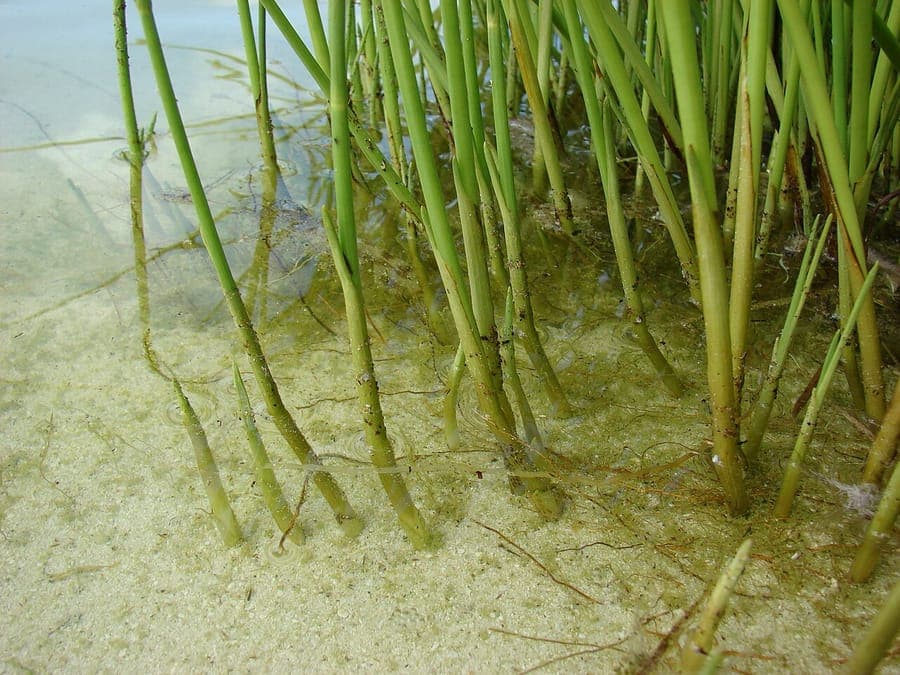
Forest & Kim Starr / CC BY 3.0, via Wikimedia Commons
Smooth flat sedge: complete guide
Cyperus laevigatus
Want to see Smooth flat sedge: complete guide in your garden?
Full design in HD: €7.99
Look after your Smooth flat sedge with the GardenWorld app
Identify plants with your camera and get a care calendar with reminders for this plant.


Smooth flat sedge (Cyperus laevigatus), also called Boredrain sedge or Smooth flatsedge, is an elegant grass species from the Cyperaceae family. This tropical sedge grows wild across Africa, Asia, and the Americas. It thrives in moist to wet soil conditions and creates a delicate, graceful texture in gardens and water features.
Overview
Cyperus laevigatus is a herbaceous, perennial sedge with worldwide distribution in tropical and subtropical regions. The plant grows from West Africa through India, from Mexico to Australia, demonstrating remarkable adaptability. It performs best in warm environments where moisture is readily available. The species belongs to a large family of sedges that includes papyrus and other ornamental water plants.
Appearance and Bloom
The plant forms dense, grass-like clumps of thin, narrow blades creating slender, upright structures. Leaves are typically green, linear, and very fine. Flowers appear as compact, brownish flowering spikelets, usually from July to October. The flower clusters are small, tightly arranged. Plant height typically reaches 30-60 centimeters, depending on growing conditions and water availability.
Ideal Location
Smooth flat sedge prefers full sun to partial shade. In tropical climates, partial shade helps prevent leaf scorch. Place this plant where water is accessible or where consistent moisture can be maintained. Water gardens, shallow ponds, marshes, and bog margins are ideal. The plant tolerates drier periods better than expected, though moisture is preferred.
Soil
Soil must remain consistently moist without waterlogging. A mix of peat-based compost and sand works well. Cyperaceae family members prefer slightly acidic to neutral pH (6.5-7.5). Add organic material to improve water retention and fertility. Heavy clay soils should be amended with gravel and sand to prevent stagnation and allow root development.
Free preview
Want to see Smooth flat sedge: complete guide in your garden? Make a free preview of your design.
Watering
Regular, consistent moisture is essential. Water should be nearly constantly available, though true waterlogging damages roots. Water daily in warm weather, several times weekly in mild seasons. In containers: pots must drain but never dry completely. For ground planting, site near water features where sedge naturally grows in marginal zones.
Pruning
Minimal pruning needed. Remove brown, dead leaves regularly to maintain neat appearance. Cut back the plant in early spring (February-March) if it becomes too tall or sprawling. Division can be performed in spring if the plant outgrows its space. No special fertilizing needed, though annual application of organic compost encourages growth.
Maintenance Calendar
Spring (March-May): Support new growth; remove dead parts. Water regularly as temperatures rise. Summer (June-August): Peak growth and flowering season. Watering is critical - maintain consistent moisture. Autumn (September-November): Flowering may continue in warm regions. Begin reducing water as temperatures fall. Winter (December-February): Minimal activity in cold regions; plant grows through in warm zones.
Winter Hardiness
Smooth flat sedge is frost-sensitive and cannot survive prolonged exposure below 10°C. This makes it primarily a warm-season or greenhouse plant in temperate climates. In USDA zones 10-12, it overwinters outdoors. In northern European gardens (Netherlands, Belgium, Germany), it serves as a summer annual or moves indoors during winter. Many garden centers stock it seasonally.
Companion Plants
Cyperus laevigatus grows well with other tropical water-loving plants. Combine with papyrus, water iris, jonquil, water lilies. In warm water gardens, plant with water hyacinth, pickerelrush, and floating ferns. On higher pond margins, associate with ferns and other shade-loving plants. These combinations create diverse aquatic habitats.
Closing
Smooth flat sedge is a versatile, elegant grass species that adds value to water gardens and moist corners. With consistent moisture and warm climate, you'll enjoy its delicate, grass-like presence for years. This plant is perfect for those wanting the elegant look of tropical water gardens in temperate zones.
Frequently asked questions about Smooth flat sedge
Is Smooth flat sedge winter hardy?
Smooth flat sedge is frost-sensitive and cannot survive prolonged exposure below 10°C. This makes it primarily a warm-season or greenhouse plant in temperate climates.
When and how do you prune Smooth flat sedge?
Minimal pruning needed. Remove brown, dead leaves regularly to maintain neat appearance.
How much water does Smooth flat sedge need?
Regular, consistent moisture is essential. Water should be nearly constantly available, though true waterlogging damages roots.
Where does Smooth flat sedge grow best?
Smooth flat sedge prefers full sun to partial shade. In tropical climates, partial shade helps prevent leaf scorch.
What soil does Smooth flat sedge need?
Soil must remain consistently moist without waterlogging. A mix of peat-based compost and sand works well.

See it in your garden
See Smooth flat sedge in your garden
One photo of your garden and a few questions. You see the result in about a minute.
Try it with a photoIdentify this plant in your own garden. Identify a plant
Similar plants
Carex conica: a small evergreen sedge for edges
Carex conica
Carex conica is a compact evergreen sedge from Japan and Korea. A guide to 'Snowline', where to plant it, soil, tidying, dividing and how hardy it really is.
Carex oshimensis: the evergreen striped sedge
Carex oshimensis
Carex oshimensis is an evergreen Japanese sedge with fine, striped leaves. How to plant, place, tidy and divide 'Evergold' and the EverColor series in your garden.
Orange New Zealand sedge (Carex testacea): a guide
Carex testacea
Orange New Zealand sedge (Carex testacea) turns copper and orange in sun and cold. Where to plant it, which soil it likes, how to tidy it and how hardy it is.
