
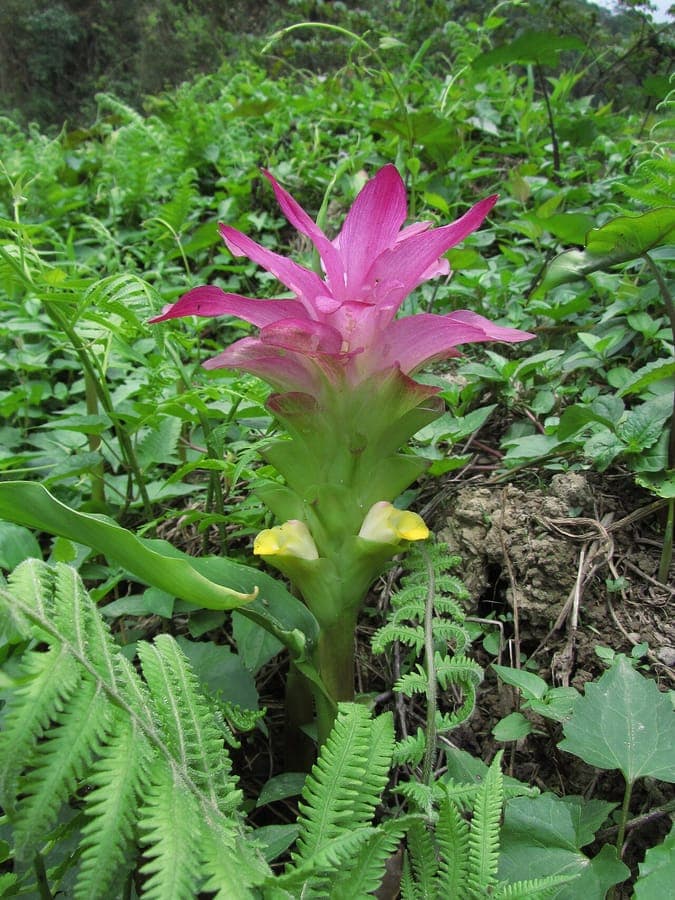
goldentakin / CC BY 2.0, via Wikimedia Commons
Wild Turmeric: complete guide
Curcuma aromatica
Want to see Wild Turmeric: complete guide in your garden?
1 minute, no credit card
Wild turmeric (Curcuma aromatica) is a stunning plant from the ginger family, native to the Indian subcontinent, China, and Indochina. This aromatic plant is valued for its beautiful yellow flowers and fragrant rhizomes that have been traditionally used across many cultures.
Overview Wild turmeric belongs to the genus Curcuma and grows naturally in the moist tropical regions of South and East Asia. The plant is related to culinary turmeric but has its own unique characteristics. It's also known as yellow zedoary and is recognized for its distinctive appearance and pleasant aroma.
Appearance and Bloom The plant reaches heights of 60-100 cm and produces large, elongated leaves that emerge directly from the ground. Flowers appear in spring and summer, displaying a striking yellow color with sometimes pink or purple accents. The blooms are densely packed in a characteristic spike-like inflorescence typical of the Curcuma genus.
Ideal Location Wild turmeric thrives in a warm spot with partial shade. While it tolerates full sun, it prefers semi-shaded environments, especially in hot climates. Provide protection from cold winds and extreme temperature fluctuations for best results.
Soil Requirements The plant prefers moisture-retaining, nutrient-rich soil with good drainage. A mixture of garden soil with added organic matter works well. Ensure water doesn't pool, as this can cause rhizome rot. A pH between 6.0 and 7.5 is ideal.
Watering Wild turmeric needs regular watering, especially during the growing season. Keep soil evenly moist but not waterlogged. In winter months when the plant is dormant, reduce watering carefully. Ensure good drainage to prevent water accumulation.
Maintenance and Pruning Maintaining this plant is straightforward. Regularly remove dead or damaged leaves. If the plant becomes too large, prune it gently. Remove spent flowers to encourage new blooming. Add organic fertilizer monthly during the growing season.
Maintenance Calendar Spring: Begin watering as temperatures rise. Add organic fertilizer. Summer: Keep soil evenly moist. Remove withered leaves. Fall: Gradually reduce watering. Check for pests. Winter: Minimal watering. Plant needs dormancy.
Winter Hardiness Wild turmeric is not cold-tolerant. In temperate climates, it must be grown as a houseplant or in a greenhouse. The plant cannot withstand temperatures below 10-15 degrees Celsius. In warm regions, it can overwinter outdoors with proper mulching.
Companion Plants Excellent companion plants include other tropical species such as orange blossom, musk mallow, and jasmine. These combinations create an exotic garden with similar moisture requirements. Avoid plants that prefer dry soil.
Closing Thoughts Wild turmeric is an excellent choice for those who love exotic, aromatic plants with stunning flowers. With proper care, this beautiful specimen blooms for years. Looking for wild turmeric? GardenWorld.app offers premium quality plants, and specialist garden centers like established nurseries carry excellent selections.
For more plant guides and garden inspiration, visit GardenWorld.app regularly for the latest advice and trends.
Want to see Wild Turmeric: complete guide in your garden? Make a free design now.
Upload a photo, pick a style, and get a photorealistic design with plant list in under a minute.
No credit card required


Similar plants
Etlingera elatior: complete guide
Etlingera elatior
Grow this exotic Torch Ginger indoors. Expert tips on warm conditions, humid soil, and care for spectacular blooms.
Indian crocus: complete guide
Kaempferia rotunda
Indian crocus offers purple flowers and tropical atmosphere. Discover how to successfully grow this fascinating bulbous plant in cooler climates.
Zingiber zerumbet: complete guide
Zingiber zerumbet
Discover Shampoo ginger (Zingiber zerumbet) - a tropical ornamental plant with spectacular flowers and exotic allure. Perfect addition to refined front garden designs.