
tanakawho / CC BY 2.0, via Wikimedia Commons
Etlingera elatior: complete guide
Etlingera elatior
Want to see Etlingera elatior: complete guide in your garden?
1 minute, no credit card
Overview
Etlingera elatior, commonly known as Torch Ginger, Philippine Waxflower, or Porcelain Rose, is a stunning tropical plant from the Zingiberaceae family. Native to tropical Southeast Asia, particularly Thailand, Malesia, and Borneo, this plant is a must-have for tropical plant enthusiasts.
This plant grows to 3 to 6 feet tall under ideal conditions but can be kept smaller as a houseplant. The flowers emerge directly from the ground, creating a unique spectacle. In warm climates it can grow outdoors; in cooler regions, it thrives only indoors.
Appearance and bloom
Etlingera elatior has large, elongated leaves that grow from rhizomes, much like bananas. These leaves are bright green and highly decorative, reaching 24 to 36 inches in length.
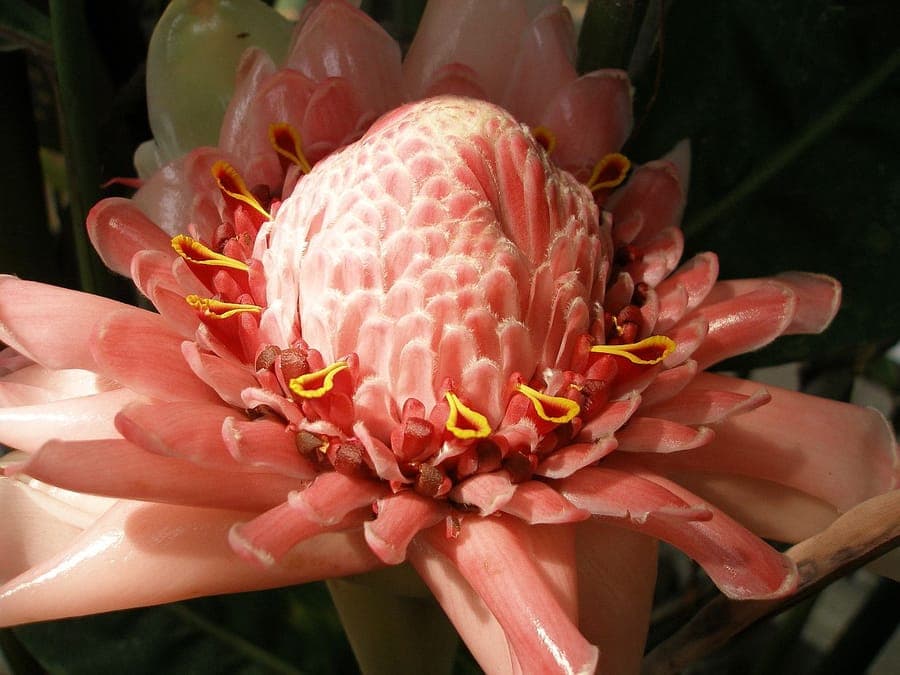
The flowers are the true showstopper. Tall stems emerge from the ground bearing impressive, densely-packed flower spikes in shades of red, pink, and orange. The flowers have a waxy texture resembling porcelain. The fragrance is pleasant and aromatic.
Ideal location
Etlingera elatior must be grown indoors in temperate climates. Place it in a warm, humid environment, preferably in a greenhouse or conservatory. It requires temperatures between 64 and 86 Fahrenheit, with a minimum of about 60 Fahrenheit in winter.
Provide bright light, preferably against south or west-facing windows. Ensure air circulation and protection from drafts.
Soil
Etlingera elatior grows best in rich, humus-based soil. Use potting soil mixed with extra compost and orchid bark for drainage. A mixture of approximately 50% potting soil, 30% compost, and 20% bark works well.
The plant prefers slightly acidic soil with a pH of about 5.5 to 6.5. Always ensure good drainage to prevent root rot.
Free design
Want to see Etlingera elatior: complete guide in your garden? Make a free design now.
Watering
Etlingera elatior is moisture-loving. Water regularly to keep soil moist but not waterlogged. Water more frequently during growing season than during rest periods.
Use rainwater when possible. Reduce watering in winter when growth slows. Increase humidity by regular misting or by placing the pot on a humid surface.
Pruning and maintenance
Etlingera elatior requires minimal pruning. Regularly remove dead leaves or spent flowers. You can remove old leaves to make room for new growth.
Fertilize every two weeks during growing season using flowering plant fertilizer. Reduce or stop fertilizing in winter.
Maintenance calendar
Spring (March-May): Growing season begins. Increase watering and fertilizing. Summer (June-August): Frequent watering. Mist regularly for humidity. Autumn (September-October): Growth begins to slow. Gradually reduce fertilizer. Winter (November-February): Minimal care. Keep drier. Stop fertilizing.
Winter hardiness
Etlingera elatior is not cold-hardy in temperate climates. It can only be grown outdoors in very warm areas or under protected conditions. Bring plants indoors before the first frost.
Companion plants
In a tropical setting, pair Etlingera elatior with other tropical plants like Strelitzia, Anthurium, or Monstera. As a houseplant, it makes a stunning solo specimen.
Conclusion
Etlingera elatior brings tropical grandeur indoors. With warmth, humidity, and proper feeding, you'll achieve spectacular blooms. Source this rare plant from specialized nurseries or online suppliers. Bring a slice of tropical paradise into your home!
Want more exotic plants? Visit gardenworld.app for inspiration and professional garden designs.
Want to see Etlingera elatior: complete guide in your garden? Make a free design now.
Upload a photo, pick a style, and get a photorealistic design with plant list in under a minute.
No credit card required


Similar plants
Indian crocus: complete guide
Kaempferia rotunda
Indian crocus offers purple flowers and tropical atmosphere. Discover how to successfully grow this fascinating bulbous plant in cooler climates.
Zingiber zerumbet: complete guide
Zingiber zerumbet
Discover Shampoo ginger (Zingiber zerumbet) - a tropical ornamental plant with spectacular flowers and exotic allure. Perfect addition to refined front garden designs.
Alpinia officinarum: complete guide
Alpinia officinarum Hance
Discover Chinese ginger from Southeast Asia, a medicinal herb with fragrant flowers and aromatic rhizomes. Cultivation, harvesting and traditional uses.