
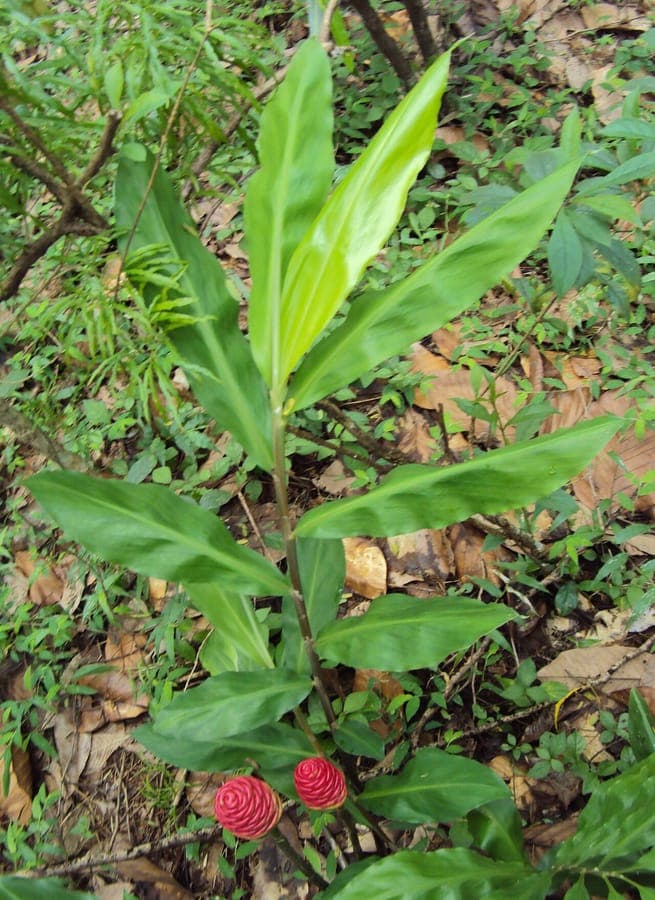
Vinayaraj / CC BY-SA 3.0, via Wikimedia Commons
Zingiber zerumbet: complete guide
Zingiber zerumbet
Want to see Zingiber zerumbet: complete guide in your garden?
1 minute, no credit card
Overview
Zingiber zerumbet, commonly known as Shampoo ginger or Bitter ginger, is a remarkable tropical plant in the Zingiberaceae family. Native to humid regions of Asia, particularly southwestern China and the Himalaya, this plant brings exotic elegance to your front garden. With its spectacular red pinecone-like flowers and lush green foliage, it becomes a true showstopper during summer months.
Shampoo ginger is renowned for its aromatic qualities and traditional uses. In the modern garden, it offers year-round interest with dramatic blooms and decorative foliage.
Appearance and Bloom
Shampoo ginger grows into an elegant plant reaching approximately 1.5 to 2 meters in height. The stems are robust, forming dense, architectural growth with long, green, elegant leaves. The foliage is elongated with striking venation.
The flowers are absolutely stunning: large, red to orange pinecone-like structures that gradually unfold. These flowers typically appear in mid to late summer and can persist for weeks. Following bloom, interesting seed capsules develop that retain decorative value.
Ideal Location
Choose a position with dappled shade to partial sun. Minimum four to six hours of gentle sunlight is ideal. In very warm climates, afternoon shade helps prevent leaf scorch. Protection from strong winds is essential, as large leaves can shred.
In your garden, this plant works best as a specimen in the middle-ground or background of the design. It creates stunning contrast against lighter green foliage and pairs beautifully with structural plants.
Soil
Zingiber zerumbet thrives in nutrient-rich, humus-laden soil with good drainage. A mixture of garden soil, compost, and leaf mold provides ideal growing conditions. pH should range between 6.0 and 7.0.
Ensure abundant organic material in the soil; this plant favors moist but not waterlogged conditions. In heavier soil areas, we recommend compost enrichment and adding drainage materials like perlite.
Free design
Want to see Zingiber zerumbet: complete guide in your garden? Make a free design now.
Watering
During the growing season (spring to autumn), soil should be moister than for many other plants. Water regularly, at least twice to three times weekly during warm periods. Ensure water does not stagnate around roots.
In winter, watering can be drastically reduced as the plant rests. Less than once weekly suffices during dormant periods. Regularly check that soil neither dries completely nor becomes waterlogged.
Container plants: water until the top centimeter feels moist; drain excess water.
Pruning
Zingiber zerumbet benefits from regular pruning to maintain shape and promote air circulation. Remove dead leaves and stems in early spring before new growth begins. Damaged leaves can be removed anytime.
Formative pruning can be applied to achieve a more compact, neat appearance. However, avoid removing too much healthy foliage as this can limit flowering. In autumn, spent flower structures can be removed after their decorative period.
Maintenance Calendar
Spring: Remove dead stems. Begin light pruning. Apply extra fertilizer.
Summer: Regular watering. Monitor for pests. Support heavy flower structures.
Autumn: Gradually reduce watering. Monitor foliage health.
Winter: Minimal care. In cold areas, mulch heavily or bring indoors.
Winter Hardiness
Zingiber zerumbet is not hardy in temperate climates. It dies back at frost and cannot survive outdoors where temperatures fall below 10C. In warmer regions (zones 10-11), it can remain outdoors.
In colder areas, winter preparation is essential: bring indoors in October or treat as an annual. Heavily mulch the base in late autumn for winter protection.
Companion Plants
Combine Zingiber zerumbet with other tropical and subtropical plants for a cohesive garden design. Well-suited companions include Canna, Hibiscus, banana plants, and other large-foliaged plants. Low-growing foliage provides nice contrast.
Avoid very dark green foliage directly adjacent to this plant; it contrasts better with lighter green leaves.
Conclusion
Shampoo ginger adds genuine tropical elegance to your front garden. With proper care and placement, this spectacular plant will provide years of dramatic display. Look for seedlings at major garden centers for reliable quality.
Plan your front garden now with gardenworld.app - upload your home photos and discover how Zingiber zerumbet fits perfectly into your unique garden design. With gardenworld.app, create a true exotic oasis in your front garden.
Want to see Zingiber zerumbet: complete guide in your garden? Make a free design now.
Upload a photo, pick a style, and get a photorealistic design with plant list in under a minute.
No credit card required


Similar plants
Etlingera elatior: complete guide
Etlingera elatior
Grow this exotic Torch Ginger indoors. Expert tips on warm conditions, humid soil, and care for spectacular blooms.
Indian crocus: complete guide
Kaempferia rotunda
Indian crocus offers purple flowers and tropical atmosphere. Discover how to successfully grow this fascinating bulbous plant in cooler climates.
Alpinia officinarum: complete guide
Alpinia officinarum Hance
Discover Chinese ginger from Southeast Asia, a medicinal herb with fragrant flowers and aromatic rhizomes. Cultivation, harvesting and traditional uses.