
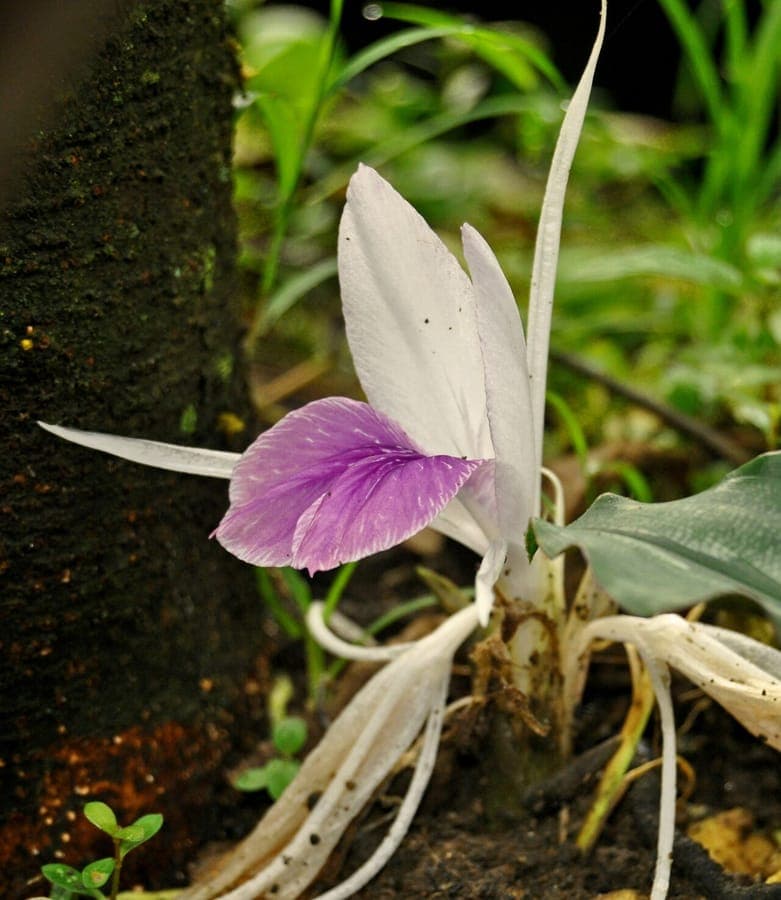
Wibowo Djatmiko (Wie146) / CC BY-SA 3.0, via Wikimedia Commons
Indian crocus: complete guide
Kaempferia rotunda
Want to see Indian crocus: complete guide in your garden?
1 minute, no credit card
Overview
Indian crocus (Kaempferia rotunda), also known as Tropical crocus or Resurrection lily, is a fascinating bulbous plant from the Zingiberaceae family. Native to the Indian subcontinent through South China, this plant grows naturally in moist forest areas. In temperate zones it's a special plant for greenhouse or indoor cultivation.
Appearance and bloom
Indian crocus grows as a low to medium-height plant (20-40 cm) with large, flattened, dark green leaves featuring attractive variegation. Leaves first emerge underground, then develop above ground. Flowers are impressive: large, purple-violet blooms appearing close to the ground, often preceding or coinciding with leaf emergence. The fragrance is delicate and announced.
Ideal location
Indian crocus prefers warm, humid locations with indirect light. In temperate zones it performs best in warm living spaces, greenhouse cultivation or humid gardens. Direct winter sun can cause problems. Seek locations with approximately 40% shade to light, dappled light environment.
Soil
For best growth, use moist but well-draining soil. Mix potting soil with 30% orchid bark or coconut husk chips for optimal drainage and aeration. pH should be slightly acidic to neutral (6.0-7.0). In humid gardens: heavy, moisture-retaining soil enriched with organic matter.
Watering
Water regularly during growing season (April-October), but prevent waterlogging. Keep the environment moist but not wet. Prefer high humidity (60-80%). During dormancy (November-March), dramatically reduce watering - the plant should become nearly dry.
Free design
Want to see Indian crocus: complete guide in your garden? Make a free design now.
Pruning
Indian crocus requires minimal pruning. Remove faded flowers and yellow leaves. Leave dead leaf material intact until fully senescent - this returns nutrients to the bulb.
Maintenance calendar
January-March: Dormancy; minimal watering, keep bulbs dry April: Begin watering, pot bulbs or plant outdoors May-September: Growing season; regular watering, humidity management October-November: Gradually reduce watering, prepare for dormancy December: Lift bulbs, dry and store in cool location or leave in dormancy with minimal watering
Winter hardiness
Indian crocus is NOT winter hardy in temperate zones. Bulbs cannot overwinter outdoors in frost areas. After aboveground parts die (November), lift bulbs, dry thoroughly and store in cool location or leave in dormancy with minimal watering in greenhouse.
Companion plants
Successfully combine with:
- Anthurium clarinervium
- Caladium (Fancy-leaf caladium)
- Alocasia (Elephant ear)
- Spathiphyllum (Peace lily)
- Fittonia (Nerve plant)
Final thoughts
Indian crocus is a beautiful, impressive plant for tropical-minded gardeners. Spectacular flowers and elegant foliage make it a show-stealer in greenhouse or living room. For gardenworld.app, ideal for exclusive greenhouse projects with southeast Asian theming or for advanced plant enthusiasts.
Want to see Indian crocus: complete guide in your garden? Make a free design now.
Upload a photo, pick a style, and get a photorealistic design with plant list in under a minute.
No credit card required


Similar plants
Etlingera elatior: complete guide
Etlingera elatior
Grow this exotic Torch Ginger indoors. Expert tips on warm conditions, humid soil, and care for spectacular blooms.
Zingiber zerumbet: complete guide
Zingiber zerumbet
Discover Shampoo ginger (Zingiber zerumbet) - a tropical ornamental plant with spectacular flowers and exotic allure. Perfect addition to refined front garden designs.
Alpinia officinarum: complete guide
Alpinia officinarum Hance
Discover Chinese ginger from Southeast Asia, a medicinal herb with fragrant flowers and aromatic rhizomes. Cultivation, harvesting and traditional uses.