
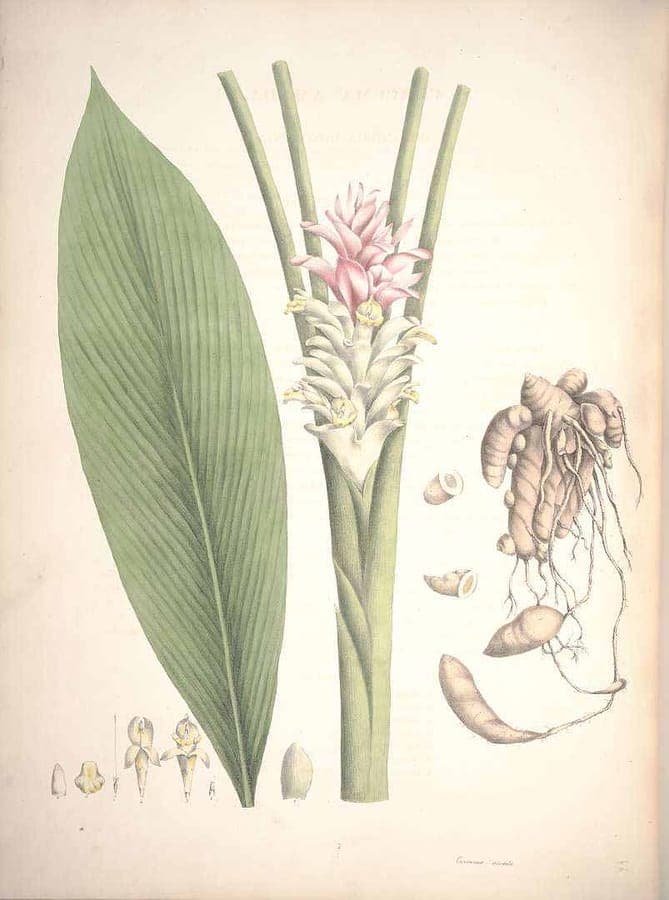
William Roscoe / Public domain, via Wikimedia Commons
Curcuma amada: complete guide
Curcuma amada
Want to see Curcuma amada: complete guide in your garden?
1 minute, no credit card
Overview
Curcuma amada, commonly known as mango-ginger or temmo pao, is a spectacular ginger-family plant from South and Southeast Asia. This tropical beauty naturally occurs in India, Bangladesh, Myanmar and Thailand. With its glossy green leaves and vibrant golden flowers, it brings tropical charm to your garden.
This plant reaches approximately 60 to 90 centimeters height and grows from underground tubers (rhizomes). The plant is valued for its exotic appearance, pleasant fruity-spicy leaf and flower aroma, and useful culinary applications. For gardeners seeking warmth and tropical atmosphere, Curcuma amada is perfect choice.
Appearance and Bloom
Curcuma amada distinguishes itself with large, rippling green leaves with prominent veining. Leaves grow alternately from the stem and can reach 40 centimeters length. From March through May, magnificent golden flowers emerge in vertical, spiral-arranged spikes. Each flower emits subtle perfume reminiscent of mango and spice.
After blooming, seed capsules form. The plant dies back to soil in winter, regrowing in spring. Underground tubers can persist multiple years.
Ideal Location
Curcuma amada thrives best in full sun to partial shade. This plant requires significant warmth and cannot tolerate frost. Position in warm, sheltered location receiving at least 5-6 hours direct sunlight. In temperate climates, full sun may provide modest winter production.
Plant in zones where temperatures never fall below 10 degrees Celsius. South-facing walls or full sun under protective structures suit this plant best. In temperate climates, it can be cultivated in containers and overwintered indoors.
Soil
Curcuma amada prefers fertile, well-draining soils. The plant tolerates acidic to neutral pH (5.5 to 7.0). Before planting, work in organic fertilizer, garden compost and optionally sand to improve drainage.
This plant performs better in loose, warm soils. In clay soils, add substantial sand and compost. Drainage is essential; standing water causes tuber rot.
Free design
Want to see Curcuma amada: complete guide in your garden? Make a free design now.
Watering
Curcuma amada enjoys regular water during growing season (April through October). Ensure soil remains moist but not waterlogged. During dry periods, water 2-3 times weekly. In winter when dormant, drastically reduce watering.
The plant is sensitive to overwatering, especially in winter. Allow soil to dry somewhat between waterings.
Pruning
Curcuma amada requires minimal pruning. Remove withered leaves and flowers for neater appearance. When plant dies back in autumn, you can cut dead stems to several centimeters above soil level.
Maintenance Calendar
In spring (March-April), plant tubers in warm, prepared soil. During growth (April-September), add regular organic fertilizer and ensure adequate water. After bloom (June-August), remove faded flowers. In autumn (October), limit water and prepare for winter dormancy.
Winter Hardiness
Curcuma amada is not winter hardy and cannot tolerate frost. In temperate climates, cultivate as annual plant or in containers overwintered indoors. Tubers can be overwintered in dry, cool conditions (5-10°C).
In warm regions (Zone 9+), tubers can overwinter in ground with heavy mulch protection.
Companion Plants
Curcuma amada combines beautifully with other tropical and heat-loving plants:
- Heliconia for height and color
- Ginger (Zingiber) for complementary fragrance
- Calathea for interesting foliage variation
- Banana plants (Musa) for size and drama
- Hibiscus for additional color and bloom
Conclusion
Curcuma amada is a unique and exotic addition for heat-loving gardeners. Its golden flowers, fragrant leaves and tropical appearance make it a showstopper. Provide warmth, sunlight and careful watering for success.
To purchase tubers, seek specialized garden centers or online tropical plant suppliers. For front yard transformation inspiration visit gardenworld.app!
Want more inspiration? Visit gardenworld.app for professionally designed tropical-modern gardens!
Want to see Curcuma amada: complete guide in your garden? Make a free design now.
Upload a photo, pick a style, and get a photorealistic design with plant list in under a minute.
No credit card required


Similar plants
Etlingera elatior: complete guide
Etlingera elatior
Grow this exotic Torch Ginger indoors. Expert tips on warm conditions, humid soil, and care for spectacular blooms.
Indian crocus: complete guide
Kaempferia rotunda
Indian crocus offers purple flowers and tropical atmosphere. Discover how to successfully grow this fascinating bulbous plant in cooler climates.
Zingiber zerumbet: complete guide
Zingiber zerumbet
Discover Shampoo ginger (Zingiber zerumbet) - a tropical ornamental plant with spectacular flowers and exotic allure. Perfect addition to refined front garden designs.