
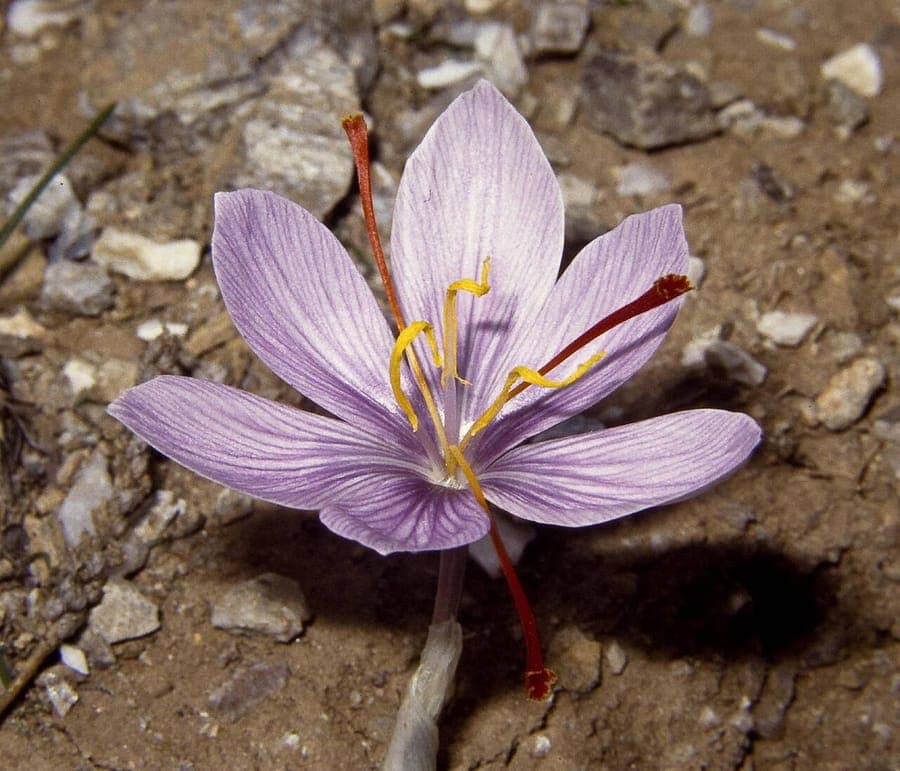
Peter coxhead / CC BY-SA 3.0, via Wikimedia Commons
Crocus cartwrightianus: complete guide
Crocus cartwrightianus
Want to see Crocus cartwrightianus: complete guide in your garden?
1 minute, no credit card
Overview
Crocus cartwrightianus is a delightful wild crocus species from Greece and the island of Crete. This autumn-flowering crocus is celebrated for its delicate purple flowers that appear in October-November.
Ideal for those seeking something unique to add to their garden. The tiny bulbs occupy minimal space but deliver tremendous aesthetic value during autumn.
Appearance & bloom
Grows from very small bulbs into flowers approximately 5-10 centimeters tall. The blooms have six petals in pure purple to deeper purple coloring, sometimes with lighter purple stripes. The style is red to orange-colored.
Flowers typically open in afternoon sunlight and close at evening. This creates a changing bloom period that offers daily interest. The leaves are green and narrow, almost grass-like.
Ideal location
Performs best in sunny to semi-shaded locations. In the wild, this crocus grows in mountainous Mediterranean terrain. Provide plenty of sunlight - at least 4-5 hours of direct daily sunlight.
Plant this crocus in rock gardens, between stones, along pathways, or in alpine plantings.
Soil
Thrives best in well-draining, slightly sandy soil. This plant hates waterlogging. If you work with clay or heavy soil, improve drainage by adding sand, perlite, or gravel.
In pots, use a mixture of cactus or alpine potting soil with extra drainage material.
Free design
Want to see Crocus cartwrightianus: complete guide in your garden? Make a free design now.
Watering
After planting in September-October, this crocus needs little watering. Autumn and winter rains usually provide adequate moisture. In dry autumns, light watering helps.
During bloom in October-November, some supplemental water can be beneficial. After bloom, provide minimal water.
Pruning
Requires no pruning. You can pinch off spent flowers to prevent self-seeding. Allow foliage after bloom to rest undisturbed so energy returns to the bulbs.
Maintenance calendar
September: Plant bulbs. October: Leaves and flowers appear. October-November: Full bloom. December: Bloom concludes. January-February: Leaf fall. March-June: Dormancy period. July-August: Dry season.
Winter hardiness
Extremely winter-hardy. It tolerates temperatures down to -20 degrees Celsius. In northern European gardens it grows outdoors year-round without protection.
Frost damage is rarely a concern. In fact, frost helps trigger bulbs from dormancy.
Companion plants
Crocus cartwrightianus pairs beautifully with other autumn-flowering plants. Try combining with Colchicum autumnale or other crocus species.
Closing
Crocus cartwrightianus is a jewel of a plant. With its delicate purple flowers in autumn, this Mediterranean crocus brings genuine charm to your garden.
Want to see Crocus cartwrightianus: complete guide in your garden? Make a free design now.
Upload a photo, pick a style, and get a photorealistic design with plant list in under a minute.
No credit card required


Similar plants
Crocus pallasii: complete guide
Crocus pallasii
Pallas's saffron is a unique autumn-flowering crocus from Balkans to the Levant. Discover this rare Mediterranean beauty.
Saffron: complete guide
Crocus sativus
How to grow Crocus sativus: care, flowering season, soil and ideal site. Suitable for gardens in temperate climates.