
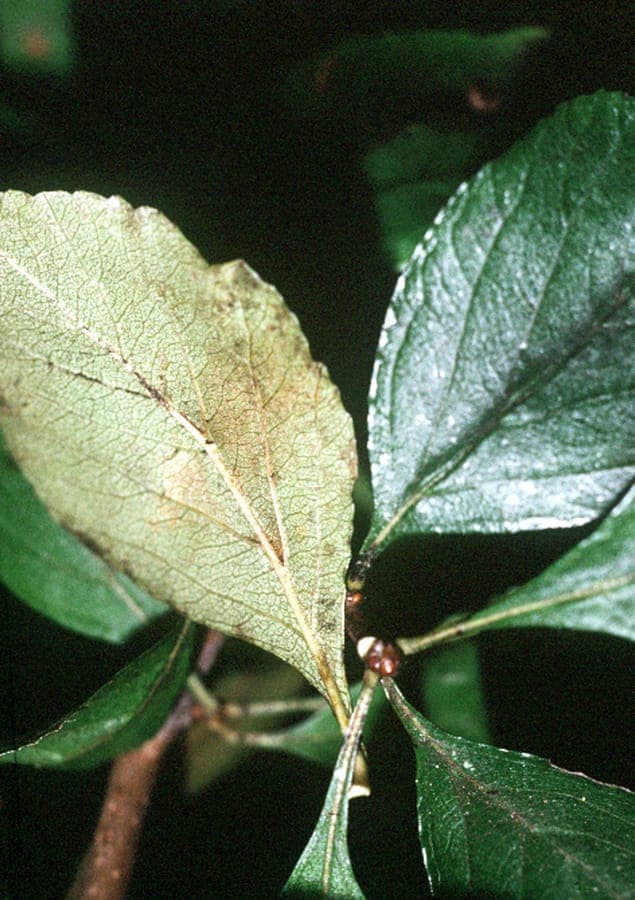
Robert H. Mohlenbrock. USDA SCS. 1991. Southern wetland flora: Field office guide to plant species. South National Technical Center, Fort Worth. Courtesy of USDA NRCS Wetland Science Institute. / Public domain, via Wikimedia Commons
Mayhaw hawthorn: complete guide
Crataegus aestivalis
Want to see Mayhaw hawthorn: complete guide in your garden?
1 minute, no credit card
Overview
Mayhaw hawthorn (Crataegus aestivalis) is one of the most distinctive fruiting trees in the Rosaceae family, native to the swampy lowlands, floodplain forests, and wet woodland margins of the southeastern United States - Alabama, Florida, Georgia, Mississippi, North Carolina, and South Carolina. The common name 'mayhaw' combines 'May', referring to the month when its red fruits ripen, with 'haw', the traditional English word for hawthorn fruits.
In its native range, mayhaw is celebrated for its edible fruits, which are prized for making jelly, syrup, and preserves with a flavour described as tart-sweet, somewhere between a crabapple and a red currant. Southern communities have been harvesting mayhaw fruits for generations, often gathering them from overhanging branches directly into canoes as the fruits fall into flooded wetlands in spring. That productive character makes this hawthorn especially appealing to gardeners who want an ornamental tree that also yields a genuine harvest.
At gardenworld.app you will find planting design ideas that incorporate fruiting trees and productive shrubs like mayhaw hawthorn into layered, beautiful garden schemes.
Appearance and bloom cycle
Crataegus aestivalis is a multi-stemmed large shrub or small tree that typically reaches 3 to 8 metres in cultivation, with a broad, open branching structure. The stems carry thorns 2 to 5 cm long, a characteristic that makes the plant useful as an impenetrable boundary hedge or wildlife shelter belt.
Flowering occurs from February to April, early in the season and often before the leaves fully emerge. The flowers are the classic hawthorn type: five-petalled, white, arranged in flat-topped clusters that smother the branches before the foliage develops. This early flowering is a significant ecological asset, providing nectar and pollen to honey bees and other early-emerging pollinators when resources are scarce in late winter and early spring. The leaves are fine-textured and dark green in summer, developing yellow to orange autumn tints before falling.
The fruits ripen in April and May - earlier than almost any other fruiting tree in the temperate garden - and are small, round, apple-like drupes 1 to 2 cm across in shades of red or yellow. Their early ripening makes them available to birds and mammals at a point in spring when food resources are still limited, giving the plant strong wildlife value.
Ideal location
In nature, mayhaw grows in flooded bottomlands, along sluggish streams, and at the margins of cypress swamps. This origins means it tolerates consistently wet soils that would stress or kill most other ornamental trees. In cultivation, however, it adapts well to normal garden conditions as long as moisture is not severely limited.
It performs best in full sun to light partial shade. Full sun encourages abundant flowering and the best fruit set; excessive shade reduces both. In the British or European garden context, a south- or west-facing position is ideal, with some protection from dry summer conditions. Coastal gardens with their milder winters and higher atmospheric moisture suit this species well.
As a hedging shrub or specimen tree, mayhaw is particularly suitable for low-lying, wet garden areas, riverside plots, and gardens adjacent to ponds or ditches. Its thorny stems make it valuable as a dense wildlife hedge that provides nesting cover for birds and refuge for small mammals.
Soil
Crataegus aestivalis tolerates a wide range of soil types, from heavy clay to sandy loam, as long as the pH remains between 4.3 and 7.3. In its native habitat it grows in nutrient-rich alluvial deposits and seasonally flooded bottomland soils. Its tolerance of wet conditions far exceeds that of most other ornamental trees.
In average garden soils, incorporate generous amounts of well-rotted compost at planting time to improve moisture retention in sandy soils and structure in clay soils. On heavier clay soils prone to severe winter waterlogging, slightly raising the planting position or incorporating coarse grit can help prevent the occasional root rot that affects even this moisture-tolerant species.
An annual mulch of 5 to 8 cm of leaf mould or composted wood chips, applied around the base of the tree but kept clear of the trunk itself, will maintain soil moisture through summer dry spells and provide a steady feed of nutrients as it breaks down.
Watering
Mayhaw is a plant of wet habitats and benefits from reliable moisture, particularly during the first two to three years after planting while it is establishing a deep root system. Water weekly during dry spells in the first growing season. Once fully established, the tree becomes considerably more resilient to occasional drought, but consistent soil moisture improves fruit production significantly.
In warm, dry summers - which are becoming more common across western Europe - supplemental irrigation in July and August is recommended for the best crop of fruits the following spring. Deep, infrequent watering that penetrates the full root zone is more effective than frequent shallow applications. Drip irrigation or a slow trickle from a hose at the base of the tree works well.
Avoid heavy watering in combination with hard frost: waterlogged, frozen roots are more vulnerable to cold damage than dry, frozen roots. Good drainage remains important even for this moisture-loving species during the dormant winter season.
Free design
Want to see Mayhaw hawthorn: complete guide in your garden? Make a free design now.
Pruning
Crataegus aestivalis requires relatively little formative pruning but responds well to regular maintenance cuts. Prune immediately after flowering in spring to avoid disrupting fruit set. Remove dead, diseased, or crossing branches annually to keep the crown open, airy, and well-lit.
For use as a formal or semi-formal hedge, clip in late summer or early autumn after the fruit has been harvested. The thorny branches make this task somewhat challenging: wear thick gloves and use long-handled loppers or a sturdy hedge trimmer. The plant tolerates quite hard cutting and regenerates vigorously.
To train a single-stem specimen tree, select the strongest upright shoot in the first year and remove competing stems from the base. Develop a well-spaced scaffold of main branches in subsequent years by removing inward-growing and crossing shoots. Always prune on a dry day to minimise the risk of fungal infection through fresh cut surfaces.
Maintenance calendar
January to February: Inspect for frost damage or disease. Prune dead wood on dry days. Apply a balanced slow-release fertiliser around the drip line if growth was poor in the previous season.
March to April: Flowering period - no pruning. Watch for aphid colonies on soft new growth. Apply compost mulch if not done in autumn.
May: Fruits ripen. Harvest for preserves or leave for wildlife. This is the most rewarding month for the mayhaw grower.
June to July: Water during dry spells. Remove any vigorous basal suckers if a tree form is desired.
August to September: Optional hedge trimming. Autumn colour begins to develop. Reduce watering as temperatures cool.
October to November: Leaf fall. Apply fresh mulch around the base (5 to 8 cm). Clear fallen leaves if there are signs of fungal disease.
December: Full dormancy. No special care required beyond checking that drainage is adequate.
Winter hardiness
As a native of the warm, moist southeastern United States, mayhaw hawthorn is less cold-hardy than many other hawthorn species. It is rated for USDA hardiness zones 6 to 9, meaning it survives moderate winter frosts but can be damaged by temperatures below approximately -20 degrees Celsius. For most of southern England, France, Belgium, and the Netherlands coastal areas, it is reliably hardy.
In colder continental inland regions at the edge of zone 5, provide young plants with some winter protection: wrap the trunk with hessian or fleece in the first two to three winters, and apply a generous mulch of straw or bracken over the root zone in November. Established trees are significantly more resilient than young transplants.
Choose the most sheltered spot available for planting - a south-facing wall, a windbreak, or a warm corner of the garden significantly increases winter survival chances in marginal climates.
Companion plants
Mayhaw hawthorn partners naturally with other plants of moist, sunny habitats. Elder (Sambucus nigra) is a natural companion that shares the same preference for fertile, wet soils and also produces edible fruits. Low-growing Salix species (willows) are ideal neighbours in wet garden corners or beside water features.
For herbaceous companions in moist soil, consider Iris pseudacorus, Lythrum salicaria, and Caltha palustris, which all thrive in the same wet conditions and extend the season of interest with their own flowering displays. Rodgersia and Astilbe bring bold foliage and summer flower to the composition.
For a productive kitchen garden design, combine mayhaw with Amelanchier (serviceberry) for spring berries, Ribes (currants and gooseberries) as understorey shrubs, and a selection of Rubus (raspberries and blackberries) for summer and autumn fruit. Together these create a complete fruiting hedge that yields harvests from April through October.
At gardenworld.app you can design your own productive and ornamental garden layout, choosing plants that suit your specific soil, light, and size constraints.
Closing thoughts
Mayhaw hawthorn is a tree with a story - a plant of Southern American wetlands that brings early spring blossom, unique edible fruits, wildlife value, and handsome autumn colour to the garden. It is not a tree for every situation: it wants moisture, sun, and a reasonable winter climate. But where those conditions can be met, it rewards its grower with something no other temperate tree quite replicates.
With proper soil preparation, consistent moisture, and a sunny, sheltered position, Crataegus aestivalis becomes a long-lived and productive member of the garden. Its jelly-making fruits make it a conversation piece as much as an ornamental asset - a living connection to the food traditions of the American South, growing in a European garden.
Want to see Mayhaw hawthorn: complete guide in your garden? Make a free design now.
Upload a photo, pick a style, and get a photorealistic design with plant list in under a minute.
10,000+ gardens designed already
No credit card required


Similar plants
Parsley hawthorn: complete guide
Crataegus marshallii
Everything about Crataegus marshallii, the ornamental parsley hawthorn with deeply lobed leaves and bright red berries. Location, pruning, wildlife value, and care tips.
Midland hawthorn: complete guide
Crataegus laevigata
A detailed guide to growing Crataegus laevigata: ideal conditions, pruning tips, companion plants, and how to support wildlife in your garden.
Hawthorn: complete guide
Crataegus monogyna
Learn how to grow and care for Hawthorn (Crataegus monogyna): ideal location, pruning, soil needs, and companion plants for UK and European gardens.