
Famartin / CC BY-SA 3.0, via Wikimedia Commons
Chamaecyparis thyoides: complete guide
Chamaecyparis thyoides
Want to see Chamaecyparis thyoides: complete guide in your garden?
1 minute, no credit card
Overview
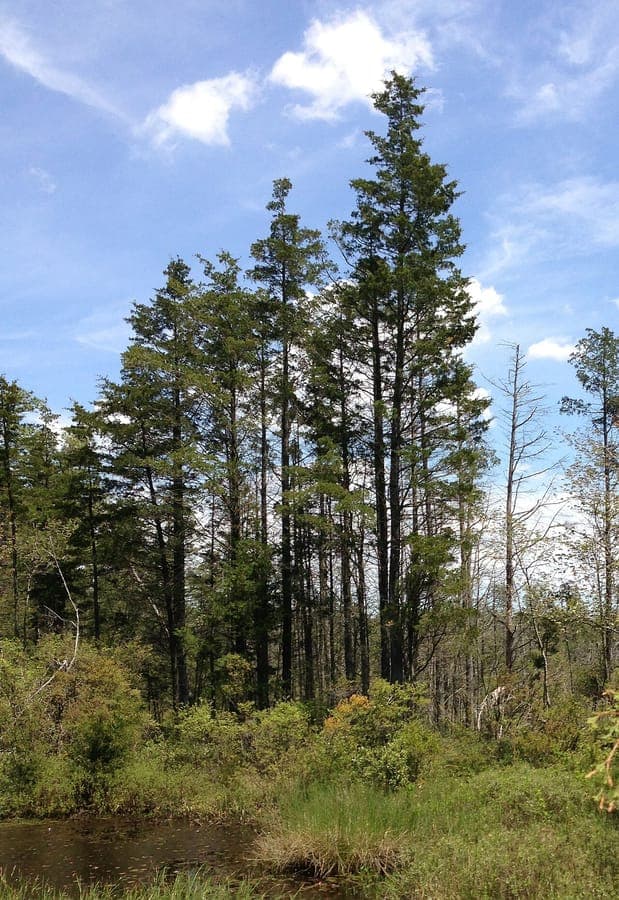
Chamaecyparis thyoides, commonly known as Atlantic white cypress or southern white-cedar, is an elegant conifer from the Cupressaceae family. This North American tree naturally occurs in marshy areas of the eastern US and grows well in West European gardens with moist, well-draining soils. With its very fine scale-like foliage and whitish to grayish bark, this tree offers structure and elegance.
Appearance & Growth
This conifer can reach 15–20 meters in a natural environment, but garden varieties typically remain smaller (4–8 m). The plant has a pyramidal to columnar form with a single stem. The foliage is extremely fine and scale-like, green to blue-green in color. The bark is whitish to grayish and peels slightly. In autumn, foliage may take on subtle purple tints in cooler climates.
Ideal Location
Chamaecyparis thyoides thrives best in moisture-retaining spots with good drainage - marshy to moist soils are ideal. Plant in partial shade to full sun, though it maintains better color in sunlight. Protect from strong winds and salt spray, which can cause desiccation. In gardens: plant where the tree can reach mature size without cutting back.
Soil Requirements
Acidic to slightly acidic soil is preferred (pH 5.5–7.0). This tree grows in moist, acidic soils but can also grow in well-draining clay. Mulch around the tree and maintain consistent moisture without waterlogging. This tree does not grow well in dry, sandy soils - moisture retention is essential.
Watering
Water regularly during the growing season, especially after planting. Established trees love consistently moist soils but tolerate no stagnation. Water during dry periods. Young trees need more guidance than mature specimens. Avoid deep drought, which damages the needles.
Free design
Want to see Chamaecyparis thyoides: complete guide in your garden? Make a free design now.
Pruning
Minimal pruning needed - this tree grows naturally into a beautiful form. Remove dead branches and crossing limbs. When pruning is necessary, do it in early spring before the growing season. Avoid heavy pruning that leaves bare branches. For more compact forms, choose dwarf varieties like 'Ericoides'.
Maintenance Calendar
- March–April: Inspect moisture content, add mulch for moisture retention
- May–August: Regular watering during drought, inspect bark for insects
- September–October: Continue watering until frost
- November–February: Minimal intervention, protect from heavy snow load
Winter Hardiness
Cold-tolerant in USDA zones 4–8. Chamaecyparis thyoides can be challenging in very dry winters outside West Europe. In the Netherlands and Belgium, it grows well in moist areas. Protect young trees from strong winter desiccation winds. Snow load can damage branches - remove carefully.
Companion Plants
Works well with other moisture-loving plants: Metasequoia glyptostroboides (dawn redwood), Nyssa sylvatica, and native Liquidambar. Combine with hydrangeas and large ferns in moist gardens. The fine texture contrasts nicely with groundcovers like Acorus gramineus.
Closing
Atlantic white cypress is a subtle yet elegant choice for gardens with moist spots. With its fine structure, interesting bark, and natural growth, it adds architectural character. On gardenworld.app, find inspiration for integrating useful conifers into garden designs. Visit gardenworld.app for more plant combinations.
Want to see Chamaecyparis thyoides: complete guide in your garden? Make a free design now.
Upload a photo, pick a style, and get a photorealistic design with plant list in under a minute.
No credit card required


Similar plants
Cupressus macnabiana: complete guide
Cupressus macnabiana
The Fragrant Cypress offers elegant growth with fine, aromatic foliage. Perfect for temperate climates and as specimen trees in contemporary gardens.
Cupressus guadalupensis: complete guide
Cupressus guadalupensis
The Guadalupe cypress: an elegant conifer for gardens. Complete cultivation guide for this Mexican cypress. Information about care, location, form and maintenance.
Austrocedrus chilensis: complete guide
Austrocedrus chilensis
Discover Austrocedrus chilensis, the Chilean Cedar ornamental conifer. Elegant specimen with fine foliage and columnar form for permanent structure.