
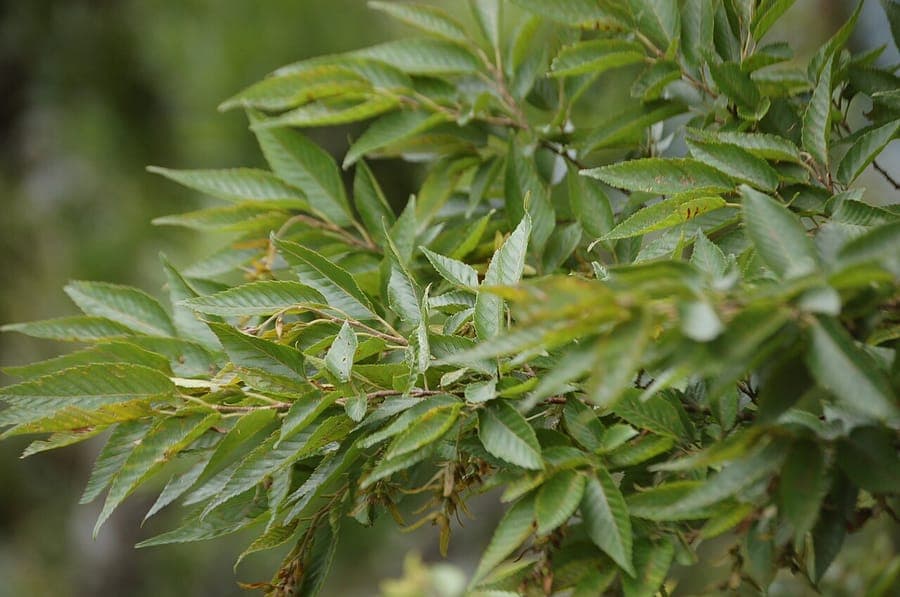
Neptalí Ramírez Marcial - https://www.inaturalist.org/people/huracan / CC BY 4.0, via Wikimedia Commons
Tropical hornbeam: complete guide
Carpinus tropicalis
Want to see Tropical hornbeam: complete guide in your garden?
1 minute, no credit card
Overview
Carpinus tropicalis, commonly called tropical hornbeam, is a seldom-seen but genuinely captivating member of the Betulaceae family. It is a close relative of the familiar European hornbeam (Carpinus betulus), but this species is native to the mountain forests of Mexico, Guatemala, Honduras, El Salvador, and Nicaragua. In the wild it grows at elevations between roughly 1,500 and 2,800 metres, where the climate is mild and considerably wetter than the coastal lowlands. Local Spanish names include alisillo, capillero, and mora blanca. Although rare in European gardens and parks, Carpinus tropicalis is steadily attracting attention from collectors and enthusiasts who want something beyond the standard nursery range. At gardenworld.app you can find planting inspiration that makes the most of distinctive specimen trees like this one.
Appearance and bloom cycle
Carpinus tropicalis is a slow-growing tree with a multi-stem habit - it typically produces several slender trunks that together create a graceful, sculptural outline. The bark is smooth and pale grey, similar to European hornbeam but somewhat lighter. Leaves are alternately arranged, ovate to oblong, with a finely serrate margin and clearly visible veins, a hallmark of the hornbeam clan. Leaf texture is medium-fine. The flowers are a notable attraction: conspicuous orange blooms appear on the branches in late spring and early summer, a characteristic that sets this species apart from most European hornbeams whose catkins are far less showy. Fruits are brownish nutlets held in decorative clusters that remain attractive into autumn. Bloom time typically falls from May through June, though this can vary with altitude and local climate conditions.
Ideal location
In the wild, Carpinus tropicalis inhabits moist mountain forests, often close to streams and ravines. This origin points directly to what the plant needs in cultivation: good light to partial shade and a consistent moisture supply. In garden settings the tree does best in a sheltered spot away from harsh afternoon sun and drying winds. Because of its tropical provenance, it is less cold-tolerant than its European relatives, but with careful siting it can be grown outdoors in mild temperate climates. Think of a south-facing courtyard, a protected urban garden, or the lee side of a building. As a container specimen it excels: large pots can be moved to a frost-free space during winter months. As a standalone tree in a larger garden it provides year-round structure and seasonal interest.
Soil
Carpinus tropicalis has clear soil preferences. It favours a slightly acid to neutral pH, ideally in the range of 4.0 to 7.4. The substrate must drain freely while retaining adequate moisture - a humus-rich loam is ideal. Although European hornbeams tolerate calcareous soils reasonably well, this tropical species does better without excess lime. Incorporating generous amounts of composted bark or leaf mould at planting time improves both water retention and soil structure. For container growing, choose a quality, free-draining potting mix with a pH of around 5.5 to 6.5. Ensure adequate drainage holes and never allow water to pool around the roots.
Watering
As a resident of moist mountain forests, Carpinus tropicalis requires a steady moisture supply throughout the growing season. From April through September keep the soil consistently moist but never waterlogged. For container specimens, check moisture levels regularly and water whenever the upper layer of compost begins to dry out. In the ground, a generous mulch layer - bark chips 5 to 8 cm thick - helps maintain even soil temperature and reduces moisture loss through evaporation. In prolonged dry spells, supplementary watering is essential. During winter, when growth slows or stops, water requirements fall considerably; reduce irrigation accordingly for both pot and ground specimens.
Free design
Want to see Tropical hornbeam: complete guide in your garden? Make a free design now.
Pruning
Good news for admirers of natural forms: Carpinus tropicalis needs little structural pruning. The tree naturally develops an attractive multi-stem silhouette that is charming without intervention. At the end of winter, in late February or early March, remove any dead, damaged, or crossing branches. If you wish to keep the tree within a particular size or shape, light pruning after flowering is appropriate. Always use clean, sharp tools to minimise wound infection risk. Avoid heavy pruning because the tree grows slowly and drastic cutting can delay recovery significantly. Let the plant retain its natural character as much as possible.
Maintenance calendar
January-February: check overwintering container plants for frost damage; prepare mulch materials. March: carry out corrective pruning of dead wood; begin light feeding. April-May: growth begins; gradually increase watering; attractive flowers appear. June-August: active growth period; apply a balanced liquid fertiliser every two weeks; monitor for aphid colonies. September: reduce nitrogen-rich feeds; ensure good drainage before autumn rain arrives. October-November: reduce watering; bring container plants to a sheltered spot when night frosts threaten. December: minimal intervention needed; carry out a visual check for winter damage.
Winter hardiness
Carpinus tropicalis originates in subtropical mountain forests and is considerably less cold-hardy than European hornbeam. In its native range winters are mild and free of sustained frost. In northern Europe the tree can only be grown outdoors in exceptionally sheltered, urban locations - USDA zone 9 or warmer is needed for reliable outdoor cultivation. Temperatures below -5 degrees Celsius risk foliage damage; prolonged hard frost threatens root survival. Reports from enthusiasts in southern England and Brittany suggest the plant can survive mild European winters with good protection using horticultural fleece and a deep bark-chip mulch. The safest approach is container cultivation: bring the tree into a cool but frost-free glasshouse, conservatory, or garage from November through March.
Companion plants
When choosing companions for Carpinus tropicalis, consider plants that complement its subtropical character. In sheltered garden situations, other moisture-loving specimens such as Liquidambar styraciflua work well as structural neighbours. At ground level, ferns like Athyrium niponicum and Dryopteris wallichiana provide a lush understorey with similar moisture preferences. Hostas and astilbes pair beautifully both visually and in terms of growing conditions. For lower accent planting around solitary specimens, the many-coloured cultivars of Heuchera make an excellent choice. Visit gardenworld.app for more ideas on combining specimen trees with complementary understorey plantings.
Closing
Carpinus tropicalis is a genuine rarity for the collector of unusual tree species. Its elegant multi-stem growth habit, conspicuous orange flowers, and rich botanical heritage give it a distinctive dimension in any garden or plant collection. It demands a little more attention than its tough European cousin - particularly regarding winter protection and reliable moisture - but the reward of a plant with genuine character makes the extra effort worthwhile. Whether grown in a large container on a sheltered terrace or inside a cool glasshouse, the tropical hornbeam always draws admiring comments.
Want to see Tropical hornbeam: complete guide in your garden? Make a free design now.
Upload a photo, pick a style, and get a photorealistic design with plant list in under a minute.
10,000+ gardens designed already
No credit card required


Similar plants
European hornbeam: complete guide
Carpinus betulus
Everything you need to know about Carpinus betulus: growing conditions, care, pruning and ideal planting spots for hedges and specimen trees.
Silver Birch: complete guide
Betula pendula
Everything about Silver Birch (Betula pendula): planting, care, pruning and cultivar choice. Practical tips for an elegant tree with white bark and golden autumn colour.
European alder: complete guide
Alnus glutinosa
Complete guide to Alnus glutinosa: growth habits, sun needs, soil preferences, and care. Ideal for wet gardens and erosion control along waterways.