
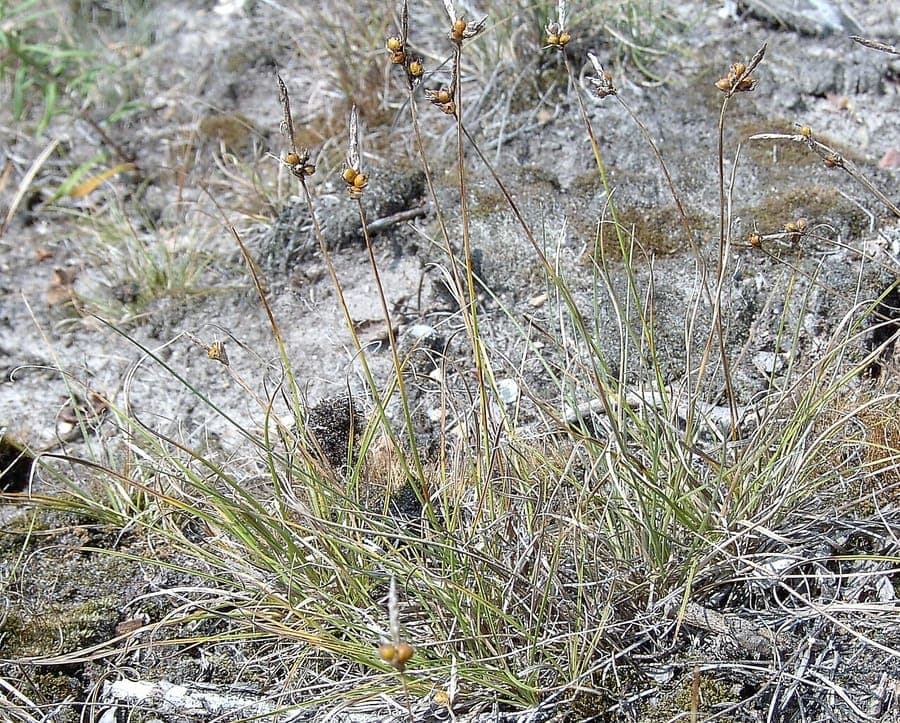
Kenraiz / CC BY-SA 4.0, via Wikimedia Commons
Weak arctic sedge: complete guide
Carex supina
Want to see Weak arctic sedge: complete guide in your garden?
1 minute, no credit card
Overview
Carex supina, known as weak arctic sedge or weak sedge, is a remarkably adaptive plant with an enormous geographic range. Occurring from temperate Eurasia through alpine zones and arctic America to central North America, this sedge thrives in mountain regions, steppes, and northern terrain. The compact growth habit and ability to withstand extreme conditions make it a fascinating choice for gardeners seeking something special.
Appearance and bloom
Carex supina forms low, compact-growing mats with shoots that grow horizontally rather than vertically. The plant reaches only 5-15 centimeters in height, making it ideal for alpine gardens and rock gardens. The leaves are narrow and grass-like, with a fresh green to grey-green color. The inflorescences appear in late spring and early summer, composed of small, discrete brownish-green spikes. The overall appearance is compact and cozy.
Ideal location
Weak arctic sedge thrives excellently in full sunlight. In warm regions, it appreciates some afternoon shade. The plant is very well adapted to windy locations and growth in alpine areas. Place Carex supina in a location with good visibility, where air circulation is good. This plant is perfect for rock gardens, rocky banks, and as a groundcover in full sun.
Soil
Carex supina is not fussy and grows in virtually all soil types as long as drainage is good. It accepts acidic and basic terrain. Even in nutrient-poor, dry sand or gravel, it grows reasonably well. For optimal growth, add some compost, but avoid heavy buried clay. Alpine gravel mixes with some garden soil work excellently in container cultivation.
Free design
Want to see Weak arctic sedge: complete guide in your garden? Make a free design now.
Watering
Once established, weak arctic sedge needs little water. It accepts long drought periods without much complaint. However, ensure you do not neglect it completely - regular moisture during the growing season helps. In pots, check weekly if soil becomes dry and water as needed. Excessive water is more harmful than underwatering.
Pruning
Pruning is not necessary for Carex supina. The compact growth habit ensures it rarely becomes straggly. However, remove dead parts in early spring for neatness. Gentle combing with a fine rake can remove dead leaves without damage.
Maintenance calendar
Spring: Check growth and remove dead parts. Summer: Water only during extreme droughts. Autumn: Leave dead leaves for insulation. Winter: Very low maintenance; only ensure good drainage to prevent frost damage.
Winter hardiness
Carex supina is extremely hardy and adapted to arctic and subarctic climates. In Europe, it can withstand temperatures of -30 degrees Celsius or lower. In the Netherlands and Belgium, it will overwinter without problems. The plant remains largely green year-round, though leaves may take on grey tints in winter.
Companion plants
Weak arctic sedge pairs well with alpine sedums, saxifrages, dianthus, and other dwarf plants. The compact form contrasts nicely with larger alpine groundcovers. Combine with alpine grasses like Festuca glauca for texture contrast. For rock and stone gardens, add small conifers and alpine flowering plants.
Closing
Carex supina is a rare jewel for adventurous gardeners. This ultra-hardy sedge offers alpine elegance with minimal maintenance. Whether you want to create a mountain garden or beautify an alpine rock garden, weak arctic sedge is an excellent choice. Find this unique plant on gardenworld.app and specialized nurseries.
Want to see Weak arctic sedge: complete guide in your garden? Make a free design now.
Upload a photo, pick a style, and get a photorealistic design with plant list in under a minute.
No credit card required


Similar plants
Sprengel's sedge: complete guide
Carex sprengelii
Sprengel's sedge (Carex sprengelii) is a versatile, hardy sedge from North America with long beaks and fine foliage. Learn how to cultivate this elegant plant in your garden.
Frosted-curls: complete guide
Carex comans
Frosted-curls (Carex comans) is a spectacular New Zealand sedge with fine, curly foliage and golden-brown tints. Learn how to cultivate this ornamental plant.
Northern long sedge: complete guide
Carex folliculata
Northern long sedge (Carex folliculata) is a versatile sedge from eastern North America with long, slender foliage. Learn how to cultivate this moisture-loving plant.