
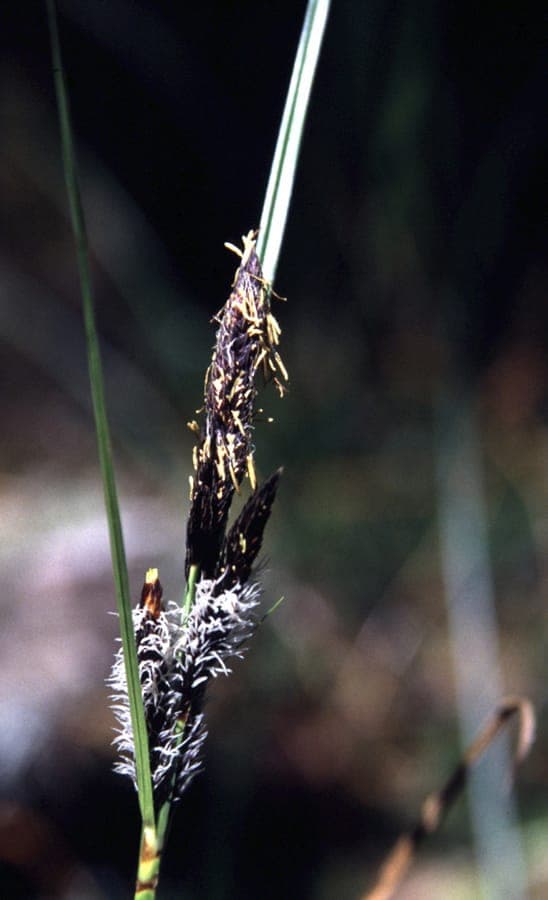
Gordon Leppig & Andrea J. Pickart / Public domain, via Wikimedia Commons
Slough sedge: complete guide
Carex obnupta
Want to see Slough sedge: complete guide in your garden?
1 minute, no credit card
Overview
Slough sedge (Carex obnupta) is a vigorous, fast-growing sedge native to the Pacific Coast of North America, ranging from British Columbia southward through Washington, Oregon and California. First described by botanist L.H. Bailey in 1891, it belongs to the family Cyperaceae - one of the world's largest plant families, encompassing thousands of sedge species from polar tundra to tropical swamps. Slough sedge has carved out its niche in coastal wetlands, river margins, pond edges and low-lying areas where water lingers long after rainfall. It is also sometimes listed in botanical references as Carex magnifica, a synonym that reflects the impressive stature this plant achieves in its native habitat.
For gardeners dealing with persistently wet ground, boggy corners, or the margins of ponds and streams, slough sedge offers a reliable, low-maintenance solution. Unlike many ornamental plants that struggle in waterlogged conditions, slough sedge actively thrives where water accumulates. Its dense, arching foliage creates a lush, naturalistic effect that works equally well in formal pond settings and wild, naturalistic gardens. Visit gardenworld.app to explore garden design ideas that incorporate water-loving plants like this sedge.
Appearance and bloom cycle
Slough sedge forms dense, spreading clumps through its rhizomatous root system, slowly expanding outward from the central crown. The foliage is coarse in texture and a rich, deep green throughout the growing season. Individual leaves can reach 60 to 100 cm in length, creating an elegant, arching mound that moves gently in a breeze. The leaf tips often recurve slightly, giving the clump a soft, cascading silhouette.
Flowering occurs in late spring to early summer - typically May through June - when the plant sends up flowering stems topped with yellowish-brown spikes. The flowers are not particularly showy; the real ornamental value of slough sedge lies in its bold foliage rather than its blooms. After flowering, small brown fruits develop and ripen through summer. The dense clump structure provides valuable cover for small birds, frogs and other wetland wildlife, even outside the flowering period.
The rhizomatous growth habit means this sedge gradually spreads to form wider and wider colonies, especially in wet conditions. In a small garden, occasional division helps keep it in check. In larger naturalistic settings, this spreading tendency is an asset, as the plant quickly colonises bare, wet ground.
Ideal location
Slough sedge is at its best in full sun to light shade in a consistently wet to waterlogged situation. It is one of the few ornamental plants that can grow with its roots in shallow standing water (up to 10 cm deep) without suffering. In the garden, the ideal locations include:
- Pond and stream margins: growing right at the water's edge, both in and just above the waterline.
- Rain gardens: low-lying beds designed to capture and slow run-off water.
- Boggy borders: areas where drainage is poor and soil remains wet for months at a time.
- Drainage ditches and swales: where other plants fail, slough sedge thrives.
Full sun encourages the most robust, upright growth. In partial shade, the plant grows well but with a slightly more relaxed, open habit. It performs best in climates with high atmospheric humidity, making it an excellent choice for coastal and river-valley gardens.
Soil
This sedge thrives in heavy, moisture-retentive soils with a pH between 5.5 and 7.0. The best soil types for slough sedge are:
- Heavy clay: excellent water retention, ideal for a plant that needs constant moisture.
- Loam: good nutrient content combined with reasonable water retention.
- Peat or muck soils: in these naturally waterlogged soils, the plant is completely in its element.
Light, sandy or free-draining soils are unsuitable unless you are willing to irrigate very heavily and frequently. Moderately acidic soils (pH 5.5-6.5) give the best results. No special fertilisation is needed; slough sedge is naturally adapted to the nutrient conditions found in wetland soils. Excessive nitrogen can promote rank, lax growth that is less attractive than compact, well-proportioned clumps.
Free design
Want to see Slough sedge: complete guide in your garden? Make a free design now.
Watering
Watering is, paradoxically, the simplest aspect of caring for slough sedge - provided the plant is sited correctly. In its natural habitat, this sedge grows alongside streams, in marshes and in seasonally flooded areas. It tolerates:
- Permanent shallow flooding: up to 10 cm of standing water around the base is perfectly acceptable.
- Consistently wet soil: ideal for most garden pond margins and boggy borders.
- Seasonal flooding: it handles periods of deeper flooding followed by a wet but not permanently flooded summer.
In a garden setting where natural rainfall and soil conditions provide constant moisture, no supplemental irrigation is needed. If you are growing slough sedge in a heavy clay border that dries out somewhat in summer, regular deep watering - at least twice a week during dry spells - is essential. The plant must not be allowed to dry out; drought stress causes the leaf tips to brown and the clump to thin out significantly.
Pruning
Slough sedge is a low-maintenance plant when it comes to pruning. The main task is a single annual cut-back in late winter or very early spring:
- Timing: late February to early March, before new growth begins to emerge.
- Method: cut the entire clump back to 10-15 cm above ground level using sharp shears or garden scissors.
- Remove dead foliage: any brown or withered leaves can be removed throughout the year as they appear.
- Avoid summer pruning: cutting back during the growing season damages new growth and disrupts the plant's energy balance.
Division every three to four years keeps the clump vigorous and prevents the centre from becoming woody and congested. Lift the entire clump in early spring, split it into sections with a sharp spade, and replant the healthiest portions.
Maintenance calendar
- January - February: plant is dormant; no action required.
- February - March: cut back previous year's foliage; apply mulch around the crown.
- March - April: new growth emerges; a good time for division if needed.
- May - June: flowering period; enjoy the understated bloom display.
- July - August: peak growing season; water generously if the site is not naturally wet.
- September - October: growth slows; trim any outward-spreading rhizomes if space is limited.
- November - December: plant goes dormant; no protection needed in most temperate climates.
Winter hardiness
Slough sedge is reliably hardy in USDA zones 7 through 10, tolerating winter temperatures down to approximately -18 degrees Celsius (zone 7). In practice, this makes it fully hardy throughout the UK, the Netherlands, Belgium, much of France and Germany's milder western regions.
In exceptional cold snaps below -15 degrees Celsius, the foliage may die back completely, but the rhizomes survive in the soil and the plant reshoot vigorously in spring. A protective mulch of straw or autumn leaves over the crown offers additional insurance in colder gardens. In milder zones (8-10), the plant remains largely evergreen through winter, providing year-round foliage interest.
Frozen soil is tolerated well, provided the rhizomes themselves do not freeze solid. In pond-margin situations, shallow water in the root zone that freezes will not harm established plants. The species has evolved to withstand the harsh, variable winters of the Pacific Northwest, making it inherently tough.
Companion plants
Slough sedge combines naturally with other wetland and moisture-loving species:
- Iris pseudacorus (yellow flag iris): bright yellow flowers above the sedge's green foliage create a vivid contrast.
- Lythrum salicaria (purple loosestrife): tall magenta spikes rise above the sedge clumps in summer.
- Juncus effusus (common rush): contrasting round, upright stems complement the arching sedge leaves.
- Filipendula ulmaria (meadowsweet): creamy-white plumes and finely divided foliage add elegance to a wetland planting.
- Caltha palustris (marsh marigold): early-flowering, provides vivid yellow colour before the sedge reaches full size.
For a naturalistic bog garden, plant slough sedge in generous drifts alongside these companions rather than in isolated clumps. Irregular, overlapping groupings mimic the way the plant grows in the wild. On gardenworld.app, you can upload a photo of your garden and generate a tailored design that shows exactly how to combine water-loving plants for maximum effect.
Closing
Slough sedge (Carex obnupta) is one of North America's most useful wetland sedges, and it earns its place in any garden with a persistently wet or waterlogged area. Its fast growth, deep green foliage, and tolerance of standing water make it an exceptional choice for pond margins, bog gardens and drainage swales. Once established in the right position, it demands little more than an annual cut-back and occasional division to remain healthy and attractive for many years. For UK and European gardeners, plants are available from specialist aquatic nurseries and well-stocked garden centres. Given its preference for conditions that other plants find hostile, slough sedge transforms problem wet spots into genuine garden assets.
Want to see Slough sedge: complete guide in your garden? Make a free design now.
Upload a photo, pick a style, and get a photorealistic design with plant list in under a minute.
10,000+ gardens designed already
No credit card required


Similar plants
Clustered field sedge: complete guide
Carex praegracilis
Everything about clustered field sedge (Carex praegracilis): location, soil, watering, maintenance and hardiness for your garden.
Calamagrostis canadensis: complete guide
Calamagrostis canadensis
Discover Canada bluejoint, an elegant ornamental grass with upright growth, ideal for moisture-rich zones, wetlands and water margins that create naturally authentic landscapes.
Slough sedge: complete guide
Carex obnupta
Everything you need to know about slough sedge (Carex obnupta): location, soil, watering, care and hardiness for your garden.