
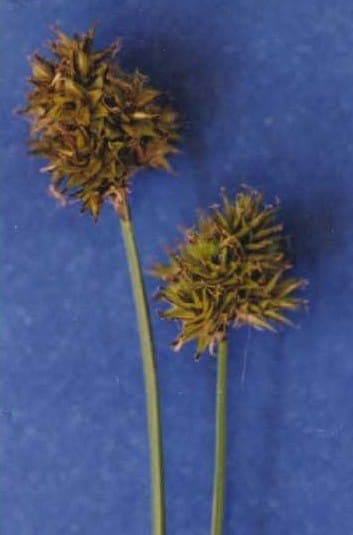
Hurd, E.G., N.L. Shaw, J. Mastrogiuseppe, L.C. Smithman, and S. Goodrich. / Public domain, via Wikimedia Commons
Smallwing sedge: complete guide
Carex microptera
Want to see Smallwing sedge: complete guide in your garden?
1 minute, no credit card
The smallwing sedge (Carex microptera) is a compact sedge native to the region from Yukon through western North America to Mexico. This sedge is also known as "ovalhead sedge," named after the characteristic shape of its flower spikes.
This is a perfect choice for alpine gardens, rock gardens, and other mountainous environments where compact, winter-hardy plants are desired. The plant grows slowly and forms dense tufts.
Carex microptera is an extremely winter-hardy plant with fine foliage texture. The plant tolerates pH values from 5.6 to 7.4, meaning it can grow in many different soil types.
The sedge is known for its tuft-forming growth and ability to thrive in somewhat drier conditions. This makes it a versatile choice for mountain gardens.
Appearance and Growth The plant reaches heights of approximately 15-40 cm and forms compact tufts with fine, almost hair-thin foliage. The leaf texture is extremely fine. The growth is slow but steady.
Ideal Location Smallwing sedge grows best in alpine gardens, rock gardens, and other mountainous environments. The plant can grow in full sun to partial shade. Ensure the plant receives adequate air circulation.
Soil The plant tolerates well-draining soils. Alpine soils or rock garden soils are ideal. The plant also tolerates somewhat drier conditions than many other sedge species.
Watering The plant is fairly drought-tolerant once established. However, regular watering is essential in the first growing season. Ensure the soil does not dry out completely.
Pruning and Maintenance The plant requires very minimal pruning. Remove dead foliage in spring. Otherwise, little maintenance is needed.
Maintenance Calendar Spring: Growing period begins, water well Summer: Water during dry periods Autumn: Preparation for winter Winter: Dormant, minimal maintenance
Winter Hardiness The plant is winter hardy to USDA zone 3 (down to approximately -35 degrees Celsius), meaning it can grow in very cold regions.
Companion Plants Smallwing sedge pairs well with:
- Other alpine sedge species
- Snow-in-summer
- Alpine flowers
- Saxifrage
Closing Remarks Smallwing sedge is ideal for those seeking a compact, drought-tolerant sedge for alpine environments. With minimal maintenance requirements and good winter hardiness, this plant will remain decorative for years. Discover more plant guides at gardenworld.app.
Want to see Smallwing sedge: complete guide in your garden? Make a free design now.
Upload a photo, pick a style, and get a photorealistic design with plant list in under a minute.
10,000+ gardens designed already
No credit card required


Similar plants
Flat-stemmed club-rush: complete guide
Bolboschoenus planiculmis
Everything about Bolboschoenus planiculmis: growing conditions, watering, care, and use as a pond margin or wetland plant in garden design.
Great Plains flatsedge: complete guide
Cyperus lupulinus
Everything about Great Plains flatsedge (Cyperus lupulinus): growing conditions, care, garden uses, and ecological value. Tips for pond margins and dry sandy soils.
Golden beak sedge: complete guide
Rhynchospora corymbosa
Everything about golden beak sedge (Rhynchospora corymbosa): a dramatic tropical marginal for pond edges, bog gardens, and wet habitats.