
USFWS - Pacific Region / Public domain, via Wikimedia Commons
Large-head sedge: complete guide
Carex macrocephala
Want to see Large-head sedge: complete guide in your garden?
1 minute, no credit card
Overview
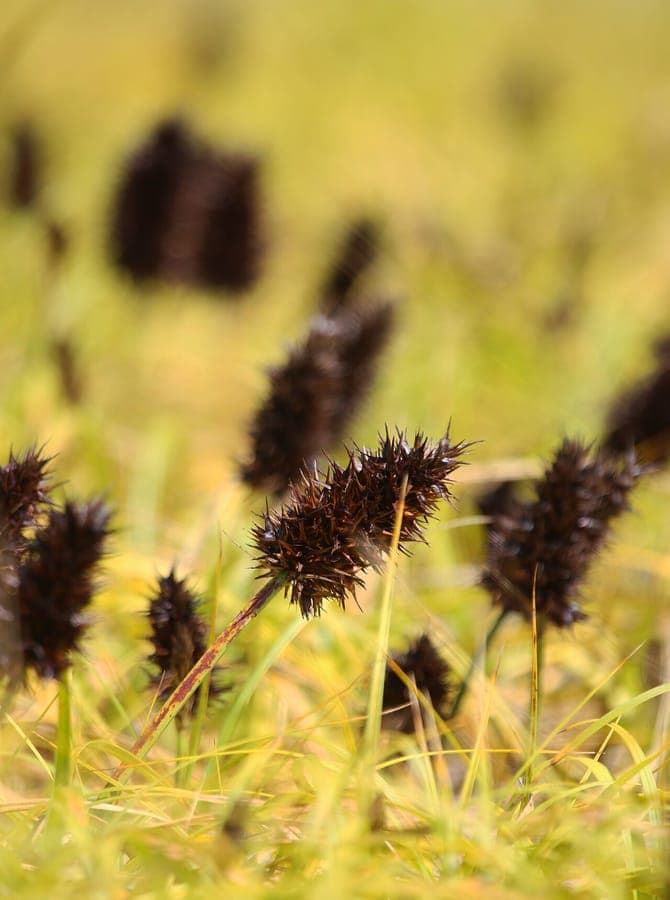
Carex macrocephala, known as Large-head sedge or Largehead sedge, distinguishes itself with exceptionally large and prominent seed heads that form rounded spheres. This graminoid (grass-like) plant originates from the Russian Far East and Japan, growing naturally from Kamchatka along coastal zones to Oregon and Washington in North America.
This sedge is an architectural accent plant with distinct, sculptural seed heads that remain interesting throughout the growing season. With typical heights of 40-60 centimeters, it forms compact, dense clumps ideal for garden designs requiring texture and form. The foliage remains green well into late autumn.
Appearance & Bloom
Large-head sedge grows in sturdy, upright clumps with mid-green foliage distributed along stems. The plant is foliage-focused (graminoid) with no traditional flowers, but with very striking seed heads.
The seed heads are truly the showstopper: large, rounded-oblong seed structures that start yellowish-green and mature to brown. These remain structurally interesting deep into fall and winter, especially when covered with frost.
Ideal Location
Large-head sedge grows best in full sun to partial shade (4-6 hours daily direct light). It tolerates somewhat more dryness than many other sedges, but prefers slightly moister soil. It thrives in standard garden soils, including both somewhat wetter and somewhat drier ground.
The plant offers architectural interest against neutral backgrounds, so place it where seed heads stand out against dark brick or green foliage tapestries.
Soil
Carex macrocephala is more flexible with soil types than many relatives. It thrives in average garden soils with moderate moisture or dryness, from heavy clay to lighter sand. While moisture-loving, it tolerates reasonable drought once established.
At planting time, work some compost through the soil for better structure. No special soil amendments required.
Free design
Want to see Large-head sedge: complete guide in your garden? Make a free design now.
Watering
During the first year after planting, water regularly, especially during dry periods. Once established (after 1-2 seasons), this sedge survives with much less water compared to other sedges.
Under normal growing conditions with average rainfall, natural precipitation usually suffices. Only in severely dry summers do you need supplemental water.
Pruning
Carex macrocephala requires spring pruning (March-April) for best appearance. Cut back last year's growth to 5 centimeters above ground, carefully not damaging the seed heads you want for winter interest.
Alternatively, leave seed heads longer for extra decorative value and winter interest - pruning can then delay until May.
Maintenance Calendar
March-April: Spring pruning; optional late pruning for seed head retention. May-June: Monitor vigorous growth; self-cleaning work. July-August: Minimal attention; enjoy seed head color. September-October: Seed heads reach full maturity; winter interest begins. November-February: Architectural interest in frost or snow; no maintenance.
Winter Hardiness
Carex macrocephala is very winter-hardy and suitable for USDA zones 4-9, making it perfect for temperate climates including the Netherlands, Belgium, and France. It can even grow in zone 3 with shelter.
Companion Plants
Outstanding companions for Large-head sedge:
- Sedum: yellow-leaf or red forms provide color contrast
- Rudbeckia: yellow summer bloomers give warmth against sedge structure
- Grasses: festuca or miscanthus create interesting texture combinations
- Dianthus: pink or red compact bloomers against sedge clumps
Closing Thoughts
Carex macrocephala deserves attention for its striking architectural seed heads and low maintenance needs. It adds sculpture and winter interest to modern or traditional gardens. Available at major garden retailers. Discover more landscape ideas at gardenworld.app.
Recognize Large-head sedge by its characteristic large, rounded seed heads that remain interesting across all seasons. With good drainage and moderate water, you'll enjoy years of architectural interest.
Want to see Large-head sedge: complete guide in your garden? Make a free design now.
Upload a photo, pick a style, and get a photorealistic design with plant list in under a minute.
No credit card required


Similar plants
Lakeshore sedge: complete guide
Carex lenticularis
Discover Carex lenticularis, an elegant ornament for wet gardens. Low maintenance, perfect for water edges and boggy spots.
Leatherleaf sedge: complete guide
Carex buchananii
Complete care guide for Carex buchananii: ideal location, soil needs, watering, and companion plants. A low-maintenance ornamental grass for modern gardens.