
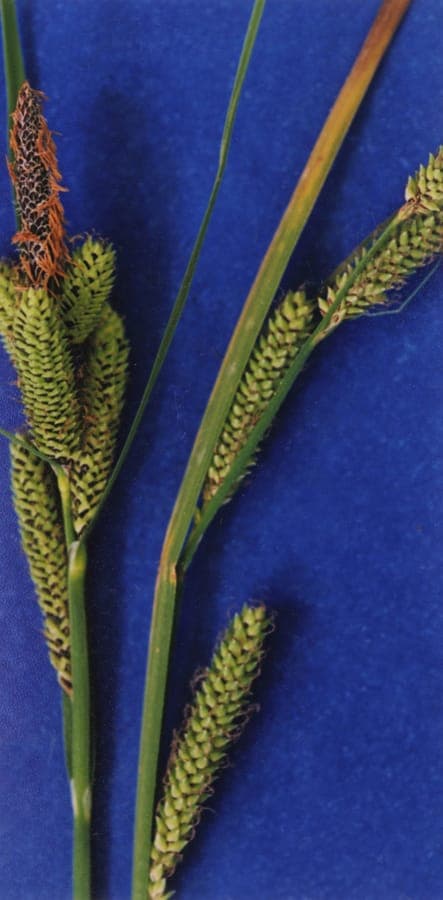
Hurd, E.G., N.L. Shaw, J. Mastrogiuseppe, L.C. Smithman, and S. Goodrich. 1998. Field guide to Intermountain sedges. General Technical Report RMS-GTR-10. USDA Forest Service, RMRS, Ogden. Courtesy of USDA FS RMRS Boise Aquatic Sciences Lab. / Public domain, via Wikimedia Commons
Lakeshore sedge: complete guide
Carex lenticularis
Want to see Lakeshore sedge: complete guide in your garden?
1 minute, no credit card
Overview
Carex lenticularis, commonly known as Lakeshore sedge or Lenticular sedge, is a remarkable grass-like plant whose name derives from the lens-shaped form of its distinctive seed capsules. This hardy perennial belongs to the Cyperaceae family and naturally occurs throughout cold regions of North America, from Arctic zones down to New England and the Appalachian Mountains.
This sedge is a favorite among landscape designers seeking durable, moisture-loving plants that require minimal intervention. It offers a fine-textured silhouette and soft tan-to-brown-green foliage that remains visually interesting throughout the year. With typical heights around 30-45 centimeters, it forms compact, rounded clumps ideal for small to medium gardens.
Appearance & Bloom
Lakeshore sedge grows in dense clumps with thin, stiff leaves that provide finer texture than many turf grasses. Foliage shifts from fresh green in spring to golden-brown tones in autumn. The flowers are discrete, pollen-producing spores arranged along the stem in interesting brownish tones.
The seed capsules are truly characteristic: distinctly lens-shaped and flattened, botanically distinguishing this species. They cluster thickly along the stem and persist well into winter, adding interest beyond October.
Ideal Location
This sedge thrives in full sun to partial shade (4-6+ hours daily direct light). While moisture-loving, it dislikes waterlogging without oxygen for extended periods. Ideally, plant it along water edges, in bog gardens, or in specialized rain garden installations that cycle between wet and dry phases.
In deep shade, growth becomes sparse and color less vibrant. In southern, very hot gardens, afternoon shade may be beneficial, as this plant has cold-origin genetics.
Soil
Carex lenticularis prefers wet, nutrient-rich soils with abundant organic matter. Unlike many ornamental grasses, these sedges cannot tolerate dry conditions. They thrive in consistently moist soil, even periodically flooded ground.
Amend heavily with compost or rotted leaf mold at planting. A pH between 6.0-7.5 is ideal. In very heavy clay, mix in sand or perlite for improved water movement and root aeration.
Free design
Want to see Lakeshore sedge: complete guide in your garden? Make a free design now.
Watering
During the first year after planting, water regularly to encourage deep rooting. Once established (after 1-2 seasons), increase watering to twice weekly depending on rainfall and soil type.
In their natural lakeside and streambank habitat, soil remains practically moist all year. They tolerate drought periods less well than many ornamental grasses. In dry summers, apply supplemental water.
Pruning
Carex lenticularis requires minimal pruning compared to other ornamental species. In early spring (March-April), cut back last year's growth to 5-10 centimeters above ground before new growth emerges. This removes dead tissue and promotes more compact growth.
Perform pruning with hand shears or a sickle, not power equipment (which can damage leaf tips).
Maintenance Calendar
March-April: Spring pruning of prior year growth; apply slow-release fertilizer. May-June: Monitor vigorous growth; fill in bare spots. July-August: Check moisture levels; add water during dry spells. September-October: Enjoy golden-brown autumn color; begin leaf litter management. November-February: Winter dormancy; no special attention needed.
Winter Hardiness
Carex lenticularis is extremely cold-hardy, suitable for USDA zones 3-9 (even zone 2 in sheltered sites). This makes it frost-tolerant and suitable for Northern European climates including the Netherlands, Belgium, and northern France.
Companion Plants
Plants that pair beautifully with Lakeshore sedge:
- Astilbe: share wet soil preferences with feathery summer blooms
- Primula: yellow, pink, and white tones contrast against sedge clumps
- Hosta: larger leaf texture contrasts fine sedge foliage
- Helleborus: early spring bloomers with dark evergreen foliage
Closing Thoughts
Carex lenticularis deserves a spot in every moisture-loving garden. With low maintenance needs and year-round visual interest, it offers both decorative value and ecological benefits. Available at major garden retailers. For more landscape inspiration, visit gardenworld.app.
Recognize Lakeshore sedge for its deep moisture tolerance and golden autumn beauty. With proper placement, you'll enjoy years of interest from this undemanding grass. Share your sedge experiences at gardenworld.app.
Want to see Lakeshore sedge: complete guide in your garden? Make a free design now.
Upload a photo, pick a style, and get a photorealistic design with plant list in under a minute.
No credit card required


Similar plants
Large-head sedge: complete guide
Carex macrocephala
Discover Carex macrocephala with its striking large seed heads. Perfect for borders, low maintenance, evergreen appeal.
Gray's sedge: complete guide
Carex grayi
Everything you need to know about growing and caring for Carex grayi, a hardy ornamental sedge perfect for moist garden areas.
Carex plantaginea: complete guide
Carex plantaginea
Plantainleaf sedge - an elegant ornamental grass for shaded gardens. Discover growing guide, location, maintenance, and winter hardiness information.