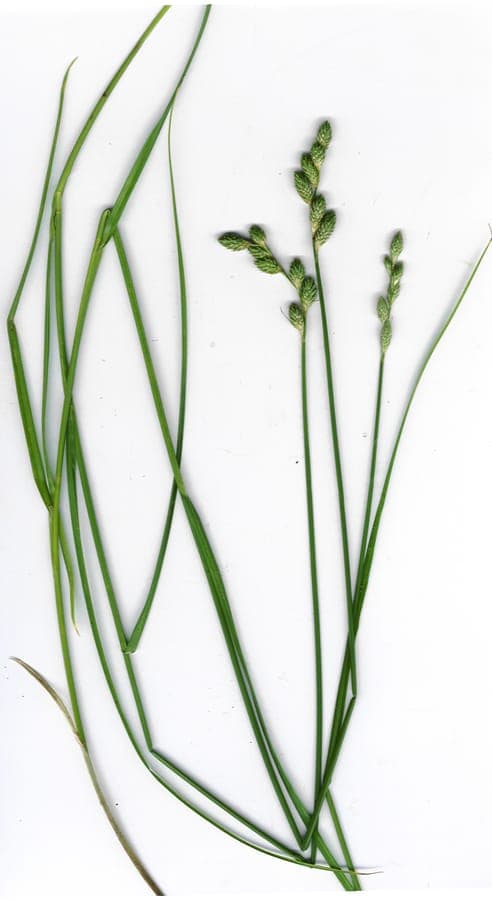
Forest & Kim Starr / CC BY 3.0, via Wikimedia Commons
Long's sedge: complete guide
Carex longii
Want to see Long's sedge: complete guide in your garden?
Full design in HD: €7.99
Look after your Long's sedge with the GardenWorld app
Identify plants with your camera and get a care calendar with reminders for this plant.


Long's sedge (Carex longii) is a striking and decorative sedge native to eastern North America, extending south to Venezuela. This sedge is renowned for its unique green-and-white foliage variegation, which distinguishes it from many other sedge species.
This sedge is perfect for those seeking a sedge with enhanced decorative value. The green-and-white leaf pattern makes it a real eye-catcher in the garden. Long's sedge is also known by other common names including "green-and-white sedge" and "round-shouldered oval sedge".
Carex longii grows in tufts and exhibits relatively low-maintenance growth. The plant tolerates both moist and slightly drier conditions, although it performs best in moisture-rich soils.
The sedge is fully winter hardy and can overwinter outdoors without protection in temperate to warm climates of Europe. The plant is ideal for marshes, water features, and other wet gardens.
Appearance and Leaf Color Long's sedge reaches heights of 30-60 cm. The most distinctive feature is its green-and-white leaf pattern. The foliage can range from pure green tones to mixed green-and-white patterns, giving the plant a highly decorative appearance.
Ideal Location The plant grows best in moisture-rich to wet soils, along water margins, in marshes, or depressions. Long's sedge can grow in full sun to partial shade, although full sun usually provides better leaf coloring.
Soil The plant tolerates a wide range of soils, including sandy, clay, and peat-rich soils. Ensure the soil retains moisture without becoming completely waterlogged.
Watering Regular watering is essential, especially during the growing season. Ensure the soil remains consistently moist. During rainy periods, supplemental watering may be reduced.
Pruning and Maintenance The plant requires minimal pruning. Remove dead foliage in early spring. Manually removing dead material helps keep the plant healthy.
Maintenance Calendar Spring: Growing season begins, water well Summer: Regular watering required Autumn: Remove dead material Winter: Winter dormancy, minimal maintenance
Winter Hardiness The plant is winter hardy to USDA zone 5 (down to approximately -25 degrees Celsius), meaning it can safely overwinter in many parts of Europe.
Companion Plants Long's sedge pairs well with:
- Marsh irises
- Other sedge species
- Water herbs
- Wetland vegetation
Closing Remarks Long's sedge is an excellent choice for those seeking a sedge with decorative foliage coloration. With its unique green-and-white pattern and strong winter hardiness, this plant remains attractive for years. Available at garden centers. Discover more plant guides at gardenworld.app.

See it in your garden
See Long's sedge in your garden
One photo of your garden and a few questions. You see the result in about a minute.
Try it with a photoIdentify this plant in your own garden. Identify a plant
Similar plants
Carex conica: a small evergreen sedge for edges
Carex conica
Carex conica is a compact evergreen sedge from Japan and Korea. A guide to 'Snowline', where to plant it, soil, tidying, dividing and how hardy it really is.
Carex oshimensis: the evergreen striped sedge
Carex oshimensis
Carex oshimensis is an evergreen Japanese sedge with fine, striped leaves. How to plant, place, tidy and divide 'Evergold' and the EverColor series in your garden.
Orange New Zealand sedge (Carex testacea): a guide
Carex testacea
Orange New Zealand sedge (Carex testacea) turns copper and orange in sun and cold. Where to plant it, which soil it likes, how to tidy it and how hardy it is.
