
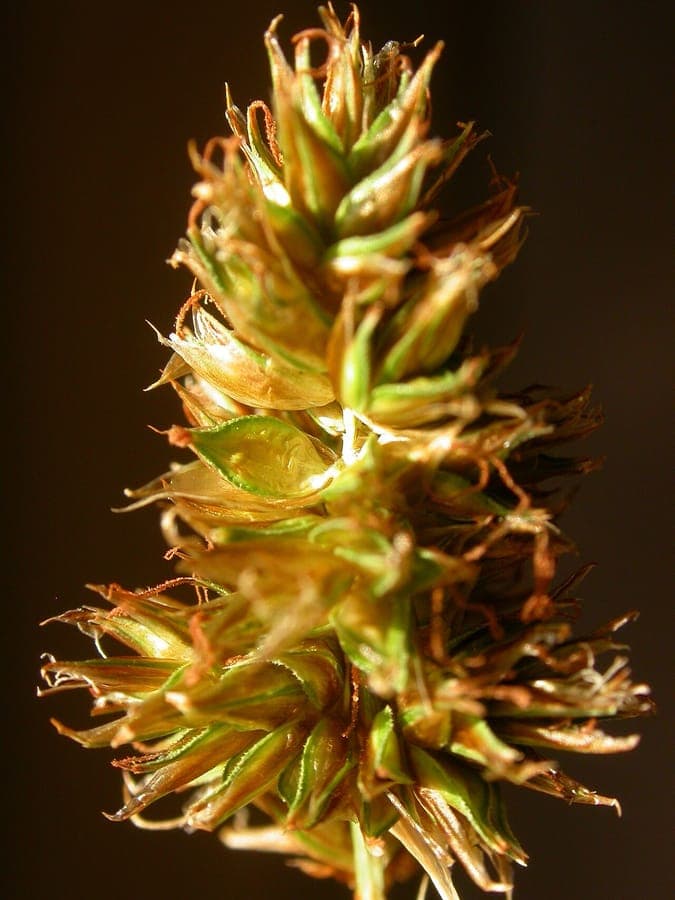
Matt Lavin / CC BY-SA 2.0, via Wikimedia Commons
Hood's sedge: complete guide
Carex hoodii
Want to see Hood's sedge: complete guide in your garden?
1 minute, no credit card
Overview
Hood's sedge (Carex hoodii) is a slim, elegantly growing ornamental grass from the Cyperaceae family. This resilient garden plant thrives in mountain regions of North America and proves itself reliable in dry, well-draining soils within landscape designs. On GardenWorld, we feature Hood's sedge regularly for garden designs in cooler zones where drought stress is common.
Appearance and bloom
Hood's sedge grows in a compact, upright growth pattern with fine, gray-green needle-like foliage. The plant forms neat, dense clumps that offer quiet structure even in minimalist garden designs. During the growing season, the plant produces inconspicuous, brownish sedge flowers, but these are not spectacular - Hood's sedge's value lies in its elegant form and hardy traits.
Ideal location
Hood's sedge thrives in full sun to light half-shade. Plant it on sunny mountain slopes, in dry rock gardens, or as an edge and transition element in drought-prone zones. The plant tolerates shade moderately, so do not place it in deep shade under deciduous trees. GardenWorld designs benefit from Hood's sedge on high-pressure drainage locations where water does not stagnate.
Soil
Hood's sedge soil requirements are modest. This plant grows best in well-draining, slightly acidic to neutral soils. Heavy clay or waterlogged soil leads to root rot - avoid this. Add sand, gravel, and organic material to heavy soils. Carex hoodii tolerates poor, stony, or even impoverished soils much better than expected, making it ideal for quiet, low-maintenance garden plans.
Watering
Once established, Hood's sedge is very drought-tolerant. During the first growing season, water regularly to establish root systems. After that, water minimally - this plant rarely needs supplementary moisture in temperate climates unless extreme drought strikes. In stony, fast-draining locations, additional water is rarely needed. Avoid stagnation: too much moisture harms this plant seriously.
Free design
Want to see Hood's sedge: complete guide in your garden? Make a free design now.
Pruning
Hood's sedge requires minimal pruning. Remove dead or damaged foliage early in the growing season. Neat pruning can keep the clump tidy, but be careful - overly aggressive pruning disrupts the natural form. Many gardeners advise leaving Carex hoodii completely untouched, because the plant naturally sheds dead foliage and maintains a natural outline.
Maintenance calendar
Spring: Remove winter damage, add compost around root base. Summer: Check water supply only during extreme drought. Fall: No pruning needed - leave dead foliage for protection. Winter: Hood's sedge is winter-hardy in most areas; no special protection required.
Winter hardiness
Hood's sedge is highly winter-hardy and grows naturally in Alpine and subarctic zones of North America. This plant tolerates temperatures below -25 degrees Celsius without any problem. In Europe and the Netherlands, Hood's sedge thrives during very cold winters without damage. This makes the plant ideal for mountain gardens and high-alpine landscapes.
Companion plants
Hood's sedge combines beautifully with other alpine ornamental grasses such as Festuca glauca, Stipa tenuissima, and Bouteloua gracilis. Add saxifrages, sedums, and alpine flowering perennials for contrast and color. In GardenWorld designs, we often pair Carex hoodii with rocks, stones, and gravel for authentic alpine landscape styling.
Closing
Hood's sedge is an underestimated gem for gardeners managing drought stress and mountain conditions. As an ornamental grass, it offers elegant form, winter hardiness, and minimal maintenance. On GardenWorld, this plant is a highlight in modern, sustainable garden designs for cool, dry zones.
Want to see Hood's sedge: complete guide in your garden? Make a free design now.
Upload a photo, pick a style, and get a photorealistic design with plant list in under a minute.
No credit card required


Similar plants
Flat-stemmed club-rush: complete guide
Bolboschoenus planiculmis
Everything about Bolboschoenus planiculmis: growing conditions, watering, care, and use as a pond margin or wetland plant in garden design.
Great Plains flatsedge: complete guide
Cyperus lupulinus
Everything about Great Plains flatsedge (Cyperus lupulinus): growing conditions, care, garden uses, and ecological value. Tips for pond margins and dry sandy soils.
Golden beak sedge: complete guide
Rhynchospora corymbosa
Everything about golden beak sedge (Rhynchospora corymbosa): a dramatic tropical marginal for pond edges, bog gardens, and wet habitats.