
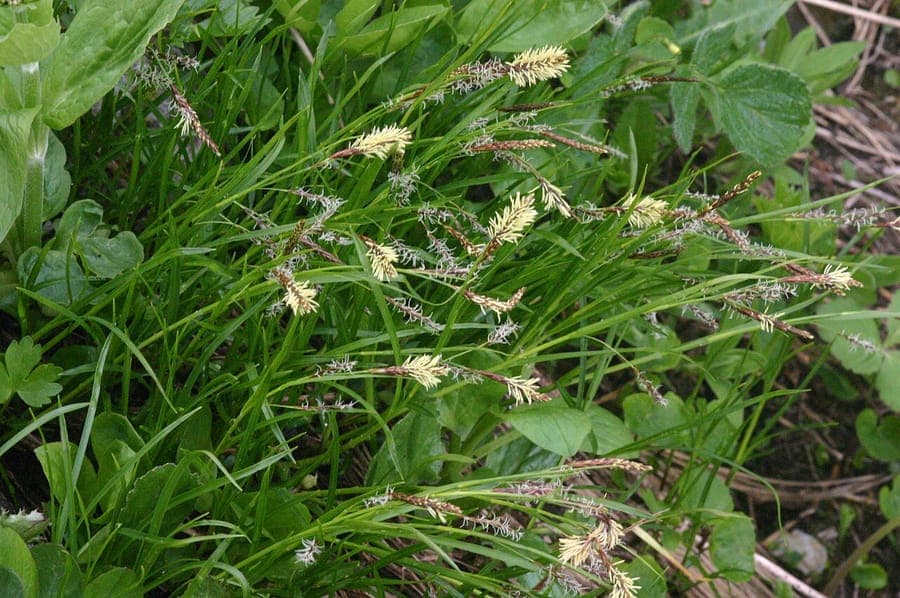
HermannSchachner / CC0, via Wikimedia Commons
Rust-coloured sedge: complete guide
Carex ferruginea
Want to see Rust-coloured sedge: complete guide in your garden?
1 minute, no credit card
Overview
Rust-coloured sedge (Carex ferruginea) is an elegant alpine sedge native to the Alps and Balkan Mountains. This evergreen perennial is prized for its distinctive rusty-brown foliage that remains ornamental throughout the year. It's an excellent choice for alpine gardens, rocky sites, and shaded locations. At gardenworld.app, designers can incorporate this plant into alpine garden designs.
Appearance and bloom cycle
Rust-coloured sedge forms compact tufts of narrow, stiff foliage reaching 20-30 cm in height. The leaves remain green through winter and develop beautiful rusty-brown tones in spring and summer. The inflorescences are typical of sedges: small greyish-brown spikes that appear from May through July. This plant holds its shape exceptionally well and slowly develops dense clumps.
Ideal location
This sedge thrives best on alpine meadows, rocky outcrops, and slopes. It prefers partial shade to full shade, especially in warmer regions. In the Netherlands and Belgium, full sun is tolerable, though afternoon shade is appreciated. Plant in locations with excellent drainage.
Soil requirements
Rust-coloured sedge grows optimally in well-draining, stony or gravelly soil with moderate moisture. Sedges despise waterlogging and stagnation. A slight preference for acidic soil (pH 5.5-6.5) is noted. Mixing with sand and gravel significantly improves drainage.
Free design
Want to see Rust-coloured sedge: complete guide in your garden? Make a free design now.
Watering
Water regularly after planting until the plant is established (first 6-8 weeks). Once established, this sedge is drought-tolerant. Misting during dry spells can benefit growth, especially on acidic soils.
Pruning
Minimal pruning needed. Old, damaged leaves can be removed in spring to encourage fresh growth. Dead foliage can be combed out.
Maintenance calendar
- March-April: Clean out old foliage, optionally divide clumps
- May-July: Flowering period, monitor moisture levels regularly
- August-October: Active growth, especially vigorous in cooler regions
- November-February: Dormancy, minimal maintenance
Winter hardiness
Rust-coloured sedge is extremely hardy to USDA zone 4 (-30°C). Perfect for Dutch and Belgian winters. Foliage often remains semi-evergreen, particularly in milder climates.
Companion plants
Pairs well with other alpine plants including:
- Humus-rich saxifrages (Saxifraga species)
- Sedges with contrasting colours (Carex species)
- Small rocks and outcrops
- Alpine asters
- Heathers and heaths
Closing
Rust-coloured sedge is a reliable choice for alpine gardens and rocky sites. Its compact form, colour, and hardiness make it invaluable. At gardenworld.app, gardeners can integrate this plant into layered alpine landscapes. Available at garden centres across Britain.
Growing information
Perfect for containers, alpine troughs, and underplanting pergolas. Excellent for elevated garden sections.
Want to see Rust-coloured sedge: complete guide in your garden? Make a free design now.
Upload a photo, pick a style, and get a photorealistic design with plant list in under a minute.
No credit card required


Similar plants
Flat-stemmed club-rush: complete guide
Bolboschoenus planiculmis
Everything about Bolboschoenus planiculmis: growing conditions, watering, care, and use as a pond margin or wetland plant in garden design.
Great Plains flatsedge: complete guide
Cyperus lupulinus
Everything about Great Plains flatsedge (Cyperus lupulinus): growing conditions, care, garden uses, and ecological value. Tips for pond margins and dry sandy soils.
Golden beak sedge: complete guide
Rhynchospora corymbosa
Everything about golden beak sedge (Rhynchospora corymbosa): a dramatic tropical marginal for pond edges, bog gardens, and wet habitats.