
Matt Berger / CC BY 4.0, via Wikimedia Commons
Carex breweri: complete guide
Carex breweri
Want to see Carex breweri: complete guide in your garden?
1 minute, no credit card
Overview
Carex breweri, better known as Brewer's sedge, is a compact sedge species from the mountainous regions of California, Nevada, Oregon, and Washington on the American West Coast. It is a member of the Cyperaceae family (sedges) and is known for its elegant, fine-textured growth habit and robust nature.
Brewer's sedge is ideal for those wanting structural elements in an alpine or rock garden. It forms compact, beautifully articulated grass cushions that persist throughout the season. This is not a showy grass, but a subtle, elegant player in the garden landscape.
On gardenworld.app, we help you integrate this interesting sedge into your design. It grows well in well-drained, acidic to neutral soils with good light. With careful watering and patience, you will enjoy years of her elegant appearance.
Appearance & bloom
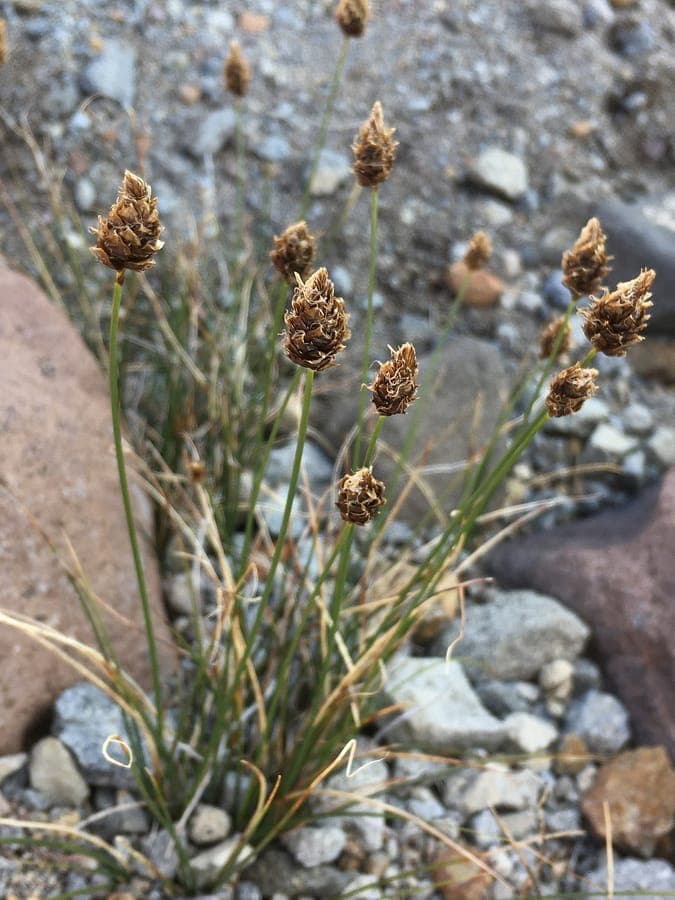
Carex breweri grows as a compact, low-growing sedge, usually no taller than 15-30 centimetres. It forms dense, beautifully structured grass cushions with very fine foliage. The leaves are relatively narrow, dark green, and have an elegant, almost refined structure.
The bloom is inconspicuous - sedges are wind-pollinated and have no spectacular flowers. Instead, the plant forms seeds in small, inconspicuous spikes in spring and summer. This does not detract from the plant's style: its true beauty lies in the volumetric structure of the plant.
The plant retains its green color year-round in temperate climates. In cold winters, the leaves may shift slightly toward a purplish or brownish-green tint, which adds decorative value. This persistent foliage makes it valuable for winter garden design.
Ideal location
Carex breweri prefers full sun to light shade. In warm regions, some afternoon shade will be beneficial. In cooler mountain climates, it grows excellently in full sun. Avoid deep shade, where it will suffer.
The plant is robust against wind and can hold its own in mountain, exposed locations. This makes it ideal for rock gardens on windy hilltops. It grows well in raised beds, alpine troughs, and among rocks.
This plant does not grow well in wet, low-lying areas. Choose a dry to dry-normal location. Even in very arid climates, it grows well as long as you apply some water during growing seasons.
Soil
Carex breweri grows in diverse soil types but prefers acidic to neutral soils (pH 5.0-6.5). It grows well in gravel-rich, mineral-rich soils. An ideal mix is 50% gravel/sand/small stones, 40% garden soil, and 10% compost.
Good drainage is absolutely essential. In heavy, clay soils, it will not form a good root system. Add gravel and sand to improve drainage. In very wet locations, work with raised beds.
The plant is not very picky about nutrition, as long as the soil is not pure sand. A light compost application once per year suffices. Heavy feeding is not needed and can even stimulate unhealthy growth patterns.
Free design
Want to see Carex breweri: complete guide in your garden? Make a free design now.
Watering
Carex breweri tolerates drought reasonably well once established. During the growing season (spring and summer), water regularly so the soil remains somewhat moist but not waterlogged. Once well established, it tolerates dry periods.
After bloom and in autumn, you can reduce watering. In winter, minimal water is appropriate, especially in wet climates. In very dry regions, some winter watering prevents the plant from completely drying out.
For potted plants: place a saucer beneath for drainage. Regularly check that the soil does not completely dry out, but is also not waterlogged.
Pruning
Carex breweri does not require intensive pruning. In spring, dead foliage and dead growth can be gently removed. This can be done with a fine rake-comb to remove dead material from the heart of the plant.
No active "flower removal" is needed because sedges have no showy flowers. The plant maintains a compact form automatically.
If the plant becomes unattractive after many years (which is rare), you can cut it back hard. It usually recovers well and forms fresh growth.
Maintenance calendar
March-April: Begin watering; check for dead foliage; light grooming with rake comb.
May-June: Growing period; water regularly; monitor for self-seeding.
July-August: Reduce water as rain season begins; monitor for insects.
September-October: Gradually reduce water; general cleanup of dead foliage.
November-February: Minimal water; possible winter protection in very windy areas.
Winter hardiness
Carex breweri is very winterhardy and tolerates frost to -15 to -20 degrees Celsius without problems. In her homeland in the American mountains, she must endure much harsher conditions. This makes her ideal for North and Central Europe.
The plant sometimes loses foliage in very heavy winters, but recovery in spring is normal. Ensure the plant is not waterlogged in winter - this is much more damaging than frost.
In very windy, exposed mountain tops where snow does not remain, this plant can thrive.
Companion plants
Carex breweri combines nicely with other mountain bloomers and sedges. Try it together with other fine-leaved sedges (Carex oshimensis, Carex flacca) and small alpine shrubs (Dryas octopetala, Silene acaulis).
Support with contrasting texture: Phlox subulata, Gypsophila repens for foliage color contrast. Rock gardens with Sedum and Sempervivum species combined with Carex also form beautiful combinations.
Avoid fast-growing, dominant grasses that will overshadow her. Plant in groups of 3-5 specimens for effect.
Closing
Carex breweri is a fine, subtle structural plant for alpine and rock gardens. Its compact growth, elegant leaf form, and winter hardiness make it valuable for those seeking refined garden design. With well-drained soil and regular water during the growing season, it will be a quiet, elegant presence for years.
You can find this plant at nurseries specializing in alpine and mountain plants. On gardenworld.app, we help you integrate sedges and fine-leaved grasses into your front yard. Brewer's sedge is perfect for those wanting subtle structure without showiness.
Want to see Carex breweri: complete guide in your garden? Make a free design now.
Upload a photo, pick a style, and get a photorealistic design with plant list in under a minute.
10,000+ gardens designed already
No credit card required


Similar plants
Flat-stemmed club-rush: complete guide
Bolboschoenus planiculmis
Everything about Bolboschoenus planiculmis: growing conditions, watering, care, and use as a pond margin or wetland plant in garden design.
Great Plains flatsedge: complete guide
Cyperus lupulinus
Everything about Great Plains flatsedge (Cyperus lupulinus): growing conditions, care, garden uses, and ecological value. Tips for pond margins and dry sandy soils.
Golden beak sedge: complete guide
Rhynchospora corymbosa
Everything about golden beak sedge (Rhynchospora corymbosa): a dramatic tropical marginal for pond edges, bog gardens, and wet habitats.