
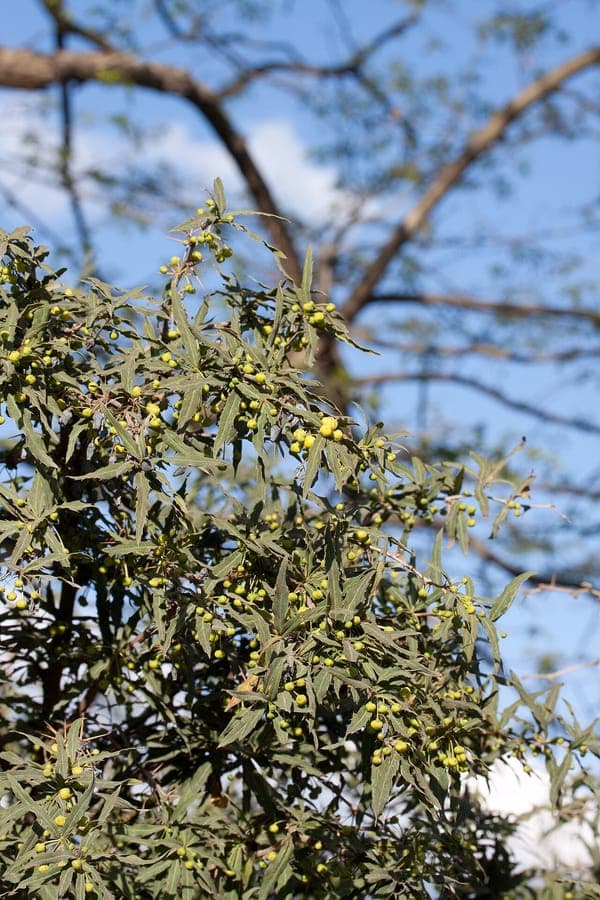
Denis.prévôt / CC BY-SA 3.0, via Wikimedia Commons
Berberis gagnepainii: complete guide
Berberis gagnepainii
Want to see Berberis gagnepainii: complete guide in your garden?
1 minute, no credit card
Overview
Berberis gagnepainii, commonly known as Gagnepain's barberry, is a fascinating thorny shrub from the Berberidaceae family. Native to China, specifically Sichuan Province, this distinctive plant features narrow, needle-like foliage and scarlet fruits. It is particularly suited for defensive planting and Japanese garden concepts.
Growing to approximately 1 to 2 meters in height, Berberis gagnepainii forms a dense, compact silhouette. The characteristic spines along the stems make it extremely suitable as a defensive plant along boundaries. Simultaneously, its refined texture is highly decorative.
Appearance and bloom
Berberis gagnepainii is distinguished by its narrow, linear foliage that appears almost coniferous. These leaves are green during the growing season and may take on bronze to red coloration during winter, depending on frost intensity. The stems are covered with long, sharp thorns that deter many people.
The blooming period occurs in May through June, with small, yellow flowers appearing in clusters. These flowers are not particularly showy but attract bees. After blooming, characteristic scarlet fruits appear which are highly decorative and attract numerous birds.
Ideal location
Berberis gagnepainii thrives in sunny to partially shaded locations. The plant grows well in full sun and with minimum four hours of direct sunlight daily. In deep shade, the plant may grow sparsely and bear fewer flowers.
Plant it in sheltered corners or along boundary lines where its defensive properties provide benefit. The plant is extremely wind and salt tolerant, making it perfect for coastal gardens. It also tolerates air pollution well.
Soil requirements
Berberis gagnepainii grows in virtually all soil types and is not fussy. It prefers well-draining soil but thrives in sandy, clayey, or stony soil. The plant is extremely tolerant of poor soil and actually performs better in lean conditions than in very rich soil.
Soil pH should be neutral to slightly acidic, between 6.0 and 7.5. This plant is particularly drought-tolerant once established, making it ideal for water-conscious gardens.
Free design
Want to see Berberis gagnepainii: complete guide in your garden? Make a free design now.
Watering
Once established, Berberis gagnepainii tolerates drought well. During the first year, water regularly until the plant is well-rooted. After the first year, the plant can survive with minimal supplemental watering.
During very dry summers, occasional watering may be necessary, but this is usually not needed. Excessive watering can lead to disease, so be cautious with water application.
Pruning
Berberis gagnepainii can be lightly pruned in spring to maintain form. The thorns make pruning physically challenging, so you will probably want thick gloves and protective clothing. Remove dead or damaged branches in spring.
The plant is extremely tolerant of pruning and can be cut back severely without harm. This is best done in early spring, around March or April.
Maintenance calendar
The maintenance calendar for Berberis gagnepainii is very simple:
March-April: Prune for form, remove dead branches. May-June: Bloom period, minimal maintenance. July-August: Plant grows, fruit set. September-October: Fruits ripen, bird food. November-February: Winter dormancy, no maintenance.
Winter hardiness
Berberis gagnepainii is extremely winter hardy, tolerating temperatures down to -25 degrees Celsius. This makes it suitable for nearly all Dutch and German climate zones. The plant does not lose all its foliage in winter, though leaves may turn red during frost.
In France and Belgium, the plant grows without difficulty. No special winter protection is required.
Companion plants
Berberis gagnepainii combines well with other defensive plants and structural planting. Plant it with other Berberis species or with thorny shrubs like Ilex for a strong defensive boundary.
In Japanese gardens, it combines beautifully with Acer trees, moss, and stone. For modern designs, plant it as a standing accent next to grey-foliaged plants. Its scarlet fruits provide contrast with dark-green conifers.
Closing
Berberis gagnepainii is a fascinating shrub that is both practical and decorative. Its thorns, narrow foliage, and scarlet fruits make it a unique plant choice. Purchase your specimens from reputable garden centres and consult gardenworld.app for more design tips. This plant demands minimal maintenance while offering maximum visual and practical benefit. Combine it with other winter-decorative planting for a year-round interesting front garden.
For more information about defensive planting and garden design, visit gardenworld.app.
Want to see Berberis gagnepainii: complete guide in your garden? Make a free design now.
Upload a photo, pick a style, and get a photorealistic design with plant list in under a minute.
No credit card required


Similar plants
Heavenly bamboo: complete guide
Nandina domestica
Everything about heavenly bamboo (Nandina domestica): planting, pruning, hardiness, and colour impact. Note: berries are toxic to birds and pets.
Colorado barberry: complete guide
Berberis fendleri
Everything about Berberis fendleri, the Colorado barberry with yellow flowers and red berries. Perfect as a thorny hedge or specimen shrub in dry gardens.
Jeffersonia diphylla: complete guide
Jeffersonia diphylla
Discover Twinleaf, a charming woodland plant from North America. White flowers, unique foliage, perfect for shady borders.