
Patrick Alexander / CC0, via Wikimedia Commons
Colorado barberry: complete guide
Berberis fendleri
Want to see Colorado barberry: complete guide in your garden?
1 minute, no credit card
Overview
Berberis fendleri, commonly known as Colorado barberry or Fendler's barberry, is a tough, spiny deciduous shrub native to the semi-arid mountain regions of Colorado, Utah, and New Mexico. First described by the botanist Asa Gray in 1849, this plant also goes by the synonym Mahonia fendleri. As a member of the barberry family (Berberidaceae), it displays all the hallmarks of the genus: fine, prickly leaves, bright yellow flowers and vivid red berries that draw birds to the garden. For gardeners seeking a low-maintenance, drought-resilient plant that offers ornamental interest across all four seasons, Colorado barberry is an outstanding choice. At gardenworld.app you can explore how this tough shrub can transform a challenging dry border or front garden.
Appearance and bloom cycle
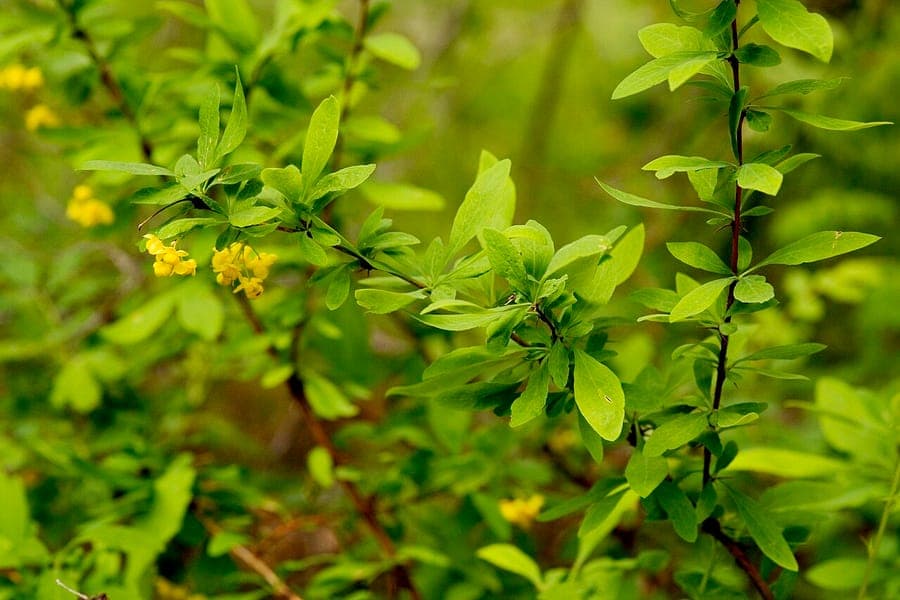
Colorado barberry is a multi-stemmed shrub with a naturally slow growth rate. Its branches are armed with sharp, three-pronged spines that provide year-round structure and deter browsing animals. The leaves are fine-textured and deep green through the growing season, turning to fiery orange-red and burgundy before leaf drop in autumn. Flowering occurs in spring, typically from April through May, when tight clusters of small, brilliant yellow blooms open along the branches. These flowers have a faint honey-like scent and are readily visited by early pollinators, particularly bees. After the flowers fade, small oval berries develop, starting green and ripening to a striking scarlet red by mid-summer. The berries often persist into winter and are an important food source for thrushes, robins, and other berry-eating birds. Mature plants typically reach 60 to 150 cm in height, depending on site conditions and soil quality.
Ideal location
As a native of the open slopes and woodland margins of the Rocky Mountain foothills, Berberis fendleri performs best in full sun to light partial shade. In its natural range it grows at elevations of 1,500 to 2,800 metres on rocky, well-drained slopes. In the garden it thrives in sunny, open positions sheltered from constant strong winds. It is a standout plant for dry, rocky borders, gravel gardens, and xeriscaping schemes where low water use is a priority. It also works well as understory planting beneath open-canopied trees. As a boundary or security hedge, its fierce spines are as functional as they are ornamental. Allow adequate space for the plant to develop its characteristic multi-stemmed silhouette; crowded conditions lead to poor air circulation and increased disease risk.
Soil
One of the great practical virtues of Colorado barberry is its tolerance of difficult soils. It thrives in well-drained ground ranging from mildly acidic to moderately alkaline, with a pH of 6.0 to 8.5. Rocky, stony, or lean loam soils that would frustrate many ornamental shrubs are perfectly acceptable to this species. The one condition it will not tolerate is waterlogged, poorly drained clay. Standing water around the roots leads to root rot and rapid decline. On heavier soils, improve drainage by incorporating coarse grit or perlite into the planting hole. Fertile, nutrient-rich soils are unnecessary and can actually be counterproductive, producing lax, vigorous growth with fewer spines and less winter hardiness. Lean soil encourages the compact, dense habit that makes this plant so attractive as a specimen or hedge plant.
Watering
Once established, Colorado barberry is one of the most drought-tolerant shrubs you can plant in a temperate garden. In its native American Southwest, it survives on natural precipitation alone, thanks to a deep, wide-ranging root system. During the first growing season after planting, regular watering is essential to help the roots become established. Water thoroughly once a week, allowing the soil to dry out completely between sessions. From the second year onwards, rainfall is generally sufficient in a temperate climate, with supplemental watering needed only during extended dry spells of more than two weeks. When you do water, do so deeply and early in the morning. Excessive irrigation and constantly moist soil are the quickest routes to root rot and leaf drop - this is firmly a plant that prefers too little water to too much.
Free design
Want to see Colorado barberry: complete guide in your garden? Make a free design now.
Pruning
Colorado barberry requires minimal pruning and largely takes care of itself when given an appropriate site. The best time for any pruning work is in early spring, before new leaves emerge - working around the spines is also easier and safer at this time of year. Remove any dead, damaged, or crossing branches cleanly at the base. On mature, dense shrubs, rejuvenation pruning can be very effective: cut one-third of the oldest, thickest stems right to the ground. This encourages vigorous new growth from the base and keeps the shrub open and productive without destroying its characteristic spiny form. Always use strong bypass secateurs and thick leather gloves - the three-pronged spines are genuinely sharp. A light annual tidy-up in early spring is all most plants need. Heavy pruning after flowering will reduce berry production, as the fruits form on the same wood that flowered.
Maintenance calendar
January-February: inspect for winter damage; mark dead wood for removal. March: prune out dead and old stems; apply a thin mulch of garden compost around the base if desired. April-May: enjoy the golden yellow flowers; water if the spring is dry. June-August: berries developing; water during dry spells exceeding two weeks; remove any overly vigorous shoots that disrupt the shape. September-October: berries ripen to brilliant red; autumn leaf colour develops; birds begin visiting for the fruit. November-December: plant dormant; apply a light mulch around the root zone in the first winter of establishment. Visit gardenworld.app to see how Berberis fendleri works in a full front garden design with complementary planting schemes.
Winter hardiness
Berberis fendleri is a genuinely cold-hardy shrub well adapted to severe winters. In its Rocky Mountain habitat it endures temperatures well below freezing, sometimes reaching -25 degrees Celsius or lower. In terms of USDA hardiness zones it is rated for zones 4 to 8, making it suitable for most of northwestern Europe without any special protection. Some leaf drop may occur in the coldest spells but the woody framework survives without issue. Young plants in their first winter benefit from a light mulch of straw or fallen leaves around the root zone. Established plants need no protection in a typical temperate winter and will emerge reliably each spring with fresh new growth.
Companion plants
Colorado barberry pairs beautifully with other drought-tolerant plants. Lavender (Lavandula angustifolia) and sage (Salvia officinalis) share the same preference for sunny, dry conditions, and their purple flowers create a striking contrast with the yellow blooms and red berries of the barberry. Blue fescue (Festuca glauca) and Mexican feather grass (Stipa tenuissima) add movement and a naturalistic feel to the planting. Cotoneaster horizontalis is a good low-level companion with similar red autumn berries. Ornamental alliums and low-growing sedums fill the gaps without competing aggressively for moisture. Avoid moisture-demanding plants such as hostas, astilbes, or large hydrangeas in the same border, as their watering needs are incompatible with those of this drought-adapted shrub. At local garden centres you can often find complementary drought-tolerant companions to complete the picture.
Disease resistance and wildlife value
Beyond its cold hardiness, Berberis fendleri is notably resistant to most common garden pests and diseases. Its dense, spiny structure deters deer, rabbits, and other browsing animals. Aphids may appear in spring but typically disappear as natural predators move in and temperatures rise. Berberis species can serve as an alternate host for wheat stem rust (Puccinia graminis), a concern in agricultural areas where winter wheat is grown. In such regions local regulations may restrict the planting of barberries - check with your local authority if you are in doubt. In ordinary garden settings this is rarely an issue, and the wildlife value of the berries and flowers more than compensates for any theoretical risk.
Closing
Fendler's barberry is a plant that earns its place in any garden through sheer versatility and low demands. Yellow spring flowers, scarlet summer berries, fiery autumn colour, and a spiny winter silhouette make it a four-season performer of the highest order. Its drought tolerance, resilience, and wildlife value make it an excellent choice for the modern, sustainable garden. Head over to gardenworld.app to see how Colorado barberry can be incorporated into a complete front garden redesign, paired with the right companions for maximum impact across the seasons. Look for it in the hardy shrub sections of garden centres when planning your next border.
Want to see Colorado barberry: complete guide in your garden? Make a free design now.
Upload a photo, pick a style, and get a photorealistic design with plant list in under a minute.
10,000+ gardens designed already
No credit card required


Similar plants
Thunberg's barberry: complete guide
Berberis thunbergii
Everything you need to know about Thunberg's barberry: planting, care, pruning, and ideal garden uses. Hardy, low-maintenance shrub with vibrant autumn colour.
Mahonia aquifolium: complete gids
Mahonia aquifolium
Leer alles over mahonia aquifolium, een veelzijdige struik met glanzende bladeren en gele bloemen. Perfecte keuze voor haagwerk en borders.
Rock cotoneaster: complete guide
Cotoneaster horizontalis
A full guide to Cotoneaster horizontalis: ideal conditions, care, soil needs and companion planting. Perfect for rockeries and low hedges.