
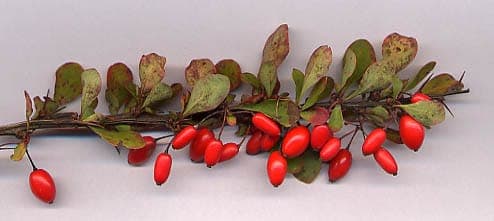
User:MPF / CC BY-SA 3.0, via Wikimedia Commons
Thunberg's barberry: complete guide
Berberis thunbergii
Want to see Thunberg's barberry: complete guide in your garden?
1 minute, no credit card
Overview
Berberis thunbergii, commonly known as Thunberg's barberry, is a deciduous shrub hailing from Japan but now widely grown across temperate gardens. It's valued for its compact form, spiny stems, and brilliant autumn colour, making it a go-to for informal hedges, borders, and low-maintenance landscapes. Mature height ranges from 2 to 4 feet (60–120 cm), with a spread of 3 to 4 feet (80–100 cm), depending on the cultivar. Growth is slow to moderate, and once established, it demands little attention.
One thing to watch: in parts of North America and Europe, this plant has shown invasive tendencies, spreading via bird-dispersed seeds into woodlands. Opt for sterile cultivars like 'Concorde' or 'Golden Nugget' to avoid contributing to ecological imbalance. On gardenworld.app, you can design a garden layout that uses Thunberg's barberry responsibly, minimizing spread while maximizing visual impact.
Appearance & bloom cycle
In mid to late spring (May), clusters of small, bright yellow flowers appear along the stems. They're not showy, but they do attract bees and other pollinators. After flowering, green berries form and ripen to a deep red by late summer. These persist into winter, offering food for birds and structural interest in the dormant garden.
The leaves are small, oval to spatulate, and emerge in late April or early May. Purple-leaved forms like 'Atropurpurea' hold their hue best in full sun. Come autumn (late October to mid-November), the foliage turns fiery red or orange, lasting up to six weeks. The spines are sharp-always wear gloves when handling.
Ideal location
Plant in full sun to light shade. Full sun brings out the richest leaf colour and heaviest fruit set. In dense shade, growth becomes leggy and flowering drops off. This shrub tolerates dry, rocky, or poor soils better than many ornamentals, making it ideal for slopes, xeriscapes, or urban gardens.
Use it for low hedges, foundation plantings, or as a thorny barrier near fences. On gardenworld.app, you can simulate sun exposure across your garden and pinpoint the best spots for Thunberg's barberry based on daily light patterns.
Soil requirements
Berberis thunbergii isn't fussy. It grows well in loam, sand, or clay, as long as drainage is good. Ideal pH ranges from 5.5 to 7.2-slightly acidic to neutral. Avoid waterlogged soils; root rot can develop if the plant sits in wet conditions for too long.
No need to amend soil at planting. Adding rich compost or fertilizer often leads to weak, floppy growth. A light mulch of pine bark or wood chips helps retain moisture and keeps roots cool in summer.
Free design
Want to see Thunberg's barberry: complete guide in your garden? Make a free design now.
Watering
Water newly planted barberries deeply once a week during the first growing season, especially in dry spells. After year one, the plant is drought-tolerant and rarely needs supplemental watering unless facing prolonged drought (3+ weeks without rain).
Always water at the base to avoid wetting the foliage, which can encourage fungal diseases like powdery mildew. Drip irrigation works best.
Pruning
Prune in late winter or early spring (March), just before new growth starts. Avoid fall pruning-you'll remove the berries that add winter interest. The shrub responds well to hard pruning; you can cut back up to half the old wood to rejuvenate overgrown plants.
Use sharp bypass pruners and thick gloves. The spines are no joke. For hedges, trim 1–2 times per year to maintain shape. Wild-type forms need less frequent shaping.
Maintenance calendar
- Jan: Check for winter damage and rabbit browsing
- Feb: Prepare tools for pruning
- Mar: Prune and consider transplanting
- Apr: New growth emerges; light organic feed optional
- May: Flowers appear, monitor for pests
- Jun: Weed around base, especially in first 2 years
- Jul–Aug: Monitor for drought stress in young plants
- Sep: Assess berry development
- Oct: Enjoy peak autumn colour
- Nov: Leave berries for wildlife
- Dec: Minimal care, assess structural form
Winter hardiness
Thunberg's barberry is hardy in USDA zones 4–8, surviving temperatures as low as -30°F (-34°C). It reliably loses leaves in late fall, but the red berries and arching branches add texture to winter gardens. No winter protection is needed, even in harsh climates.
Young plants may benefit from a 2–3 inch (5–8 cm) mulch layer around the root zone to prevent frost heave.
Companion plants
Pair with other drought-tolerant perennials like lavender, sedum 'Autumn Joy', or yarrow. The contrast of purple barberry against silvery foliage or yellow blooms works beautifully. Avoid moisture-loving plants like hostas or astilbes, as their needs clash.
Good ground-level companions include barrenwort (Epimedium) or creeping phlox. Keep space around the trunk for air circulation to prevent fungal issues.
Closing
Thunberg's barberry is a tough, adaptable shrub that earns its place in the garden with minimal effort. Just watch for invasiveness and choose non-seeding varieties when possible. Plant in groups of three or five for impact, or use as a solo accent in a rock garden.
Available at garden centres nationwide, typically in 1-gallon pots (30–40 cm) starting at $14.99. Look for compact growth, healthy stems, and no signs of powdery mildew. On gardenworld.app, you can design a planting plan that integrates Thunberg's barberry with companion plants, including spacing and pruning reminders.
Want to see Thunberg's barberry: complete guide in your garden? Make a free design now.
Upload a photo, pick a style, and get a photorealistic design with plant list in under a minute.
No credit card required


Similar plants
Heavenly bamboo: complete guide
Nandina domestica
Everything about heavenly bamboo (Nandina domestica): planting, pruning, hardiness, and colour impact. Note: berries are toxic to birds and pets.
Colorado barberry: complete guide
Berberis fendleri
Everything about Berberis fendleri, the Colorado barberry with yellow flowers and red berries. Perfect as a thorny hedge or specimen shrub in dry gardens.
Jeffersonia diphylla: complete guide
Jeffersonia diphylla
Discover Twinleaf, a charming woodland plant from North America. White flowers, unique foliage, perfect for shady borders.