
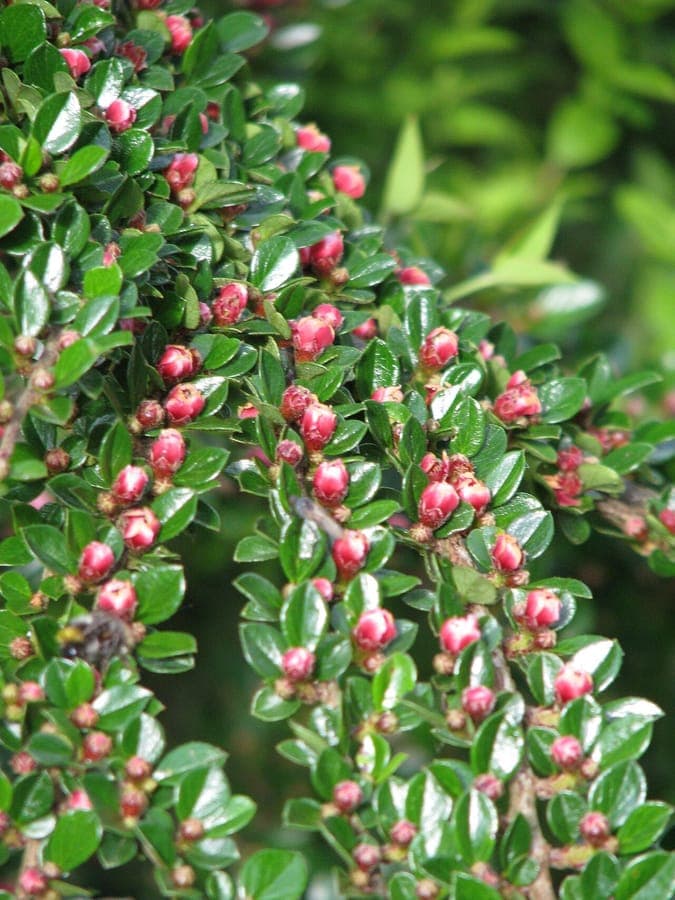
peganum from Henfield, England / CC BY-SA 2.0, via Wikimedia Commons
Rock cotoneaster: complete guide
Cotoneaster horizontalis
Want to see Rock cotoneaster: complete guide in your garden?
1 minute, no credit card
Overview
Cotoneaster horizontalis, commonly known as rock cotoneaster, is a deciduous shrub native to central and southeastern China, including Taiwan. It's prized in gardens for its distinctive layered, herringbone-like growth pattern and reliable performance in tough conditions. Reaching 60 cm in height but spreading up to 1.5 meters wide, it's ideal for rock gardens, low hedges, or trained against walls. As a member of the Rosaceae family, it shares traits with apples and hawthorns, though its small fruits are not edible for humans.
This shrub is hardy to USDA zone 7 (-15°C), making it well-suited to most temperate climates. It loses its leaves in winter but remains visually engaging thanks to its architectural branching and persistent berries. It's low-maintenance, deer-resistant, and attracts pollinators during bloom time.
On gardenworld.app you can design a planting scheme that features rock cotoneaster as a structural anchor, especially along terraces or dry stone walls where its form can shine.
Appearance & bloom cycle
The rock cotoneaster has a striking, fan-shaped habit. Young stems grow upright before bending sharply outward at 45–90 degrees, creating a zigzag pattern. Foliage is small, dark green, and lanceolate, turning bronze or red in autumn before dropping. In late spring (May to early June), clusters of tiny white to pale pink flowers appear. They're not showy but are a valuable nectar source for bees.
By August, berries begin to form-small, round, and bright red. They persist well into winter, often lasting until February, providing food for birds like thrushes and waxwings. While toxic to humans, the berries are a wildlife asset. The plant's bare branches in winter reveal a sculptural quality that few low shrubs can match.
Ideal location
Plant in full sun to light shade. Full sun encourages dense branching and maximum berry production. In heavy shade, the plant becomes leggy and sparse. Choose a spot with good air circulation to prevent fungal issues. It's excellent for slopes, retaining walls, or the front of mixed borders.
Because of its horizontal spread, give it at least 1 meter of clear space on all sides. Avoid planting too close to larger shrubs or trees that might shade it out. Use it to soften hardscape edges-its form complements stone, brick, or gravel beautifully. On gardenworld.app you can visualise how rock cotoneaster integrates into a modern, low-water garden with gravel paths and drought-tolerant perennials.
Soil requirements
It thrives in well-drained soil across a pH range of 5.5 to 7.0. Sandy, loamy, or gravelly soils work well. Avoid heavy clay unless amended with grit or compost to improve drainage. It tolerates poor soils and doesn't require fertiliser. Excess nutrients lead to weak growth and fewer flowers.
Free design
Want to see Rock cotoneaster: complete guide in your garden? Make a free design now.
Watering
Once established, rock cotoneaster is drought-tolerant. Water young plants weekly during their first growing season, especially in dry spells. Apply 5–10 litres per plant each time. After year one, supplemental watering is rarely needed except in prolonged drought.
Pruning
Pruning is minimal. If needed, trim in early spring before new growth emerges. Remove dead, damaged, or crossing stems. Avoid heavy cutting-this shrub doesn't regenerate well from old wood. Use sharp, clean secateurs to prevent disease transmission.
Maintenance calendar
- January: Inspect for pests or disease. Avoid working in frozen ground.
- February: Prepare tools. Remove any winter-damaged stems.
- March: Light shaping if needed. Check soil drainage.
- April: Watch for new shoots. No feeding required.
- May: Bloom begins. Monitor for pollinator activity.
- June: Continue monitoring. Keep young plants watered in dry periods.
- July: Water established plants only in extreme drought.
- August: Berries start ripening. Leave them for birds.
- September: Stop pruning. Allow plant to harden off.
- October: Clear fallen leaves if desired. Not essential.
- November: Check berry retention. Ensure base stays dry.
- December: Visual inspection. Appreciate winter structure.
Winter hardiness
Hardy to USDA zone 7. In colder zones (6 or below), tip dieback may occur, but the plant usually recovers. No winter protection needed. In exposed sites, a light mulch (5 cm of bark or leaf litter) can help insulate roots.
Companion plants
Pair with drought-tolerant perennials: Sedum 'Autumn Joy', Thymus vulgaris, Dianthus 'Firewitch', or Helianthemum 'Wisley Pink'. For structure, combine with Juniperus horizontalis or low-growing conifers. Avoid vigorous groundcovers that might smother it. Good in mixed rock gardens with ornamental grasses like Festuca glauca.
Closing
Rock cotoneaster is a tough, attractive, and ecologically beneficial shrub that demands little and gives much. Its architectural form, seasonal interest, and wildlife value make it a standout choice for low-maintenance gardens. Available at most garden centres, including OBI and Hornbach in Europe. Plant in well-drained soil, give it room to spread, and enjoy decades of reliable performance. Its year-round appeal, especially in winter, sets it apart from many other low shrubs.
On gardenworld.app you'll find curated garden designs where rock cotoneaster plays a key role-perfect for gardeners seeking structure, texture, and habitat support.
Want to see Rock cotoneaster: complete guide in your garden? Make a free design now.
Upload a photo, pick a style, and get a photorealistic design with plant list in under a minute.
No credit card required


Similar plants
Siberian crab apple: complete guide
Malus x robusta
Complete guide to the Siberian crab apple (Malus x robusta): location, soil, pruning, winter hardiness and the best companion plants for your garden.
Chinese flowering crabapple (Malus x spectabilis): complete guide
Malus x spectabilis
Meet the Chinese flowering crabapple (Malus x spectabilis): a classic spring bloomer with carmine buds and pink blossom.
Potentilla crassinervia: complete guide
Potentilla crassinervia
Potentilla crassinervia, the Corsican cinquefoil, grows wild on Corsica and Sardinia's peaks. Discover how to grow this hardy alpine rock garden gem.