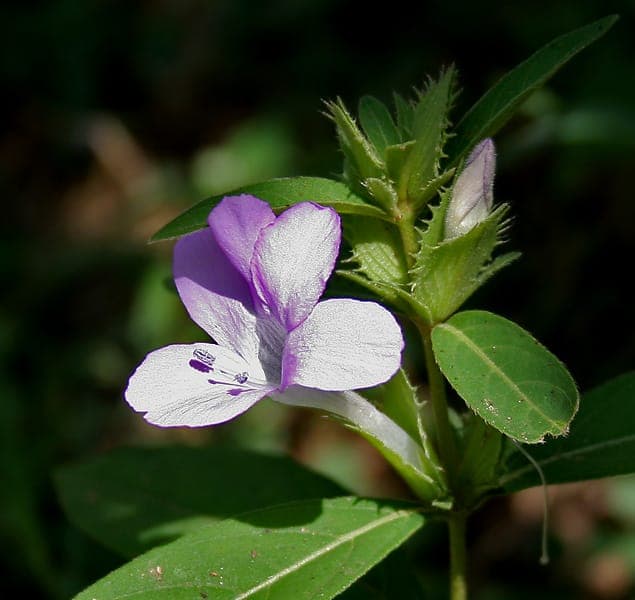
J.M.Garg / CC BY-SA 4.0, via Wikimedia Commons
Barleria cristata: complete guide
Barleria cristata
Want to see Barleria cristata: complete guide in your garden?
Full design in HD: €7.99
Look after your Barleria cristata with the GardenWorld app
Identify plants with your camera and get a care calendar with reminders for this plant.


Overview
The Philippine-violet (Barleria cristata) is a striking tropical shrub native to southern and southeastern Asia. Celebrated for its densely packed clusters of lavender-blue to violet flowers, this plant adorns subtropical forests and gardens throughout its native range, where it's sometimes used as a hedge plant.
In temperate climates, grow it in warm conservatories, greenhouses, or as a sunny houseplant. With abundant light and warmth, it grows steadily and flowers prolifically.
Appearance and bloom
Philippine-violet develops as an upright shrub reaching 1-2 meters in warm conditions. Its lanceolate leaves are dark green and slightly rough-textured. Flowers emerge in dense, angular clusters at branch tips.
Each bloom is deep blue to violet with a characteristic flat face. In warm climates, flowering occurs year-round; in temperate regions, primarily summer and autumn. The display is remarkable and continuous with good care.
Ideal location
Philippine-violet demands abundant light. Place it on a south or southwest windowsill receiving 6-8 hours of direct sun daily. In conservatories, position it prominently where light is maximum. Insufficient light causes poor flowering and weak growth.
The plant loves warmth: minimum 15°C, ideally 20-25°C. Avoid cold drafts and temperature fluctuations.
Soil requirements
Use peat-based potting soil enriched with perlite. A blend of 50% peat, 30% perlite, and 20% sand works excellently. The plant prefers slightly acidic to neutral pH.
Ensure excellent drainage. Pots with drainage holes are essential. Top-dress containers annually with fresh peat.
Free preview
Want to see Barleria cristata: complete guide in your garden? Make a free preview of your design.
Watering
Keep soil consistently moist during growth but never waterlogged. Water less in winter. Use soft water when possible. In dry indoor climates, regular misting benefits the plant.
Test soil regularly; when the top 2 cm feels dry, it's time to water.
Pruning
Philippine-violet can become leggy. Prune regularly, especially reducing the top third of shoots in spring. This stimulates branching and bushier habit.
Older canes can be removed entirely after summer to make room for vigorous new growth.
Maintenance calendar
Spring: Begin pruning and increase watering. Summer: Peak growth and flowering. Apply regular dilute fertilizer monthly. Ensure ample light and moisture. Autumn: Flowering continues. Gradually reduce feeding. Winter: Minimal watering, no feeding. Allow the plant to rest in cool (not cold) conditions.
Winter hardiness
Philippine-violet is not cold-hardy. In temperate climates, it must overwinter indoors. Temperatures below 10°C cause leaf drop.
In warm regions, outdoor cultivation is possible with frost protection.
Companion plants
Philippine-violet fits well in mixed tropical collections with other Southeast Asian plants: Acanthus, Sarcochilus, and other warm-loving species. A shared warm growing space is ideal.
In conservatory scenes, it forms an attractive background shrub with smaller flowering plants in front.
Final thoughts
Philippine-violet is perfect for gardeners with warm conservatories, greenhouses, or heated interiors. The deep lavender-blue flowers emerge continuously in well-lit environments. With regular pruning and feeding, this shrub develops into a spectacular flowering specimen. For tropical plant enthusiasts, it's highly recommended. Find it through specialty greenhouse growers and online plant retailers.
Introduce warm tropical beauty to your sunny space with this remarkable Asian gem!
Frequently asked questions about Barleria cristata
Is Barleria cristata winter hardy?
Philippine-violet is not cold-hardy. In temperate climates, it must overwinter indoors.
When and how do you prune Barleria cristata?
Philippine-violet can become leggy. Prune regularly, especially reducing the top third of shoots in spring.
How much water does Barleria cristata need?
Keep soil consistently moist during growth but never waterlogged. Water less in winter.
Where does Barleria cristata grow best?
Philippine-violet demands abundant light. Place it on a south or southwest windowsill receiving 6-8 hours of direct sun daily.
What soil does Barleria cristata need?
Use peat-based potting soil enriched with perlite. A blend of 50% peat, 30% perlite, and 20% sand works excellently.

See it in your garden
See Barleria cristata in your garden
One photo of your garden and a few questions. You see the result in about a minute.
Try it with a photoIdentify this plant in your own garden. Identify a plant
Similar plants
Nerve plant: care guide
Fittonia albivenis
How to grow the nerve plant (Fittonia albivenis): light, humidity, watering, potting mix and cuttings for this terrarium favourite with white or red-veined leaves.
Polka dot plant: care guide
Hypoestes phyllostachya
How to grow the polka dot plant (Hypoestes phyllostachya): light, watering, pinching, cuttings and sowing for this pink, red or white-spotted houseplant. Safe for pets.
Limestone wild petunia: complete guide
Ruellia strepens
Ruellia strepens is a long-blooming perennial native to central and eastern North America, with lavender trumpet flowers from June to September.
