
Wikimedia Commons / CC BY-SA 3.0, via Wikimedia Commons
Freckled milkvetch: complete guide
Astragalus lentiginosus
Want to see Freckled milkvetch: complete guide in your garden?
1 minute, no credit card
Overview
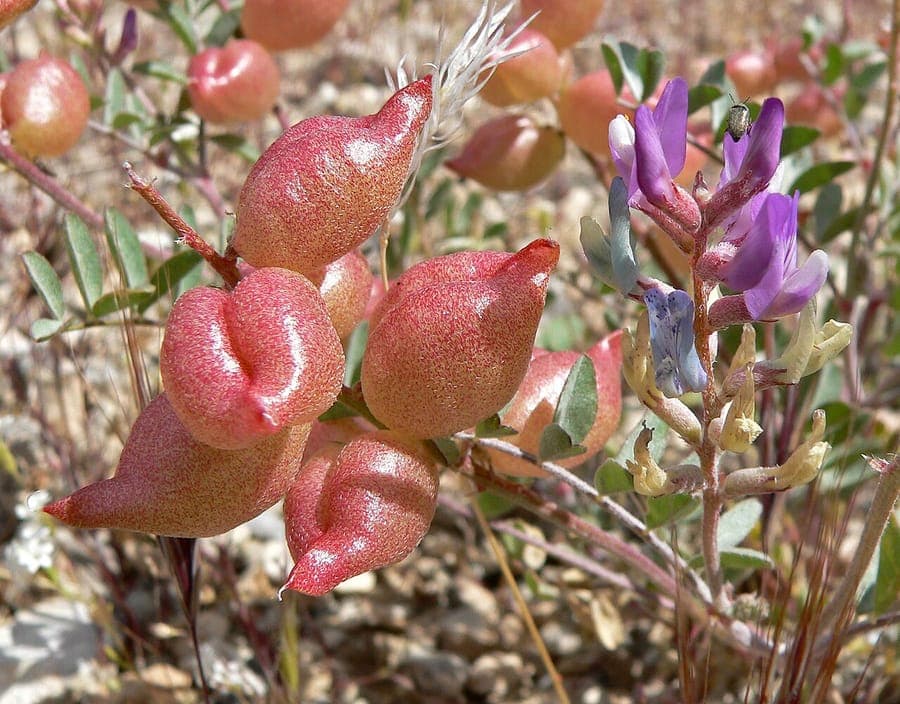
Astragalus lentiginosus, commonly known as the freckled milkvetch or speckledpod milkvetch, is a captivating herbaceous plant belonging to the pea family Fabaceae. It is part of the vast genus Astragalus, which encompasses more than 3,000 species worldwide. The name lentiginosus means 'freckled' or 'spotted', a direct reference to the distinctive mottled markings that adorn the seed pods. Among enthusiasts of native plants and sustainable gardening, the freckled milkvetch has been gaining recognition for its remarkable ability to thrive on dry, nutrient-poor soils where many other plants struggle.
Native to the western and southwestern United States and northern Mexico - ranging from California and Washington to Nevada, Arizona, Utah, Colorado, and Texas - this species has developed extraordinary variability across its range, resulting in dozens of recognized varieties. While still relatively uncommon in European horticulture, the freckled milkvetch holds real appeal for gardeners interested in rock gardens, xeriscape plantings, and prairie-inspired designs. You can use gardenworld.app to create a tailored garden plan that showcases the freckled milkvetch within a drought-resilient front yard or border.
As a member of the legume family, the freckled milkvetch can fix atmospheric nitrogen through bacteria hosted in root nodules, making it a natural soil enricher. Bees, bumblebees, and other pollinators are strongly attracted to the flowers, adding ecological value beyond the purely ornamental. Its adaptability to harsh conditions makes it a reliable choice for gardeners who want to water less and enjoy more.
Appearance and bloom cycle
The freckled milkvetch is a herbaceous perennial, though some varieties behave as annuals or biennials depending on the local climate. The stems are prostrate to ascending and typically reach 20 to 60 cm in height. The leaves are pinnately compound, consisting of 11 to 27 small, elliptical to oval leaflets approximately 1 to 2 cm long. The foliage is a fresh mid-green with a soft texture.
The flowers are typical of the pea family, with a broad upper banner petal, two lateral wing petals, and a lower keel that encloses the stamens. In Astragalus lentiginosus, flowers are predominantly yellow, though variants with bluish-purple or pale pink blooms also exist. The flowering period falls mainly between April and June, varying with elevation and climate. After flowering, the plant develops the distinctive pods that give it its common name: often spotted or marbled with darker markings on a green or reddish background, reaching 2 to 4 cm in length.
These ornamental pods persist on the plant well after the flowers fade, extending the season of interest. Pollinators make excellent use of the flowers as an early-season nectar source. The plant grows from a robust, deep-reaching root system that carries it through drought and ensures reliable regrowth each year.
Ideal location
The freckled milkvetch is a plant of open, sunny landscapes. In the wild it colonizes sagebrush flats, rocky slopes, dry stream channels, and elevated prairies. In the garden, this translates to a spot with full sun - ideally at least six hours of direct sunlight per day. It is not suited to shaded corners or positions where taller competing plants block the light.
The ideal location also provides some shelter from the strongest winds, though the milkvetch tolerates wind reasonably well due to its low, spreading growth habit. Dry, exposed slopes, driveways borders, and south-facing raised beds are all excellent choices. Avoid low-lying spots where rainwater pools, as poor drainage is the single greatest threat to this plant. You can plan the whole composition at gardenworld.app to pair the milkvetch with other Mediterranean or steppe-style plants for a low-maintenance design.
The plant adapts reasonably well to urban conditions and tolerates some air pollution, though it always performs best in an open, genuinely sunny position. In gardens with a warm microclimate - in front of a south-facing wall or on a sloped terrace - it truly excels.
Soil
The freckled milkvetch is accustomed to lean, nutrient-poor soils and does not need rich, fertile garden soil. On the contrary, heavily fertilized ground leads to lush but floppy growth with fewer flowers. The plant prefers well-drained, slightly sandy to loamy soil with a pH between 5.7 and 7.4. Heavy clay is problematic due to water retention and should be improved by incorporating coarse sand and grit.
When planting in clay, dig a hole at least 40 cm wide and 30 cm deep and mix the soil with perlite or coarse gravel. On light sandy soils, intervention is minimal; a handful of mature compost around the roots at planting time is sufficient. Mulching with fine gravel or pebbles around the base of the plant reduces evaporation and keeps the root collar dry, which prevents fungal infections.
The nitrogen-fixing capacity of the plant greatly reduces the need for fertilization. If after two or three years the plant looks tired, a light application of a potassium and phosphorus-rich fertilizer in spring is adequate, with no additional nitrogen needed. The soil does not need deep cultivation; the plant's own root system keeps the ground well aerated.
Free design
Want to see Freckled milkvetch: complete guide in your garden? Make a free design now.
Watering
One of the greatest strengths of Astragalus lentiginosus is its excellent drought tolerance. Once well-established - which takes three to six months after planting - the freckled milkvetch can bridge long periods without rainfall. In dry summers with less than 40 mm of rain per month, watering thoroughly once every two weeks is enough to keep the plant healthy.
Young plants in their first year need more water and should be watered weekly throughout their first growing season so that the roots reach sufficient depth. Always water deeply and allow the soil to dry out completely before the next watering. Drip irrigation or watering directly at the base of the plant is preferable, as keeping the foliage dry reduces the risk of fungal disease.
In autumn and winter, adjust watering to match rainfall; supplemental watering is generally not required. During winter dormancy, the soil may remain dry for weeks without harm. Excess moisture is more damaging than drought: wet soil combined with frost leads quickly to root rot. Always check the soil with your finger before watering.
Pruning
The freckled milkvetch requires little pruning. The plant grows naturally compact and does not need hard shaping cuts. After flowering in May or June, you can remove the spent flower stems to limit seed set and self-sowing - or leave them to encourage natural spreading in the desired spots. If you want to collect seed for propagation elsewhere, allow the pods to ripen fully and dry on the plant before harvesting.
In early spring, as new growth appears, remove the dead stems and leaf litter from the previous season to tidy the plant and improve airflow. Cut back to just above the basal rosette. Use clean, sharp pruning tools and disinfect between plants to avoid spreading pathogens.
A hard rejuvenation cut is rarely needed. If after several years the plant has developed an open, less floriferous centre, cut it back to about 10 cm above the ground in early spring. It will regrow vigorously and produce more flowers the following year. Healthy specimens rarely need this treatment.
Maintenance calendar
January and February: The plant is dormant. No special measures needed. Check that the soil is not remaining waterlogged and look for any visible frost damage on stems. Frost protection is unnecessary in mild climates.
March: As nights grow milder, new growth emerges. Remove the dead stems from the previous season at this point. Optionally apply a light dusting of potassium and phosphorus-rich fertilizer around the plant.
April and May: Peak season begins. The plant blooms and attracts bees and bumblebees. Water only during prolonged drought. Allow the flowers to bloom undisturbed.
June: Remove spent flower stems unless you wish to harvest seed. Pods ripen and change colour. The plant begins to face summer heat.
July and August: Dry period. Limit watering to once every two weeks when rainfall is completely absent. Check for aphid colonies on young stems and treat if necessary with a mild soap solution.
September and October: The plant prepares for winter dormancy. Stop fertilizing. Leave the dead stems standing as winter structure and as shelter for beneficial insects.
November and December: Full dormancy. No pruning, no watering, no fertilizing. In cold winters, protect the root zone with a thin layer of grit or lava pebbles.
Winter hardiness
Astragalus lentiginosus is moderately cold-hardy. The species as a whole withstands temperatures down to approximately -20 degrees Celsius, corresponding to USDA zones 5 to 7. Varieties from higher elevations or more northerly parts of the range - such as those from the Rocky Mountains - are generally hardier than lowland varieties from the southwestern deserts. In western Europe, where winters are mild but often wet, successful overwintering depends on drainage. A plant grown in well-drained, dry soil survives the average western European winter without difficulty.
In areas with severe winters, mulch the root zone with 5 to 10 cm of grit or lava pebbles - not organic material such as wood chips, which retain moisture. A sheltered spot against a south-facing wall provides additional thermal protection. Plants less than a year old are more vulnerable to frost damage and deserve extra attention during their first winter. In zones colder than USDA 5, the plant may be grown as an annual or given a substantial mulch cover.
Companion plants
The freckled milkvetch thrives alongside other drought-tolerant, sun-loving plants suited to prairie or rock garden settings. Lavender (Lavandula angustifolia), sage (Salvia officinalis and S. nemorosa), Penstemon, Verbena bonariensis, and various Sedum species make excellent companions. These combinations work beautifully in a dry-climate border or naturalistic garden design.
Ornamental grasses such as Stipa tenuissima (Mexican feather grass) or Bouteloua gracilis (blue grama grass) complement the milkvetch well and reinforce the prairie character. In a front garden with a gravel or pebble mulch for low maintenance, Astragalus lentiginosus provides a striking focal point with its yellow blooms and distinctive mottled pods. You can design your complete drought-tolerant planting scheme at gardenworld.app for a professional, personalised garden plan. Local garden centres often carry selections of native and drought-adapted perennials that pair well with the milkvetch.
Closing
Astragalus lentiginosus, the freckled milkvetch, proves its worth on the most challenging sites in the garden. Drought, lean soil, full sun - these are precisely the conditions in which it flourishes. Its yellow pea-family flowers and eye-catching mottled pods provide visual interest from April through summer, while simultaneously enriching the soil through nitrogen fixation and offering a feast for bees and bumblebees. For gardeners seeking low-maintenance, ecologically responsible planting, it is an outstanding choice.
Whether you are creating a rock garden, shaping a dry border, or improving a poorly drained area with a pioneer plant - the freckled milkvetch is a dependable companion. For inspiration and professional garden designs, visit gardenworld.app and turn your outdoor space into the ecologically rich, beautiful garden you have always envisioned.
Want to see Freckled milkvetch: complete guide in your garden? Make a free design now.
Upload a photo, pick a style, and get a photorealistic design with plant list in under a minute.
10,000+ gardens designed already
No credit card required


Similar plants
Tall Silky Lupine: complete guide
Lupinus elatus
Tall silky lupine is a fast-growing Californian perennial with silvery foliage and blue-purple flower spikes, ideal for a prairie-style garden.
Garfield Lupine: complete guide
Lupinus garfieldensis
The Garfield lupine is a rare, fast-growing American perennial for alkaline, dry grassland gardens, with striking blue flower spikes.
Lupinus elegans: complete guide
Lupinus elegans
Lupinus elegans, the elegant lupine, is a spectacular blooming plant from Mexico with blue flower spikes. Care, cultivation and garden use.