
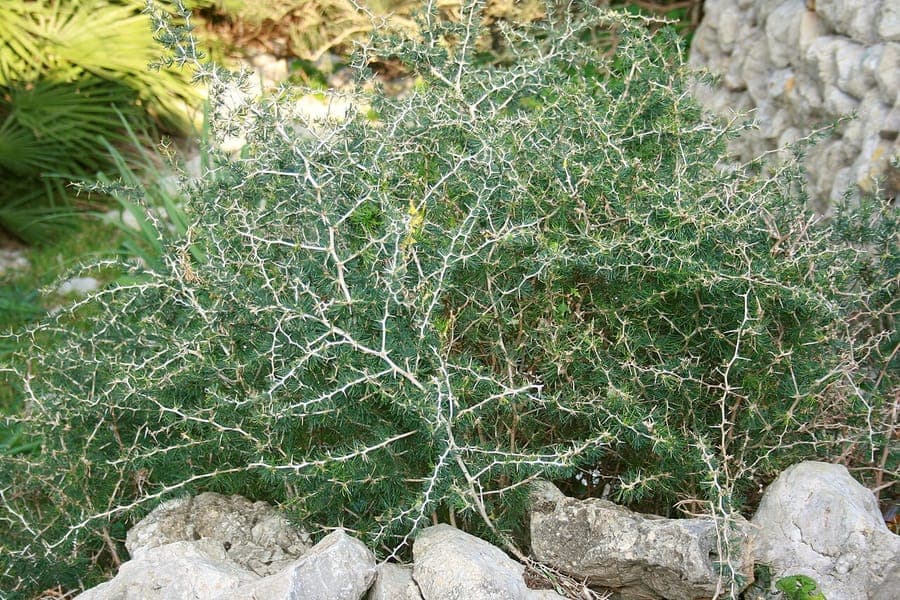
Frank Vincentz / CC BY-SA 3.0, via Wikimedia Commons
Asparagus albus: complete guide
Asparagus albus
Want to see Asparagus albus: complete guide in your garden?
1 minute, no credit card
Overview
Asparagus albus, white asparagus, is a fine Mediterranean subshrub from North Africa and the western Mediterranean coast. This woody plant forms an elegant, airy habit with extremely fine needle-like foliage and inconspicuous white flowers followed by attractive red berries. It is frost-sensitive, ideal for warm, dry coastal gardens or sheltered locations in temperate climates.
Appearance and Bloom
Asparagus albus forms a dainty shrub, 30 to 80 centimetres in height, with very fine, needle-like leaves (cladodes). Flowers are small, white, blooming August through October. Subsequently, attractive red berries approximately 1 centimetre in diameter develop. These berries persist for months, making the plant particularly ornamental in autumn and winter. The plant grows with woody stems and branches openly and airtly.
Ideal Location
Full sun is essential; minimum 6 to 8 hours direct sunlight daily. In very hot climates (southern Mediterranean) light afternoon shade is tolerated. Plant this asparagus in warm, sheltered locations against walls, fences, or in terracotta gardens. In windy sites, protection from strong drying gales is welcome. Avoid shady corners and positions behind larger plants.
Soil
Asparagus albus grows optimally in well-drained, highly porous soil. This is a plant for poor, mineral-rich soils; excessively fertile earth encourages weak growth. Sandy, gritty soils low in humus are ideal. pH range 6.5 to 7.5 is acceptable. In container culture use cactus or succulent potting mix blended with sand to 40% grit content. This plant tolerates salt and drought excellently; ideal for coastal gardens.
Watering
Water very sparingly. Allow soil to dry completely between waterings. During the growing season (May to September) water once every two weeks or less. In autumn and winter, water minimally. If foliage briefly withers from drought, this is not harmful; many specimens thrive semi-dry. Potted plants need watering slightly more frequently, but always drain thoroughly; standing water kills roots assuredly.
Free design
Want to see Asparagus albus: complete guide in your garden? Make a free design now.
Pruning
Pruning helps maintain shape. Remove dead branches and spent flower stems after blooming. In March/April older stems can be cut back to young wood; this encourages compact growth. Prune cautiously; this plant recovers slowly from heavy cutting. Also remove seed berries (red fruits) to prevent energy drain, unless you prefer them persisting into winter.
Maintenance Calendar
May to September: very sparing water, sun position checks. October to December: flowering and fruiting, minimal water. January to April: removal of dead wood, very cautious pruning, prevent seed production. Year-round: no feeding required; poor soil better than excess nutrients.
Winter Hardiness
Asparagus albus is not frost-tolerant below 0-5 degrees Celsius. In temperate climate zones 9-11 it grows outdoors. In cold regions (zone 8 and colder) grow it in containers and bring indoors for winter. Prolonged freezing periods cause death. Wet frost is worse than dry frost; drainage and dry winters are essential. In areas with moderate winters, protection with burlap during sub-freezing periods can help.
Companion Plants
Asparagus albus pairs beautifully with other Mediterranean, drought-tolerant species: Lavandula, Rosmarinus, Cistus, Salvia, Gaura, Artemisia. The fine texture offers lovely contrast with sturdier, more massive plants. Also works well with ornamental grasses and silver-leaved plants (Santolina, Teucrium). Avoid moisture-loving species.
Closing Remarks
Asparagus albus is an elegant, underappreciated choice for dry, sunny gardens where water is precious. With good drainage, full sun, and minimal care, this Mediterranean shrub thrives for years effortlessly. The red berries provide autumn and winter colour. For coastal gardens and warm, dry locations, this is a genuine asset.
Want to see Asparagus albus: complete guide in your garden? Make a free design now.
Upload a photo, pick a style, and get a photorealistic design with plant list in under a minute.
No credit card required


Similar plants
Narrow-leaved dracaena: complete guide
Dracaena angustifolia
Everything about Dracaena angustifolia - the narrow-leaved dracaena: location, care, overwintering and use as a houseplant or patio plant.
Chaparral yucca: complete guide to Hesperoyucca whipplei
Hesperoyucca whipplei
Hesperoyucca whipplei (Our Lord's candle) is a dramatic rosette-forming plant from California that produces a towering flower spike, ideal for dry and gravel gardens.
False lily-of-the-valley: complete guide
Maianthemum dilatatum
Everything about Maianthemum dilatatum, the false lily-of-the-valley. Care, shade location, propagation and garden combinations for this popular shade ground cover.