
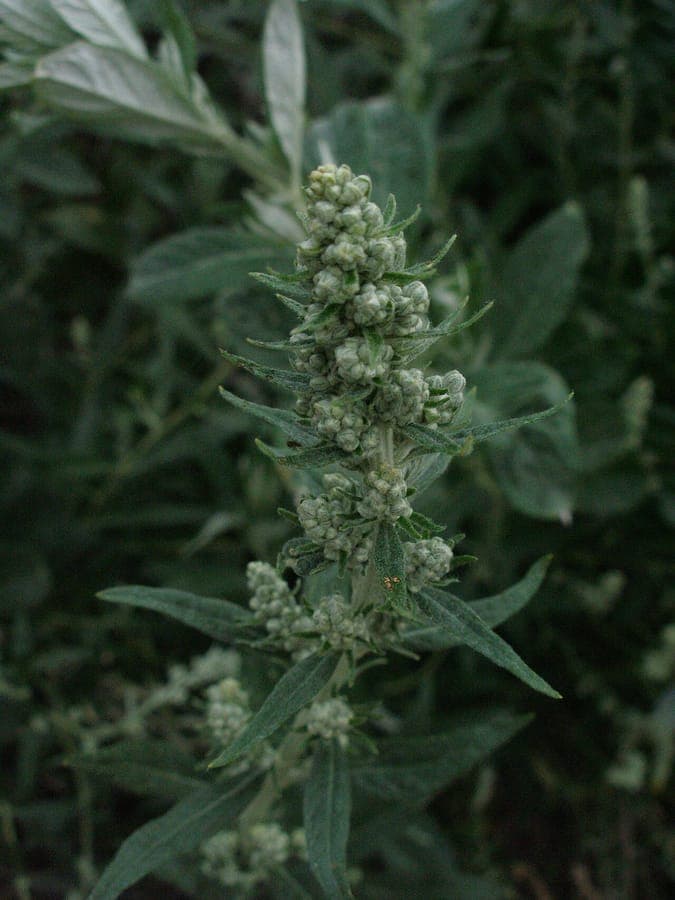
stonebird from inglewood, california, usa / CC BY-SA 2.0, via Wikimedia Commons
Douglas mugwort: complete guide
Artemisia douglasiana
Want to see Douglas mugwort: complete guide in your garden?
1 minute, no credit card
Overview
Douglas mugwort (Artemisia douglasiana) is a native herbaceous perennial from the western United States and northern Mexico. First described in 1833 by Besser using material collected by the Scottish botanist David Douglas, this member of the Asteraceae family shares the hallmark traits of its genus: intensely aromatic foliage, modest flower clusters, and remarkable adaptability to dry, lean growing conditions. In gardens, Douglas mugwort earns its place through its striking silvery foliage, low maintenance requirements, and ability to support pollinators throughout the late summer months. On gardenworld.app you can explore planting plans that feature this plant at the heart of drought-tolerant border designs and naturalistic planting schemes.
Appearance and bloom cycle
Douglas mugwort produces upright to arching stems that reach 60 to 120 cm in height during the growing season. The leaves are the plant's most distinctive feature: deeply lobed to pinnatifid in shape, dark green on the upper surface and densely covered with white hairs beneath, giving the plant its characteristic silvery shimmer. This two-tone effect is especially noticeable on windy days when the pale undersides catch the light. The fragrance is strong and camphoraceous with a faint citrus undertone, characteristic of Californian populations. Flowering runs from July through October. The flowers are small, yellowish to cream, arranged in long panicles that can extend up to 50 cm. As with all Artemisia species, the flowerheads lack the showy ray florets associated with other members of the daisy family, but the feathery plumes lend a graceful texture to the late-season garden.
Ideal location
In its native range, Douglas mugwort colonizes sunny, dry slopes, roadsides and open woodland margins from the Cascade Range to the Sierra Nevada and the coastal ranges of California, Nevada and Oregon. In the garden it thrives in full sun to partial shade. Full sun promotes compact growth and the most intense silver coloration in the leaves. In too much shade the stems grow tall and floppy, and the characteristic appearance is lost. This plant is ideal for dry borders, gravel gardens, naturalistic areas and as a groundcover on difficult slopes. In northern European gardens, where summer droughts are becoming more frequent, Douglas mugwort fits comfortably into low-maintenance planting schemes.
Soil
Douglas mugwort is undemanding about soil type. In the wild it grows on poor, freely draining soils ranging from sandy to loamy in texture. It tolerates alkaline, even slightly saline conditions typical of coastal areas. What it cannot tolerate is waterlogging: standing water and wet winter conditions represent the primary threat to this plant. On heavy clay soils, improving drainage by incorporating sharp sand or fine gravel before planting is strongly recommended. Fertilising is rarely necessary; lean soils actually produce the most compact and ornamental plants. Avoid rich compost or fertilisers, which encourage lush but soft growth that is more susceptible to frost damage and fungal problems.
Watering
One of the most appreciated qualities of Douglas mugwort is its outstanding drought tolerance. Once established, the plant needs virtually no supplementary irrigation in temperate climates. During the first season after planting, regular watering is important to allow a strong root system to develop, but thereafter the plant can largely rely on rainfall. Deep but infrequent watering, when supplementary irrigation is given, encourages the roots to grow downward and increases the plant's long-term resilience. Overwatering combined with poor drainage leads rapidly to root rot, which is typically fatal for Artemisia species. Err on the side of too little water rather than too much.
Free design
Want to see Douglas mugwort: complete guide in your garden? Make a free design now.
Pruning
Pruning Douglas mugwort is straightforward. In late winter or early spring, once the risk of severe frost has passed (typically late February to early March), cut the old stems back to 10 to 15 cm above ground level. This encourages compact regrowth and prevents the plant from becoming woody and open at the base. A light trim in midsummer after the first flush of growth can stimulate fresh foliage. Spent flower panicles can be removed in late autumn or left standing through winter as structural interest and food for seed-eating birds. Wear gloves when handling the plant as the aromatic essential oils can cause mild skin irritation in sensitive individuals.
Maintenance calendar
January-February: resting period, no action required. March: cut back stems to 10-15 cm; take softwood cuttings from emerging shoots for propagation. April-May: new growth emerges; apply a light feed on very poor soils if growth looks weak. June-July: rapid growth phase; monitor for excessive laxness and cut back by half if needed to maintain compact form. July-October: flowering period; enjoy the aromatic plumes and collect seed if desired for sowing. October-November: lightly trim the flowering tips; leave stems as shelter for overwintering insects. December: dormancy; the plant is hardy but a light cover of conifer branches offers protection on very wet, heavy soils.
Winter hardiness
Douglas mugwort is rated hardy to USDA zone 5, corresponding to minimum temperatures around -20 degrees Celsius. In Belgian and Dutch gardens, which typically fall in USDA zones 7 to 8, the plant overwinters without difficulty in the open ground. Wet winters pose a greater risk than cold winters; drainage is therefore the key factor for successful overwintering. On clay soils or in areas with heavy winter rainfall, a light mulch or gravel collar around the crown can prevent excess moisture accumulation. In mild winters, some evergreen foliage may persist; in harsh winters the above-ground stems die back completely, but the plant reliably regrows from the roots in spring.
Companion plants
Douglas mugwort pairs beautifully with other drought-tolerant perennials. Its silver-grey tones form an ideal backdrop for purple and blue flowers such as lavender (Lavandula), ornamental sage (Salvia nemorosa) and anise hyssop (Agastache). Yellow-flowered companions like sneezeweed (Helenium) or evening primrose (Oenothera) create a warm, Mediterranean feel. In the dry border it also works well with yarrow (Achillea millefolium), fennel (Foeniculum vulgare) and fine-textured grasses such as blue fescue (Festuca glauca). The silky texture of its foliage contrasts effectively with the bold leaves of Eryngium or the upright spikes of Kniphofia. Garden centres across the UK and wider Europe increasingly stock Artemisia species as part of the growing demand for resilient, water-wise planting.
Closing thoughts
Douglas mugwort is a versatile, low-maintenance perennial that brings genuine value to any garden that can offer it a sunny, reasonably dry position. Its silvery foliage provides season-long colour and texture, its flowers attract pollinators from July to October, and its drought tolerance makes it an excellent choice for the increasingly warm summers of northern Europe. Whether used as a groundcover, as part of a naturalistic border, or as a structural element in a gravel garden, this plant repays modest attention with reliable and attractive performance year after year. Visit gardenworld.app to see how Douglas mugwort can be woven into a professionally designed garden scheme that suits your outdoor space.
Want to see Douglas mugwort: complete guide in your garden? Make a free design now.
Upload a photo, pick a style, and get a photorealistic design with plant list in under a minute.
10,000+ gardens designed already
No credit card required


Similar plants
Siberian wormwood: complete guide
Artemisia laciniata
A full guide to Siberian wormwood, a frost-tough aromatic perennial native across Eurasia and subarctic North America, perfect for dry and rocky gardens.
Felonherb: complete guide
Artemisia vulgaris
Learn how to grow Artemisia vulgaris (Felonherb) successfully in your garden. Full details on sun, soil, care and companion planting.
Yarrow: complete guide
Achillea millefolium
Master Achillea millefolium care: low-maintenance perennial for sun, poor soil, drought resistance, and colorful blooms year after year.