
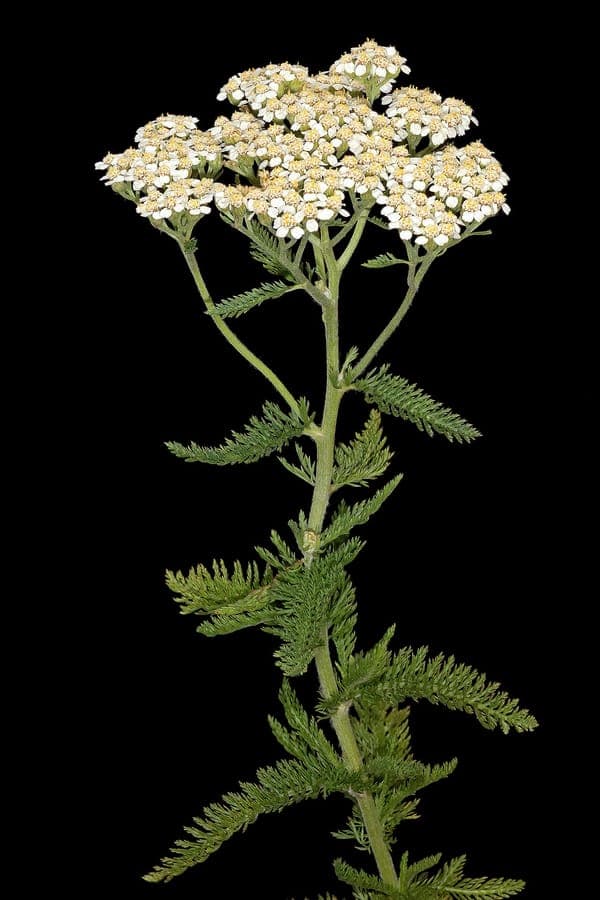
SAplants / CC BY-SA 4.0, via Wikimedia Commons
Yarrow: complete guide
Achillea millefolium
Want to see Yarrow: complete guide in your garden?
1 minute, no credit card
Overview
Yarrow (Achillea millefolium) is one of the most reliable and easy-to-grow perennials available. This adaptable plant thrives from Scandinavia to Guatemala, demonstrating its exceptional resilience across climates. For gardeners seeking a low-maintenance perennial with months of colorful blooms, yarrow is an obvious choice.
The name comes from Greek mythology - legend credits Achilles, a great warrior, with using yarrow to heal wounds. The delicate, finely divided foliage almost appears fern-like, giving the plant an ethereal quality in the garden.
Appearance & bloom cycle
Yarrow reaches 30-120 cm (12-48 inches) depending on variety. Most garden cultivars stay between 60-90 cm. The foliage is feathery and finely cut, creating soft, textured clumps year-round.
Flowers appear from June through September in dense, flat flower clusters called corymbs. Colors include pink, red, orange, yellow, white, and cream - often multiple hues in a single plant. Each tiny flower is insignificant alone, but thousands clustered together create dramatic displays.
After flowering, seed heads offer architectural interest and provide winter food for birds. Leave them for natural beauty or deadhead for a tidier garden.
Ideal location
Full sun is essential for best flowering. Yarrow needs minimum 6-8 hours of direct sunlight daily. It tolerates light shade but blooms sparsely in shadier positions.
Site selection is critical: yarrow demands excellent drainage. Waterlogged soil kills it faster than any other condition. Even one winter of waterlogging can eliminate an established plant.
The plant handles wind excellently, even thriving in exposed, windy sites where other perennials struggle.
Soil requirements
Yarrow adapts to nearly any soil type - sand, loam, clay, even rocky ground - provided drainage is good. Fertile soil is unnecessary and actually detrimental. Overfed plants grow lush, weak, and prone to falling over.
- pH: Tolerates 5.5-7.5 (slightly acid to neutral)
- Fertility: Poor to moderately fertile soil is better than rich soil
- Structure: Must drain well. Add gravel or coarse sand to heavy clay
- Texture: Loose, friable soil promotes deeper root penetration
Watering
Established yarrow is remarkably drought-tolerant. New plants (first two years) benefit from consistent moisture until roots establish.
Watering schedule:
- Established plants: Water only during extreme drought
- Young plants: Water when top 5 cm of soil feels dry
- Apply water at soil level, never on foliage, to prevent fungal issues
- Reduce watering in autumn and winter
Container-grown yarrow needs more frequent watering. Check daily during warm months.
Free design
Want to see Yarrow: complete guide in your garden? Make a free design now.
Pruning
Minimal pruning is needed, but regular pinching produces bushier plants with more flowers.
- May: Pinch growing tips to encourage branching
- June: Remove spent flower clusters to encourage repeat blooming
- August: Deadhead to prevent excessive self-seeding
- October: Cut entire plant back to 10-15 cm (4-6 inches)
Leave seed heads if you want winter interest and bird food.
Maintenance calendar
March-April: Growth begins. Remove winter debris. Add coarse sand if drainage is poor.
May: Pinch young plants for bushier growth. Remove weeds early.
June-September: Flowering period. Deadhead for neatness. Water sparingly. Stake tall varieties if needed.
October: Cut back entire plant. No fertilizer needed.
November-February: Winter dormancy. No maintenance required. Watch for waterlogging in wet winters.
Winter hardiness
Yarrow is hardy to USDA zone 3 (-40°C/-40°F) and likely colder. Frost is not the problem in most regions; waterlogging in winter is. Ensure excellent drainage, especially in clay soils.
Companion plants
Yarrow combines beautifully with:
- Lavender: Same needs, complementary colors
- Roses: Classic pairing, yarrow fills space beneath roses
- Russian sage & Nepeta: Creates a low-maintenance, pollinator-friendly border
- Eryngium: Both prefer dry, well-drained soil
- Sedum: Perfect for rock gardens and alpine troughs
- Ornamental grasses: Soft texture contrast
Closing
Yarrow is an essential perennial for any gardener seeking reliable, long-blooming plants with minimal input. Its tolerance for poor soil, drought, and neglect makes it perfect for busy lives and sustainable gardening.
On gardenworld.app, you can design a garden incorporating yarrow as a key element. Our design system helps visualize how your front garden will look with these cheerful perennials in full bloom. Use gardenworld.app to plan color combinations and see your complete design before you dig a single hole.
You can also explore complete garden designs featuring yarrow and discover which companion plants work best for your specific site. On gardenworld.app, create your personalized front garden plan that includes proper siting and care information for every plant.
Want to see Yarrow: complete guide in your garden? Make a free design now.
Upload a photo, pick a style, and get a photorealistic design with plant list in under a minute.
No credit card required


Similar plants
Calendula stellata: complete guide
Calendula stellata
Complete guide to Calendula stellata, the star-flowered marigold from Sicily: location, soil, watering and companion planting tips.
Korean chrysanthemum: complete guide
Chrysanthemum x rubellum
Chrysanthemum x rubellum is a hardy autumn perennial with single pink to copper flowers from August to November. Care and combinations.
Helianthus divaricatus: complete guide
Helianthus divaricatus
Helianthus divaricatus is a North American woodland sunflower with yellow summer blooms, ideal for naturalistic borders and shady edges.