
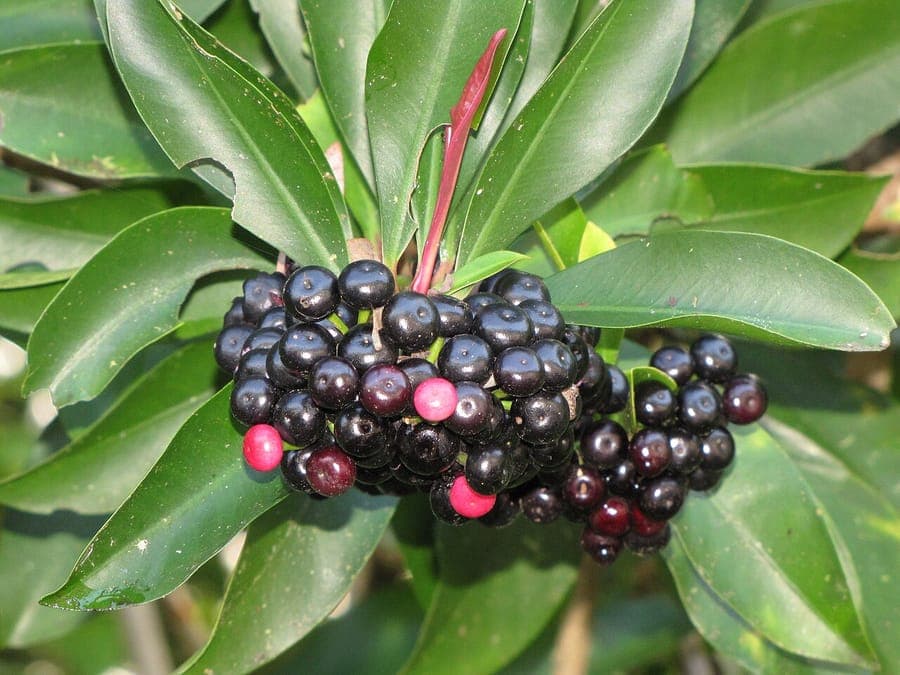
Forest and Kim Starr / CC BY 3.0 us, via Wikimedia Commons
Shoe-button Ardisia: Complete Guide
Ardisia elliptica
Want to see Shoe-button Ardisia: Complete Guide in your garden?
1 minute, no credit card
Overview
Ardisia elliptica, commonly known as Shoe-button Ardisia or China-shrub, is a fascinating tropical plant distinguished by its glossy, elliptical leaves and striking red berries. Belonging to the Primulaceae family, this plant originates from tropical Asia, ranging from Bangladesh to the Philippines and Taiwan. In modern gardens and homes, Ardisia elliptica enjoys increasing popularity as a decorative plant thanks to its attractive appearance and relatively low-maintenance nature.
The plant grows as a compact to medium-sized shrub, perfect for container cultivation or as an accent in a tropical front garden. What makes this plant special is its naturally elegant leaf form and rich red fruits that persist on the plant for extended periods. These red berries offer visual appeal and attract birds, bringing additional wildlife to your garden.
Appearance and Bloom
Ardisia elliptica is an evergreen plant with dense foliage that forms a full, attractive shape. The leaves are elliptical to lanceolate, glossy green, and approximately 5-10 centimeters long. They grow in whorls around the stems, creating a structured, symmetrical appearance. The foliage is dense enough to provide privacy and shade in your front garden.
The flowers are small, pink to white blossoms appearing in clusters, typically in spring. While not dramatically large, these flowers mark the beginning of the fruit-bearing season. After pollination, the characteristic red berries develop, creating striking contrast against the glossy green foliage. These berries can remain on the plant for months, making Ardisia elliptica an excellent choice for seasonal decoration.
Ideal Location
Ardisia elliptica thrives best in a location with bright, indirect light. The plant can also grow in lightly shaded spots, though full ripening sunlight encourages more flowers and fruits. In tropical climates, the plant can grow outdoors in partial shade, while in more temperate regions it does best in a warm, sheltered spot.
Temperature is crucial. Ardisia elliptica is cold-sensitive and thrives best between 15 and 24 degrees Celsius. In areas with harsh winters, container cultivation is recommended so the plant can be moved indoors when temperatures drop too low. This flexibility makes the plant well-suited to regions with varying seasons.
Soil
The perfect soil for Ardisia elliptica is nutrient-rich, well-draining and slightly acidic. A mixture of garden soil, compost, and sand works ideally, or you can use specially formulated tropical potting mix. Good drainage is essential, as the plant is sensitive to waterlogged roots. Maintain soil pH around 6.0-6.5 for optimal nutrient uptake.
Adding organic matter such as leaf mold or compost improves both the nutritional quality and water-holding capacity of the soil, which this plant requires to thrive.
Free design
Want to see Shoe-button Ardisia: Complete Guide in your garden? Make a free design now.
Watering
Ardisia elliptica needs regular watering, especially during the growing season in spring and summer. Keep the soil evenly moist, but not saturated. Overwatering is the primary cause of problems with this plant, so ensure water drains well.
In winter, reduce watering, though the plant still needs some moisture. Check the soil regularly: if the top layer feels dry, it's time to water. Use lukewarm water, as very cold water can shock the plant and cause stress symptoms.
Pruning
Pruning helps maintain a compact, full form for Ardisia elliptica. Prune regularly to encourage lateral branches and support a bushy shape. This is best done in late winter or early spring, before the growing season begins.
Remove all dead, damaged, or diseased branches completely. If the plant becomes too large, cut back larger branches to desired size. Pruning also stimulates flowering, so regular maintenance pruning can ultimately produce more flowers and fruits.
Maintenance Calendar
Spring: Start monthly feeding during the growing season. Check for pests and diseases. Prune to desired shape.
Summer: Maintain consistently moist soil. Feed every two weeks. Monitor for spider mites and mildew, especially in dry conditions.
Fall: Reduce feeding to biweekly or monthly. Begin gradually reducing water.
Winter: Minimal feeding. Limited water. Bring potted plants indoors in frost-prone areas.
Winter Hardiness
Ardisia elliptica is not winter-hardy in terms of freezing temperatures. The plant can survive light frost down to about -1 to 0 degrees Celsius, but heavy frost will likely kill it. Therefore, in areas with winter seasons, keep this plant indoors or in a protected microclimate outdoors.
In Mediterranean or subtropical climates, Ardisia elliptica can be grown permanently outdoors, provided it has shelter from extreme cold winds and sudden temperature drops.
Companion Plants
Ardisia elliptica works well with other tropical plants sharing similar growing conditions. Suitable companions include:
- Begonias: These elegant foliage plants share preference for indirect light and regular moisture.
- Ficus: These classic houseplants offer textural contrast with their larger leaves.
- Syngonium: These climbing plants can be positioned beside Ardisia for a layered look.
- Chlorophytum: Spider plants offer finer foliage as contrast.
Conclusion
Ardisia elliptica is a charming addition to any front garden or houseplant collection. With its glossy leaves, beautiful flowers, and long-lasting red berries, this plant offers months of interest and beauty. With proper care - regular watering, bright indirect light, and temperature safety - your Ardisia elliptica will thrive and bring joy for decades.
For landscaping assistance, we're happy to help. Local retailers including garden centers always stock Ardisia elliptica as potted plants. For more information and plant selection, visit gardenworld.app to discover how to create a front garden full of tropical beauty.
Want to see Shoe-button Ardisia: Complete Guide in your garden? Make a free design now.
Upload a photo, pick a style, and get a photorealistic design with plant list in under a minute.
No credit card required


Similar plants
Primula incana: complete guide to silvery alpine primrose
Primula incana
Silvery primrose (Primula incana), a delicate alpine flower with white blooms and powdered grey-green leaves. Growing, care, and cultivation guide.
Mealy cowslip: complete guide
Primula pulverulenta
Grow the Mealy cowslip (Primula pulverulenta): striking candelabra flowers in red and purple tones, moisture-loving and ideal for shady, damp garden corners.
Cliff dwarf-primrose: complete guide
Androsace laevigata
Full guide to growing Androsace laevigata, a rare Pacific Northwest alpine cushion plant. Planting, care, and garden design tips explained.