
Brian Arthur / CC BY-SA 3.0, via Wikimedia Commons
Black cardamom: complete guide
Amomum subulatum
Want to see Black cardamom: complete guide in your garden?
1 minute, no credit card
Overview
Black cardamom (Amomum subulatum), also called Nepal cardamom or greater cardamom, is an aromatic herbaceous plant from the ginger family. This exotic plant originates from the Himalayan region and grows naturally in mountain forests of Nepal, India, and Tibet. The plant is prized for its intensely fragrant seed pods, widely used in Indian, Asian, and African cuisines.
Appearance and Bloom
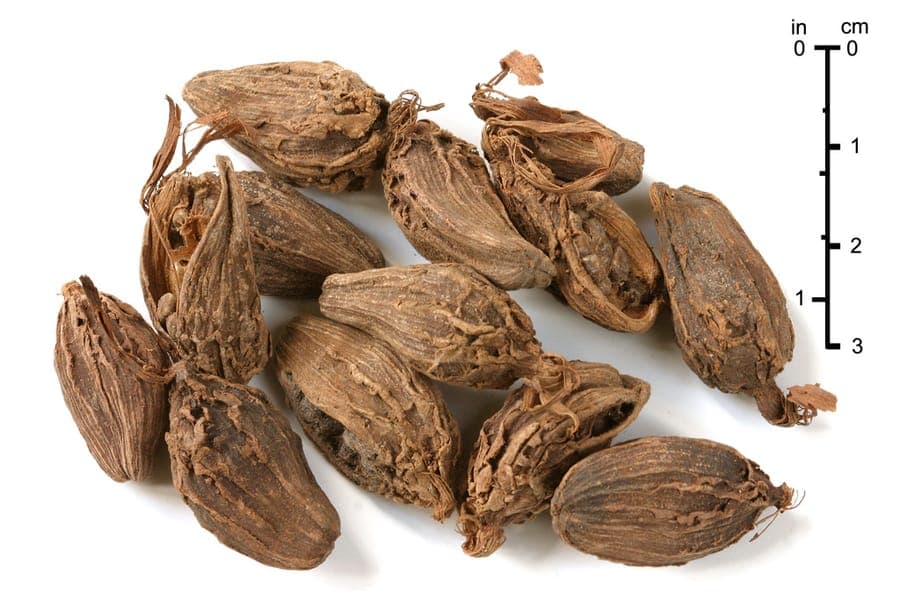
Black cardamom grows as a large herbaceous plant with long, lance-shaped leaves. The plant typically reaches 60-120 cm in height. The leaves are elongated, green with lighter undersides. Small flowers are inconspicuous, greenish-yellow with minimal ornamental value. The true treasure is the fruit: large, irregular seed pods filled with tiny black aromatic seeds possessing a distinctive camphor-like fragrance.
Ideal Location
Black cardamom grows best in warm, humid conditions. Ideal temperatures are 18-25C. In tropical or subtropical regions, outdoor cultivation is possible. In temperate climates, grow indoors or in heated conservatories. The plant tolerates shade but grows better with bright indirect light.
Soil
Use nutrient-rich, well-draining potting mix with added compost, leaf mold, and peat. The plant prefers slightly acidic to neutral soil. Ensure excellent drainage to prevent root rot.
Free design
Want to see Black cardamom: complete guide in your garden? Make a free design now.
Watering
Keep soil consistently moist but never waterlogged. Increase watering during active growth period (spring/summer) and reduce in winter. Mist foliage regularly to maintain humidity. The plant prefers humid environments.
Pruning
Pruning is not essential. Remove dead leaves and stems to improve air circulation and appearance.
Maintenance Calendar
- March/April: Start of growing season, increase watering
- May/June: Regular watering, maintain high humidity
- July/August: Peak growth period
- September/October: Gradually reduce watering
- November/December: Minimal watering
- January/February: Light watering only
Winter Hardiness
Black cardamom is not cold-hardy and cannot tolerate frost. In temperate regions, it must be grown indoors or protected during winter months.
Companion Plants
Pair with other tropical plants like cannas, bananas, and palms in warm regions. Indoors, grow with other ginger family members.
Closing
Black cardamom is a fascinating spice plant with many growing possibilities. Discover more exotic plants at gardenworld.app and design your dream tropical garden today!
Want to see Black cardamom: complete guide in your garden? Make a free design now.
Upload a photo, pick a style, and get a photorealistic design with plant list in under a minute.
No credit card required


Similar plants
Etlingera elatior: complete guide
Etlingera elatior
Grow this exotic Torch Ginger indoors. Expert tips on warm conditions, humid soil, and care for spectacular blooms.
Indian crocus: complete guide
Kaempferia rotunda
Indian crocus offers purple flowers and tropical atmosphere. Discover how to successfully grow this fascinating bulbous plant in cooler climates.
Zingiber zerumbet: complete guide
Zingiber zerumbet
Discover Shampoo ginger (Zingiber zerumbet) - a tropical ornamental plant with spectacular flowers and exotic allure. Perfect addition to refined front garden designs.