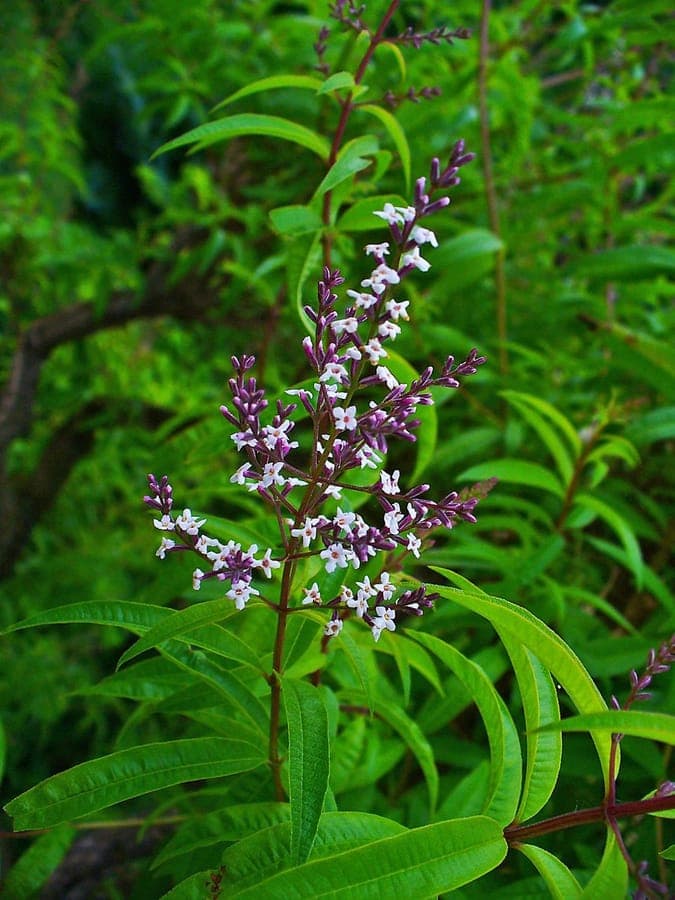
H. Zell / CC BY-SA 3.0, via Wikimedia Commons
Lemon verbena: care, harvesting and overwintering
Aloysia citrodora
Want to see Lemon verbena: care, harvesting and overwintering in your garden?
Full design in HD: €7.99
Look after your Lemon verbena with the GardenWorld app
Identify plants with your camera and get a care calendar with reminders for this plant.


Overview
Lemon verbena (Aloysia citrodora) has the strongest lemon scent of any garden herb. Brush past the plant and you immediately catch a fresh, sweet fragrance that recalls lemon zest and lemongrass at the same time. A few leaves in hot water make a bright, calming tea, and in the kitchen the foliage lifts desserts, syrups and drinks. Little wonder this herb is so popular on patios and in herb gardens.
The plant comes from South America, where it grows wild in Argentina, Chile, Bolivia, Peru, Uruguay and Paraguay. Spanish explorers brought it to Europe in the seventeenth century. The genus name Aloysia honours María Luisa of Parma, wife of King Charles IV of Spain. Botanically it is a deciduous shrub in the verbena family (Verbenaceae), a distant relative of the garden verbenas but not a true Verbena. Older books still use the names Aloysia triphylla or Lippia citriodora.
An important point for gardeners in north-western Europe: lemon verbena is only borderline hardy. In most gardens it is best grown in a pot that spends the winter somewhere frost-proof. If you are planning a patio or herb garden where container plants like this sit well alongside perennials in the ground, you can have a garden design made on gardenworld.app that takes your aspect into account.
For people, lemon verbena is considered safe in the normal amounts used for tea and cooking. However, the ASPCA, the American animal welfare organisation, lists it as toxic to dogs, cats and horses: the essential oils can cause vomiting, diarrhoea and, in horses, colic. Keep the pot away from a dog or cat that likes to nibble plants.
Appearance and bloom cycle
In a pot, lemon verbena usually reaches 80 cm to 1.5 m; planted out in a mild climate it can grow into a shrub of 2 to 3 m. The shoots are slender and slightly angled, becoming woody with age. The leaves are arranged in whorls of three, sometimes four, around the stem. They are lance-shaped, 5 to 10 cm long, bright green, a little rough on top and packed with tiny glands full of essential oil.
From July or August to September, loose panicles of hundreds of tiny flowers appear at the shoot tips, white inside and lilac to purple outside. That is exactly what the photo shows: a flowering spray above the narrow leaves. The flowers are delicate and pretty and attract butterflies and bees, but it is the foliage you grow it for.
Ideal location
Give lemon verbena the warmest, sunniest spot you have. On a south-facing patio, against a warm wall or in a sheltered corner it grows best and the leaves develop the most scent. In partial shade it will grow, but it becomes lanky and smells less strongly.
Shelter from cold winds matters, especially for plants left outdoors. Place the pot close to a seating area: you will brush past it often and enjoy the fragrance. It does less well as a houseplant, because the light is too weak indoors and red spider mite soon moves in.
Soil requirements
The plant wants well-drained, moderately fertile soil. In a container, use good-quality potting compost mixed with a fifth to a quarter of grit or coarse sand, with a drainage layer at the bottom and generous holes in the base. Choose a pot at least 30 cm across and repot every two to three years in spring.
In open ground, and only in the mildest gardens, plant it in light, sandy or gravelly soil with a pH of 6 to 7.5. Heavy, wet clay is fatal in winter. During the growing season, feed every three to four weeks with a half-strength organic herb fertiliser. Too much feeding produces plenty of leaves but less fragrance.
Watering
From May to September, lemon verbena in a pot needs regular watering, sometimes daily in hot weather. Let the top few centimetres of compost dry out between waterings, and never leave water standing in the saucer. Plants in the ground need less once established, but water them too during long dry spells.
From October, gradually water less. During winter dormancy, once the plant has dropped its leaves, keep the compost just short of bone dry: a little water every three to four weeks is enough. Overly wet compost in winter is the main cause of root rot.
Free preview
Want to see Lemon verbena: care, harvesting and overwintering in your garden? Make a free preview of your design.
Pruning
Prune in spring when the buds start to swell, usually in April or May. Cut last year's shoots back to two or three buds above the old wood, leaving a sturdy framework 30 to 50 cm high. Remove dead, frosted or weak wood. Healthy plants will then shoot strongly.
Do not panic if the plant stays bare for a long time in spring. Lemon verbena is late to break bud, sometimes not until late May or June. Gently scratch a twig: if the wood underneath is green, the plant is alive. In summer, pinch out the tips regularly to keep it full and bushy, which doubles as your harvest.
Harvesting and use
Harvest from May to September, taking the tips of the shoots with a few whorls of leaves. The aroma is strongest just before flowering and on a dry, sunny morning. For winter supplies, cut a larger quantity in August and September and dry it. Spread the sprigs out in an airy, shaded place or hang them in bunches. The dried leaves hold their scent remarkably well; store them in an airtight jar.
For tea, use five to ten fresh leaves or a tablespoon of dried leaves per cup, pour on hot water and leave to steep for five minutes. In the kitchen, the leaves flavour syrups, ice cream, panna cotta, fruit salads, cakes, lemonades and cocktails, or add a fresh note to fish and chicken. Remove larger leaves after infusing, as they are tough. Take softwood cuttings from young, non-woody shoots in June and July.
Maintenance calendar
March to April: The plant is still in its winter quarters. Gradually give a little more water and move it into brighter light.
April to May: Prune once the buds swell. Repot if needed. Move outdoors after mid-May.
June: New growth and first harvest of tips. Feed every three to four weeks. Take cuttings.
July to September: Main harvest and flowering. Water regularly. Dry a supply for winter.
October: Reduce watering. Bring indoors before the first frost.
November to February: Dormancy at 5 to 10 °C with very little water. The leaves drop; this is normal.
If you want reminders of when to prune, harvest and bring your herbs inside, the planting calendar on gardenworld.app helps you keep track of lemon verbena all year round.
Winter hardiness
Aloysia citrodora is only borderline hardy. The top growth is killed at around -5 °C. The roots of a well-established plant, under a thick mulch in a sheltered spot against a south-facing wall, can survive down to about -10 °C and reshoot in spring. In the mildest parts of Britain and the Low Countries this sometimes works, but there are no guarantees.
It is safer to keep the plant in a pot and bring it in before the first frost, to a cool, frost-proof place at 5 to 10 °C: an unheated conservatory, a garage with a window or a bright cellar. It loses its leaves there and so needs little light. A warm living room is too warm: the plant keeps growing weakly and is plagued by red spider mite.
Companion plants
Lemon verbena fits perfectly into a fragrant herb corner. Combine it in pots or in a border with lavender (Lavandula angustifolia) and common sage (Salvia officinalis), which need the same sun and sharp drainage. Lemon balm (Melissa officinalis) and lemongrass (Cymbopogon citratus) make a lovely trio of tea plants with lemon verbena, although lemon balm prefers slightly moister soil. Spearmint (Mentha spicata) is best kept in its own pot, as it spreads. Group the pots together on the patio near your seat, so all the scents are within easy reach.
Final thoughts
Lemon verbena is a herb for anyone who loves fragrance. With a sunny spot, well-drained compost, regular picking and a frost-proof place for winter, one plant will give you years of pleasure. Be patient in spring, because it wakes up late, and harvest generously in summer. A cup of fresh lemon verbena tea on a warm evening is the best reward.
Frequently asked questions about Lemon verbena
Is Lemon verbena winter hardy?
Aloysia citrodora is only borderline hardy. The top growth is killed at around -5 °C.
When and how do you prune Lemon verbena?
Prune in spring when the buds start to swell, usually in April or May. Cut last year's shoots back to two or three buds above the old wood, leaving a sturdy framework 30 to 50 cm high.
How much water does Lemon verbena need?
From May to September, lemon verbena in a pot needs regular watering, sometimes daily in hot weather. Let the top few centimetres of compost dry out between waterings, and never leave water standing in the saucer.
Where does Lemon verbena grow best?
Give lemon verbena the warmest, sunniest spot you have. On a south-facing patio, against a warm wall or in a sheltered corner it grows best and the leaves develop the most scent.
What soil does Lemon verbena need?
The plant wants well-drained, moderately fertile soil. In a container, use good-quality potting compost mixed with a fifth to a quarter of grit or coarse sand, with a drainage layer at the bottom and generous holes in the base.

See it in your garden
See Lemon verbena in your garden
One photo of your garden and a few questions. You see the result in about a minute.
Try it with a photoIdentify this plant in your own garden. Identify a plant
Similar plants
English Lavender: complete guide
Lavandula angustifolia
Everything about English Lavender (Lavandula angustifolia): planting, pruning, care and overwintering. Practical tips for lush purple blooms.
Sage: complete guide
Salvia officinalis
Everything you need to grow and care for Salvia officinalis: ideal spot, soil needs, pruning, and winter hardiness for gardens in temperate climates.
Lemon balm: complete guide
Melissa officinalis
Lemon balm is a frost-hardy perennial with lemon-scented leaves. Ideal for tea gardens, bee-friendly gardens, and medicinal uses. Easy to grow and maintain.
