
Qwert1234 / CC BY-SA 3.0, via Wikimedia Commons
Acer distylum: complete guide
Acer distylum
Want to see Acer distylum: complete guide in your garden?
1 minute, no credit card
Overview
Acer distylum, also known as the lime-leaved maple, is a beautiful ornamental tree endemic to northern Honshu in Japan. This graceful maple reaches a modest height of 6-8 meters and is renowned for its fine, double-lobed leaves that resemble lime leaves. It is a perfect choice for medium-sized gardens seeking year-round visual interest.
This is an absolute favorite among Japanese tree growers and increasingly common in European gardens. With its unique leaf morphology and enchanting appearance, this tree adds charm and refinement to any landscape.
Appearance and Bloom
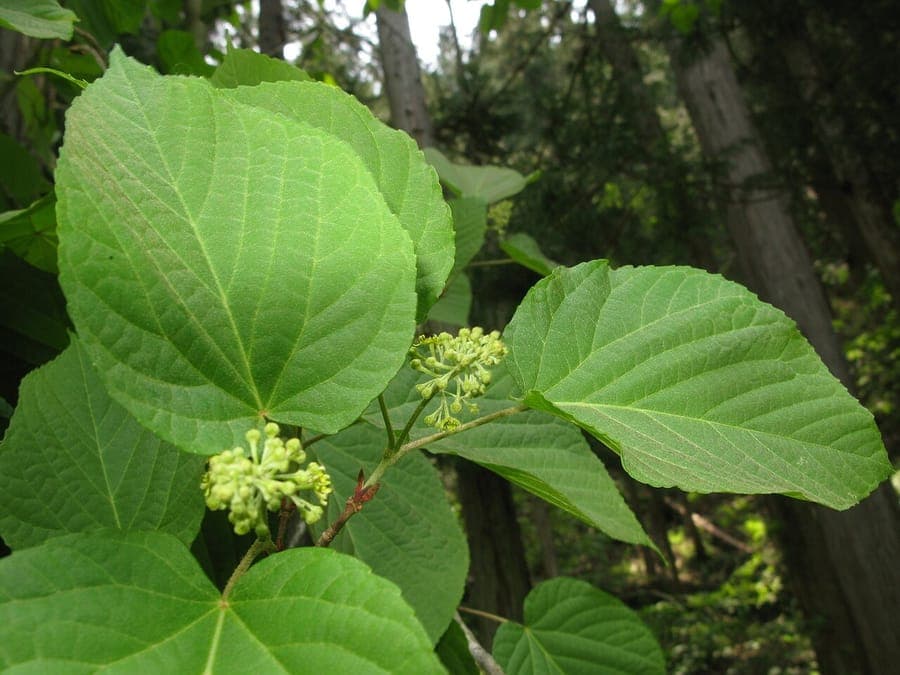
The lime-leaved maple distinguishes itself through its strikingly asymmetrical leaves with two uneven lobes - a large left lobe and a smaller right lobe, similar to lime leaves. The foliage is bright green with a soft texture. In early spring, delicate, yellow-green flowers appear in discrete clusters, followed by characteristic winged samaras.
The autumn color is spectacular - leaves transform into bright golden, red, and orange hues. This season lasts longer than many other tree species, extending visual interest. The bark structure is smooth and grayish, adding interest in winter months.
Ideal Location
Acer distylum grows best in partial shade to full sun, depending on your climate. In hot southern regions, partial shade is preferred; in temperate climates, it tolerates full sunlight well. East or north-facing positions receive morning sun, which is ideal.
Ensure you place the tree where air circulation is good but protected from strong side winds. A position under larger trees works excellently, as long as sufficient light penetrates. In group plantings, space at least 4-5 meters apart.
Soil
Acer distylum requires well-draining soil with a neutral to slightly acidic pH (6.0-7.0). Sandy loam soils are ideal. Improve native soils with compost and organic material for better structure and water retention.
Avoid waterlogging and heavy clay soils - these cause serious root problems. In heavy soils, add perlite or sand for better drainage. A light mulch layer helps moisture retention without building too much heat around the stem.
Watering
Young trees must be well established with regular water supply during the first growing season. Keep the soil moist but not waterlogged. Deep watering once per week is better than shallow, frequent sprinkling.
Once established (after 2-3 years), Acer distylum tolerates mild drought well, though regular watering is still preferred. In extreme drought, more frequent watering helps prevent leaf yellowing. Winter watering can be minimal in temperate climates.
Free design
Want to see Acer distylum: complete guide in your garden? Make a free design now.
Pruning
Acer distylum requires light maintenance pruning. Remove only dead or diseased branches in late winter. The tree develops a naturally open, bird-like silhouette that cannot be forced by heavy pruning.
Minimal pruning encourages better flower and seed production. Avoid shear-pruning which distorts the form; instead use selective branch removal. If training is needed, do this carefully in the first few years after planting.
Maintenance Calendar
January-February: Inspect for winter damage. Apply light cleaning pruning. Add mulch to prevent frost damage.
March-May: New growth begins; regular watering is critical. Flowers appear during this season. Add balanced fertilizer.
June-August: Ensure regular watering during dry periods. Check for insect problems. Enjoy the full green canopy.
September-October: Autumn color reaches its peak; watering can decrease. Begin winter preparation. Seed falls during this season.
November-December: Tree goes dormant. Minimal care needed. Plant new specimens during this period.
Winter Hardiness
Acer distylum is hardy to -20degC in protected locations, though it prefers moderate winters. Protect young trees against late frost damage with mulching or shading during frost-risk periods. In very cold regions (hardiness zones below 5), carefully check hardiness.
The tree grows successfully in European zones 5-9 with minimal problems. Protect young trees in their first year against frost.
Companion Plants
Acer distylum pairs excellently with groundcover such as fatsia, aucuba, and Japanese holly. Low-growers like hellebores, sedums, and polystichum ferns create nice texture contrast. Red acers as dwarf bonsai forms or red-leafed cultivars blend well.
Combine with white-flowering plants like deutzia or dogwood for contrast. Rhododendrons under the tree create a layered interesting garden. Add flowering groundcover like violas or pansies for seasonal interest.
Closing Thoughts
Acer distylum is a truly exceptional tree that adds elegance and refinement to any garden. This Japanese jewel grows easily in most European gardens with basic attention to drainage and regular watering. Find specimens at nurseries like Intratuin and Gamma. With minimal pruning and feeding, this tree will provide decades of beauty.
Visit gardenworld.app for inspiration on combining Acer distylum with other trees and shrubs.
Want to see Acer distylum: complete guide in your garden? Make a free design now.
Upload a photo, pick a style, and get a photorealistic design with plant list in under a minute.
No credit card required


Similar plants
Acer caesium: complete guide
Acer caesium
Discover the Indian maple (Acer caesium), an elegant tree from the Himalayan mountains. Learn how to grow, care for and enjoy this rare species in your garden.
Acer nipponicum: complete guide
Acer nipponicum
Discover the Nippon maple (Acer nipponicum), a rare Japanese tree with refined foliage. Learn how to grow and maintain this beautiful species in your garden.