
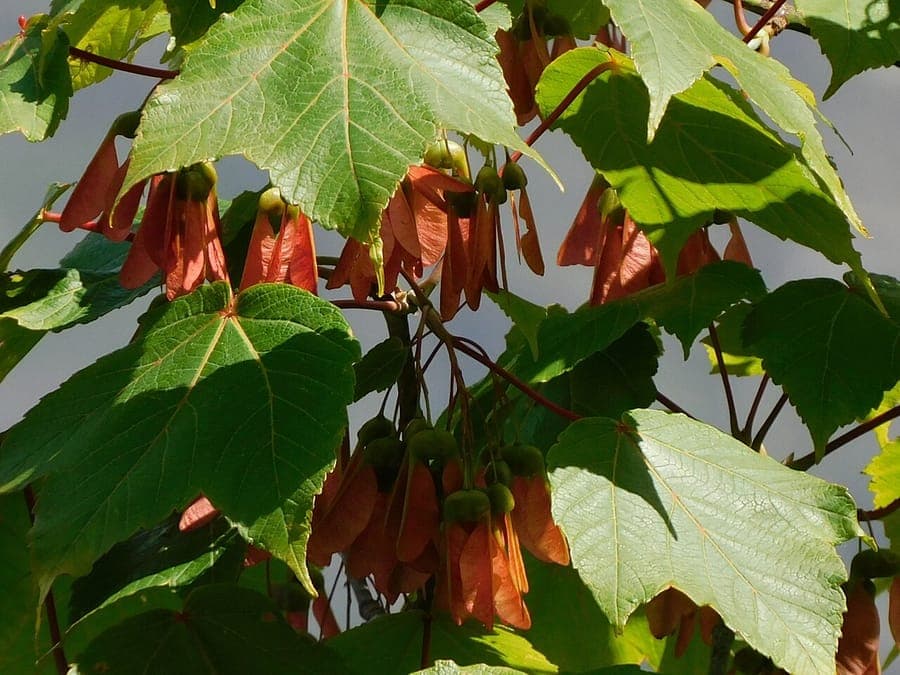
Jagdish Singh Negi - https://www.inaturalist.org/people/negi / CC BY 4.0, via Wikimedia Commons
Acer caesium: complete guide
Acer caesium
Want to see Acer caesium: complete guide in your garden?
1 minute, no credit card
Overview
Acer caesium, commonly known as Indian maple, is a magnificent tree native to the mountainous regions of Afghanistan, Nepal, Pakistan, and China. This exceptional maple grows slowly and develops a graceful, slender form with elegantly shaped leaves that turn vibrant colors in autumn. Due to its distinctive origin and character, this species is highly sought after by garden enthusiasts seeking something different from the more common Japanese maples.
If you're looking for a distinguished tree that combines elegance and character, Acer caesium is an excellent choice. This tree thrives best in partial shade with well-draining soil and is ideally suited for larger gardens or parks with sufficient space.
Appearance and Bloom
Acer caesium distinguishes itself through its finely textured, strikingly shaped leaves arranged in clusters of three to seven lobes with sharp points. The foliage is deep green with a lustrous texture that beautifully reflects light. During the growing season, the leaves transition to golden to orange hues, creating a spectacular display.
The flowers are small and inconspicuous, appearing in spring in red to yellow tones. They are followed by characteristic winged seeds called samaras that flutter helicopter-like from the tree. This visual spectacle adds extra dynamism to any garden during the summer months.
Ideal Location
Acer caesium thrives best in partially shaded environments, requiring protection from the most intense afternoon sun, especially in warm climates. A location under larger trees or on the north side of a building provides ideal conditions. The tree grows better in temperate temperatures and appreciates good air circulation.
Ensure you plant the tree at least 5-7 meters from other large trees to provide adequate growing space. In smaller gardens, a mature specimen can reach 8-10 meters in height, so ensure sufficient vertical clearance.
Soil
This maple requires well-draining soil with a slightly acidic pH level (around 5.5-6.5). Rich, organically amended soil is essential - add plenty of compost or leaf mold during planting. Sandy or clay soils can be improved with organic matter to enhance water retention and nutrient content.
Avoid heavy clay soils and waterlogged conditions that cause root rot. Good drainage is critical, especially during wet seasons. Mulching around the trunk helps retain moisture while protecting the tree.
Free design
Want to see Acer caesium: complete guide in your garden? Make a free design now.
Watering
Acer caesium requires regular watering, especially during the growing period in spring and summer. Young trees should be watered deeply after planting until they are well established - this may take two years or more. Keep the soil moist but not waterlogged.
During dry periods, water more deeply but less frequently. Deep watering encourages strong roots. A layer of mulch 5-8 cm around the trunk helps retain moisture and regulate temperature. In winter, when the tree is dormant, reduce watering.
Pruning
Acer caesium requires minimal maintenance pruning. Remove only dead, diseased, or crossed branches in late winter before the growing season begins. The tree naturally develops an attractive form without forcing.
Avoid heavy pruning that disturbs the natural shape. Small pruning wounds heal quickly; large wounds may attract diseases. Sterilize pruning tools after each use to prevent disease spread.
Maintenance Calendar
February-March: Inspect for dead branches and remove carefully. Apply preventive pest measures.
April-May: New growth begins; ensure regular watering. Add organic fertilizer.
June-August: Ensure adequate water during dry periods. Check for diseases and pests.
September-October: Enjoy the autumn colors. Begin gentle cleanup of fallen leaves.
November-January: Tree is dormant; minimal care needed. Plant new specimens during this period.
Winter Hardiness
Acer caesium is moderately winter hardy and can tolerate temperatures down to -15degC, though in northern climates it may need protection against extreme frost. In very cold regions, protect young trees with a thick mulch layer or burlap wrapping.
In European gardens (zones 6-8), this tree grows successfully. Protect against intense summer sun in southern areas to prevent leaf scorch.
Companion Plants
Acer caesium works beautifully in combination with other shade-loving undergrowth. Bergenia, waldsteinia, and hellebores create a lovely carpet beneath the tree. Rhododendrons and azaleas match well with the light shade that Acer caesium provides.
Strawberries (Fragaria), lily of the valley (Convallaria), and polystichum ferns create a sensual groundcover system. Combine with dark-leafed sedums or heuchera for color contrast.
Closing Thoughts
Acer caesium offers garden owners the opportunity to bring something truly exceptional to their outdoor space. With attention to good drainage, regular watering, and protective location planning, this Himalayan maple will provide years of beauty. You can find specimens at specialized nurseries and garden centers like Intratuin and Gamma. Start with a young tree and watch how this elegant maple transforms your garden.
Visit gardenworld.app for more inspiration around tree selection and garden design.
Want to see Acer caesium: complete guide in your garden? Make a free design now.
Upload a photo, pick a style, and get a photorealistic design with plant list in under a minute.
No credit card required


Similar plants
Acer distylum: complete guide
Acer distylum
Learn everything about the lime-leaved maple (Acer distylum), an elegant tree from Japan. Discover care tips, planting recommendations, and autumn character in this comprehensive guide.
Acer nipponicum: complete guide
Acer nipponicum
Discover the Nippon maple (Acer nipponicum), a rare Japanese tree with refined foliage. Learn how to grow and maintain this beautiful species in your garden.