
Qwert1234 / CC BY-SA 3.0, via Wikimedia Commons
Acer nipponicum: complete guide
Acer nipponicum
Want to see Acer nipponicum: complete guide in your garden?
1 minute, no credit card
Overview
Acer nipponicum, known as the Nippon maple, is a rare and exotic species found only in central and southern Japan. This unique tree is less well-known than its famous relatives but offers garden owners something truly special. With slow growth, modest dimensions (5-8 meters), and refined leaf morphology, this maple is a jewel for collectors.
Acer nipponicum distinguishes itself from other Japanese species through its very specific leaf shape and careful refinement. This is the ideal choice for garden owners seeking something rare and distinctive.
Appearance and Bloom
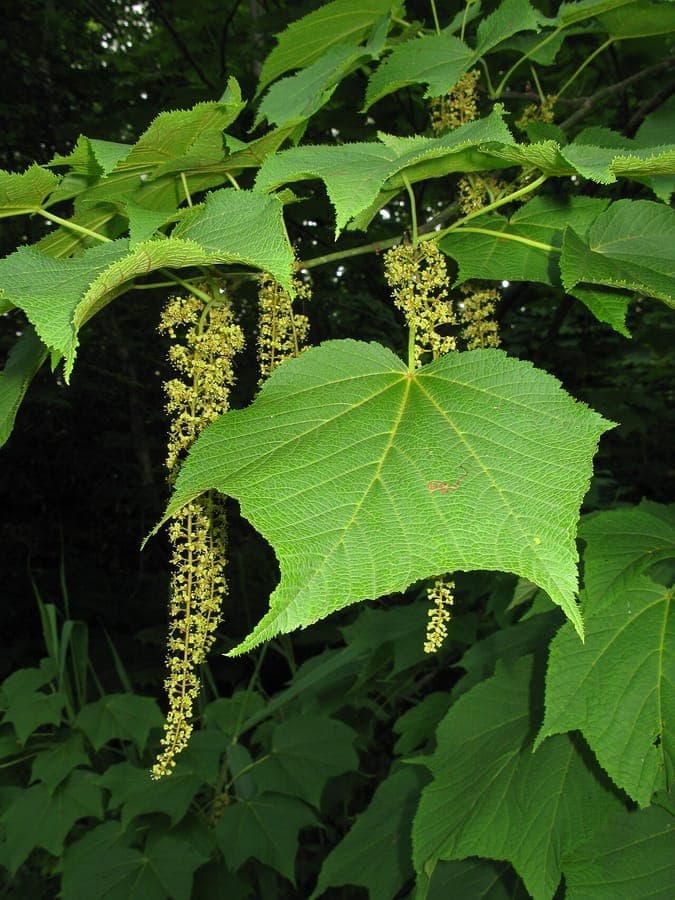
The Nippon maple has small to medium-sized leaves with a characteristic shape, notable for their fine structure. The leaf surface is smooth with subtle dentils along the edges, creating an elegant appearance. Leaf color is primarily green, changing to intense red and gold-yellow in autumn.
The flowers are small and inconspicuous, but appear in clusters at twig tips. They are followed by small, refined winged samaras that spread carefully. The winter bark structure is smooth grayish-purplish, adding visual interest during dormancy.
Ideal Location
Acer nipponicum thrives in partial shade with protection from intense midday and late sun. A location under larger yet light trees is ideal. In northern climates, more sun can be tolerated; in southern climates, 50% shade is preferred.
Place the tree in a spot with good air movement, especially in winter to allow leaves to dry quickly after rain or dew. Avoid low points where cold air stagnates. An open slope or mountain location is ideal.
Soil
Acer nipponicum requires well-draining soil with acidic pH (5.0-6.5), similar to other Japanese maples. Add generous amounts of leaf mold, peat moss, and coarse sand for optimal drainage. The tree loves rich, loose soils.
Heavy clay soils must be substantially improved with pure sawdust and sand. Apply mulch at 5-10 cm height, but keep this away from the stem base. A lightly acidic, well-draining soil is critical for long-term success.
Watering
Acer nipponicum requires regular, thorough watering, especially during growing periods in spring and summer. Keep soil consistently moist but not waterlogged. Deep water 2-3 times per week, depending on temperature and rainfall.
Young trees need extra attention to watering during their first two growing years until they develop a strong root system. Avoid water stress that leads to premature leaf yellowing. Mulching helps moisture retention without causing stagnation.
Free design
Want to see Acer nipponicum: complete guide in your garden? Make a free design now.
Pruning
Acer nipponicum requires careful pruning to maintain its natural form. Remove only dead, diseased, or crossed material in late winter. The tree grows slowly and doesn't need much aggressive pruning.
Do not apply heavy pruning - this can seriously damage the tree. Stakes for young trees may be needed in windy locations. Avoid pruning during growing season; prune only during dormancy.
Maintenance Calendar
December-January: Tree is dormant; perform careful inspection. Remove dead branches. Plant prevention for spring.
February-March: Add organic mulch. Check for winter damage. Begin growth preparation.
April-June: Regular watering is critical as growth is in full swing. Add balanced fertilizer once in May. Check branch growth.
July-September: Add water during dry periods. No fertilizer after July. Enjoy the full canopy.
October-November: Autumn color reaches its peak; watering can gradually decrease. Remove fallen leaves carefully.
Winter Hardiness
Acer nipponicum is hardy to -15 to -18degC in protected locations. Young trees may suffer frost damage in winters colder than -15degC. In very cold regions (below zone 6), protect trees against extreme frost with burlap or structural windbreaks.
In European gardens (zones 6-8), this tree grows well, though northeast-facing, harsh winter exposure can be a risk. Protect especially against harsh winter sun that can cause leaf scorch.
Companion Plants
Acer nipponicum works beautifully in combination with fine-textured undergrowth. Small rhododendrons, azaleas, and bergenia create harmonious underplanting. Japanese ferns like Dryopteris and Polystichum add texture.
Underplanting choices include moss-growing, small hellebores, and low-growers like sedums. Add white-flowering plants like deutzia or sarcococca for spring beauty. Preference for shade-tolerant plant companions.
Closing Thoughts
Acer nipponicum is an exceptional tree for the advanced garden owner seeking something truly rare and wonderful. This Japanese rarity requires attention to soil composition, watering, and location choice, but delivers decades of incomparable beauty. Find specimens through specialized nurseries. Plant in a protected setting and enjoy this Japanese treasure.
Visit gardenworld.app for more information on growing rare maples and Oriental trees.
Want to see Acer nipponicum: complete guide in your garden? Make a free design now.
Upload a photo, pick a style, and get a photorealistic design with plant list in under a minute.
10,000+ gardens designed already
No credit card required


Similar plants
Acer caesium: complete guide
Acer caesium
Discover the Indian maple (Acer caesium), an elegant tree from the Himalayan mountains. Learn how to grow, care for and enjoy this rare species in your garden.
Acer distylum: complete guide
Acer distylum
Learn everything about the lime-leaved maple (Acer distylum), an elegant tree from Japan. Discover care tips, planting recommendations, and autumn character in this comprehensive guide.