
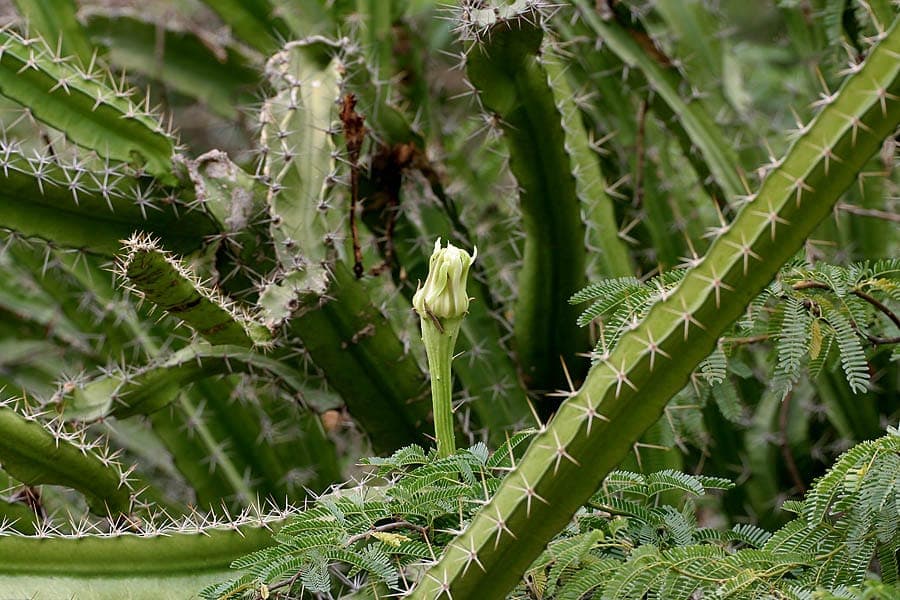
J.M.Garg / CC BY 3.0, via Wikimedia Commons
Acanthocereus tetragonus: complete guide
Acanthocereus tetragonus
Want to see Acanthocereus tetragonus: complete guide in your garden?
1 minute, no credit card
Overview
The Acanthocereus tetragonus, commonly known as the barbed-wire cactus or triangle cactus, is a fascinating climbing cactus native to South Florida, the Caribbean islands, and Venezuela. This unique succulent grows by scaling trees and rocks in its natural habitat, which sets it apart from many other cacti species. The plant is recognized for its characteristic triangular stems with sharp spines, which inspired its common name.
Acanthocereus tetragonus has been introduced to various parts of the world over centuries, including Australia and New Caledonia. In Europe, it thrives in greenhouses and living rooms, adding a green architectural element to interior design. The plant is appreciated for its unconventional growth pattern and interesting flowers that open at night.
Appearance and Bloom
The Acanthocereus tetragonus has a striking appearance with its three- to five-angled, green stems that can reach several meters in length. The stems are equipped with sharp spines that resemble wire, hence its popular name. This plant naturally clings to support surfaces and climbs like a vine.
The flowers of this cactus are large, white, and nocturnal bloomers. They can grow up to 20 centimeters long and emit a subtle fragrance. Blooming typically occurs in warm months, from August to October. After flowering, lemon-yellow fruits develop that are edible and taste sweet. These fruits are considered a delicacy in their native habitat and are harvested and eaten by local populations.
Ideal Location
The Acanthocereus tetragonus is a plant that requires plenty of light to grow optimally. Place this cactus in a location where it receives at least six to eight hours of direct sunlight daily. In temperate climates, it can also be placed on a south or west-facing window.
Due to its climbing nature, the plant is best positioned where it can be supported by a trellis, lattice, or vertical structure. This helps it maintain its natural growth form and integrate creatively into your interior or greenhouse. During warm seasons, the plant can also be placed outdoors on a patio or balcony, provided it is protected from wind.
Ensure the plant receives adequate air circulation, as this helps prevent fungi and pests.
Soil
The Acanthocereus tetragonus requires well-draining soil. Use specialized cactus mix available at garden centers, or create your own blend by mixing regular potting soil with perlite or sand in a 1:1 ratio. This ensures water drains quickly and roots don't become waterlogged.
Place the plant in a pot with drainage holes at the bottom. This is essential to prevent root rot, a common issue with cacti in household settings. Refresh the soil once every two to three years by partially adding fresh cactus mix.
The soil pH should be between 6.0 and 7.5. Check this occasionally with a pH meter, especially if the plant is not growing well.
Watering
Watering is less critical for this cactus compared to many other houseplants. During the growing season (spring and summer), you can provide more moisture, but always let the soil partially dry out between waterings.
In fall and winter, water much less frequently. Go even several months without water if temperatures drop significantly. This winter dormancy is beneficial for many cacti and promotes blooming in the next season.
Use filtered water or rainwater, as cacti are sensitive to calcium buildup from tap water. Always check if the soil is dry before watering again.
Free design
Want to see Acanthocereus tetragonus: complete guide in your garden? Make a free design now.
Pruning
The Acanthocereus tetragonus doesn't require much pruning unless it grows out of shape or you want to keep it more compact. Pruning can be done in spring before the growing season begins. Use a clean knife or scissors to make cuts larger than half a centimeter.
Remove dead or damaged stems immediately to prevent disease. If you want to propagate stems, cut healthy pieces of at least 10 centimeters and let them dry for several days. Then plant them in dry sand or cactus mix.
The plant can grow tall, so arrange it regularly to maintain a nice shape.
Maintenance Calendar
FEBRUARY-MARCH: Start of growing season. Gradually increase watering frequency and begin light watering.
APRIL-MAY: Full growing period. Water weekly and add cactus fertilizer once monthly.
JUNE-AUGUST: Peak growing period. Water regularly and provide plenty of light. Expect possible blooming at the end of this period.
SEPTEMBER-OCTOBER: Possible flowering. Water carefully. Begin gradually reducing watering.
NOVEMBER-JANUARY: Winter dormancy. Minimal watering. Place in a cooler location if possible (around 10-15 degrees Celsius).
Winter Hardiness
The Acanthocereus tetragonus is not winter-hardy and can only be grown outdoors in warm, dry climates, such as South Florida, Southern California, or the Mediterranean coast. In temperate climates, the plant should be placed in a greenhouse or indoors when temperatures drop below 10 degrees Celsius.
The plant can tolerate short periods of frost-free temperatures (around 5 degrees Celsius), but prolonged exposure to frost will damage the plant. If you keep it outdoors, ensure it is protected from wind gusts and heavy rainfall.
Companion Plants
The Acanthocereus tetragonus grows well alongside other xerophilic plants that require similar growing conditions. Some suitable companions are:
- Aloe vera
- Echeveria species (rosettes)
- Haworthia and other small succulents
- Sedum species
- Kalanchoe plants
In a greenhouse or conservatory, you can arrange these plantings in the same container, as long as each plant has its own drainage. These combinations create an attractive xeriscaped landscape.
Closing Remarks
The Acanthocereus tetragonus is a fascinating plant that makes a unique addition to any plant collection. With proper care, good light, and well-draining soil, this impressive cactus will bring you joy for years to come. Whether you cultivate it in a greenhouse, conservatory, or on a sunny window ledge, this succulent is sure to attract interest from visitors.
Give this cactus plenty of light and ensure dry conditions. Your fascinating climbing plant will brighten your interior or garden with its unique shape and beautiful night flowers. Get yours today at your favorite garden center!
Find more information about Acanthocereus tetragonus on gardenworld.app, where you can also discover plant guides and recommendations on gardenworld.app.
Want to see Acanthocereus tetragonus: complete guide in your garden? Make a free design now.
Upload a photo, pick a style, and get a photorealistic design with plant list in under a minute.
No credit card required


Similar plants
Plains prickly pear: complete guide
Opuntia polyacantha
All about plains prickly pear cactus: hardiness, soil, placement and care. One of the most cold-tolerant cacti for temperate gardens.
Saguaro: complete guide
Carnegiea gigantea
Everything about growing saguaro cactus: container care, watering, overwintering, and companion plants for this iconic desert giant.
Cylindropuntia imbricata: complete guide
Cylindropuntia imbricata
The Tree Cholla offers distinctive segmented stems and vibrant red flowers. A unique ornamental succulent perfect for sunny, dry gardens and large containers.