
Wikimedia Commons / Public domain, via Wikimedia Commons
Fava bean: complete guide
Vicia faba
¿Quieres ver Fava bean: complete guide en tu jardín?
1 minuto, sin tarjeta de crédito
Overview
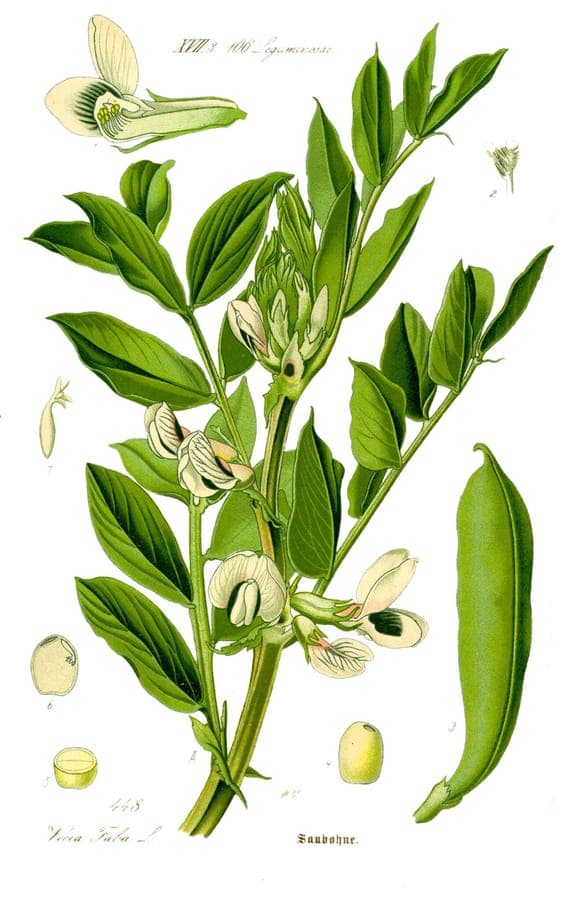
The fava bean, also called broad bean (Vicia faba), is a robust, upright vegetable plant in the pea family, valuable as both food crop and cover crop. Native to the Mediterranean, fava beans are now cultivated worldwide for their nutritious seeds. Fava beans bear elegant white flowers with characteristic black wing markings and produce large, impressive pods filled with green to brown nutritious beans. The plant offers outstanding nutrition and soil benefits to the garden.
Appearance and Bloom
Fava beans form sturdy, upright stems with grey-green pinnate foliage. Under ideal conditions, plants reach 60-150 cm height depending on variety and conditions. White flowers with distinctive black markings on the wings appear from April through June in loose clusters along stems. Following bloom, large green pods develop, ripening to yellow-brown with substantial seed compartments.
Ideal Location
Position fava beans in full sun on open, well-ventilated sites with 6-8+ hours direct sunlight. Plants thrive in cool spring and warm summer conditions. Open growing locations with good air circulation help prevent fungal diseases. Avoid dense shade beneath large trees. Moderate wind exposure is acceptable and actually beneficial.
Soil
Fava beans grow best in well-prepared, nutrient-rich soil with pH 6.5-8.0 (neutral to lightly alkaline). Work in rich compost or well-aged manure before planting. Good drainage is essential; create raised beds in poorly-draining soils. Nitrogen is less critical due to nitrogen-fixation capability, but phosphorus and potassium are important.
Watering
Regular moisture is essential, particularly for flowering and pod development. Water deeply and gently at plant bases. Keep soil consistently moist but never waterlogged. Insufficient water limits pod-set; excessive water promotes foliage at the expense of fruit. In rainy seasons, supplemental water is rarely needed.
Diseño gratis
¿Quieres ver Fava bean: complete guide en tu jardín? Crea un diseño gratis ahora.
Pruning
Topping fava beans is rarely necessary. Pinch off top growth if plants become excessively tall to direct energy toward pod-setting. Remove damaged leaves as needed. Many growers pinch off the top 10-15 cm after bloom-end to encourage earlier ripening. Deadheading has minimal effect on production.
Maintenance Calendar
Fall/Winter: Plant seed directly in mild climates. Spring: Water regularly. Plant seed in colder zones. Add plant supports. Summer: Monitor for pests and diseases. Maintain consistent moisture. Harvest green beans or allow full maturation. Autumn: Harvest dry beans. Remove plant material; nitrogen-fixing benefits remain in soil.
Winter Hardiness
Fava bean hardiness varies by variety. Winter-type varieties (fall-planted) tolerate frost conditions to -10 to -15 degrees Celsius, producing spring-summer crops. Spring varieties are frost-sensitive. Temperate European gardens benefit from fall planting for extended early harvest. Colder continental zones should use spring planting.
Companion Plants
Create productive vegetable bed combinations by pairing fava beans with:
- Celery and carrots (root crops aid)
- Potatoes and onions (pest deterrence)
- Dill, parsley, and coriander (beneficial insects)
- Endive and spinach (crop succession)
- Peas (other legumes)
- Sunflowers as living stakes
- Nasturtium as trap-crop
Closing
Fava beans deserve recognition as productive, nutritious vegetables and sustainable farming plants. Striking flowers and potential for abundant nutritious harvest make them valuable in modern vegetable gardens and organic systems. Seeds available from garden centers and seed catalogs. Design complete growing systems and planting plans with gardenworld.app featuring comprehensive vegetable gardening guides. Discover more on gardenworld.app for full growing strategies.
¿Quieres ver Fava bean: complete guide en tu jardín? Crea un diseño gratis ahora.
Sube una foto, elige un estilo y obtén un diseño fotorrealista con lista de plantas en menos de un minuto.
Más de 10.000 jardines diseñados
Sin tarjeta de crédito


Plantas similares
Bithynian vetch: complete guide
Vicia bithynica
Bithynian vetch is an elegant wildflower with delicate blue blooms for meadows. Learn cultivation, care, and companion planting for naturalistic gardens.
Cow vetch: complete guide
Vicia cracca
Cow vetch is a vigorous climbing herb with stunning purple flower clusters. Ideal for wildlife gardens. Learn cultivation and important ecological benefits.
Great wood-vetch: complete guide
Vicia dumetorum
Great wood-vetch is an elegant shade-loving climber with delicate white flowers. Perfect for woodland gardens and semi-shaded borders. Complete growing guide.