
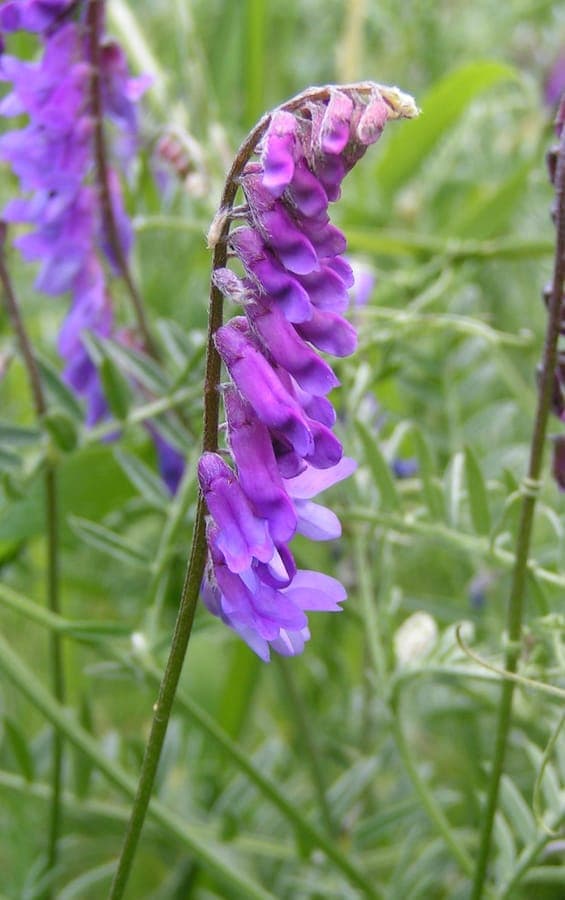
The original uploader was Sannse at English Wikipedia. / CC BY-SA 3.0, via Wikimedia Commons
Cow vetch: complete guide
Vicia cracca
¿Quieres ver Cow vetch: complete guide en tu jardín?
1 minuto, sin tarjeta de crédito
Overview
Cow vetch (Vicia cracca), also called tufted vetch, is a robust, scrambling herbaceous plant in the pea family found throughout Europe. This versatile species climbs through meadows, hedgerows, and disturbed ground, producing eye-catching purple to lavender flower clusters. Historically valued for animal fodder and nitrogen fixation, cow vetch remains useful in ecological gardens and permaculture settings for its wildlife benefits and soil enrichment.
Appearance and Bloom
Cow vetch develops slender, climbing stems with feathery pinnate leaves and fine tendrils for grasping support. The plant reaches 60-120 cm in height depending on available structure. Purple to lavender-blue flowers appear in dense, lovely clusters from May through August, offering extended color. Following bloom, small blackish-green seed pods develop containing nutritious seeds.
Ideal Location
Position cow vetch in full sun to light shade. The plant thrives in open positions with good light exposure but tolerates partial shade with reduced flowering. Provide stable support via trellis, stakes, or hedge frameworks. Wind exposure poses no problem; this vetch is remarkably wind-tolerant and wind-resistant.
Soil
Cow vetch is not fussy about soil quality and grows in most ordinary garden soils. Neutral to slightly acidic (pH 6.5-7.5) is optimal. The plant tolerates poor soils owing to nitrogen-fixing root nodules harboring beneficial bacteria. Avoid waterlogged conditions; good drainage is essential for long-term success. Soil fertility is less critical than drainage.
Watering
Regular moisture during growing and flowering seasons supports vigorous development. Allow soil surface to dry slightly between waterings. Once established, cow vetch exhibits moderate to good drought tolerance, persisting even in dry summers. In rainy seasons, supplemental water is rarely needed. Excess moisture can cause problems.
Diseño gratis
¿Quieres ver Cow vetch: complete guide en tu jardín? Crea un diseño gratis ahora.
Pruning
Prune cow vetch carefully due to fragile tendril systems. After flowering, remove spent flower material. Damaged stems can be cut at the base. Avoid heavy pruning that weakens the plant. Instead, work with its natural climbing character and guide growth as desired.
Maintenance Calendar
Spring: Install sturdy supports early in growth. Water regularly as growth accelerates. Remove dead foliage. Summer: Enjoy purple blooms. Deadhead some flowers to limit seed production if desired. Autumn: Reduce watering. Leave seed heads for birds. Winter: In frost zones, cut to ground level; in mild areas, plant may persist as evergreen structure.
Winter Hardiness
Vicia cracca is hardy to approximately -10 to -15 degrees Celsius, suitable for nearly all temperate British and European gardens. In harsh continental climates, the plant survives most winters with minor damage, regrowing vigorously from roots. Snow cover provides additional protection. The plant is exceptionally resilient after frost damage.
Companion Plants
Create attractive combinations by pairing cow vetch with:
- Wild cornflowers and wild roses
- Ornamental grasses like Miscanthus and feather grass
- Climbing honeysuckle and jasmine
- Rambling passion vine and hazel
- Low-growing clematis varieties
- Woolly lavender and catmint
- Tall grasses and meadow wildflowers
Closing
Cow vetch deserves a place in wildlife gardens, hedgerows, and ecological landscapes as a robust, beneficial plant supporting pollinators and birds. Purple blooms attract butterflies and moths; seeds provide bird food. Source seeds from wildlife suppliers or native plant nurseries. Design complete ecological gardens with gardenworld.app for comprehensive planting schemes. Discover more on gardenworld.app for detailed guides.
¿Quieres ver Cow vetch: complete guide en tu jardín? Crea un diseño gratis ahora.
Sube una foto, elige un estilo y obtén un diseño fotorrealista con lista de plantas en menos de un minuto.
Más de 10.000 jardines diseñados
Sin tarjeta de crédito


Plantas similares
Bithynian vetch: complete guide
Vicia bithynica
Bithynian vetch is an elegant wildflower with delicate blue blooms for meadows. Learn cultivation, care, and companion planting for naturalistic gardens.
Great wood-vetch: complete guide
Vicia dumetorum
Great wood-vetch is an elegant shade-loving climber with delicate white flowers. Perfect for woodland gardens and semi-shaded borders. Complete growing guide.
Bitter vetch: complete guide
Vicia ervilia
Bitter vetch is a Mediterranean legume with elegant white flowers, historically used for grain and green manure. Perfect for warm organic garden systems.