
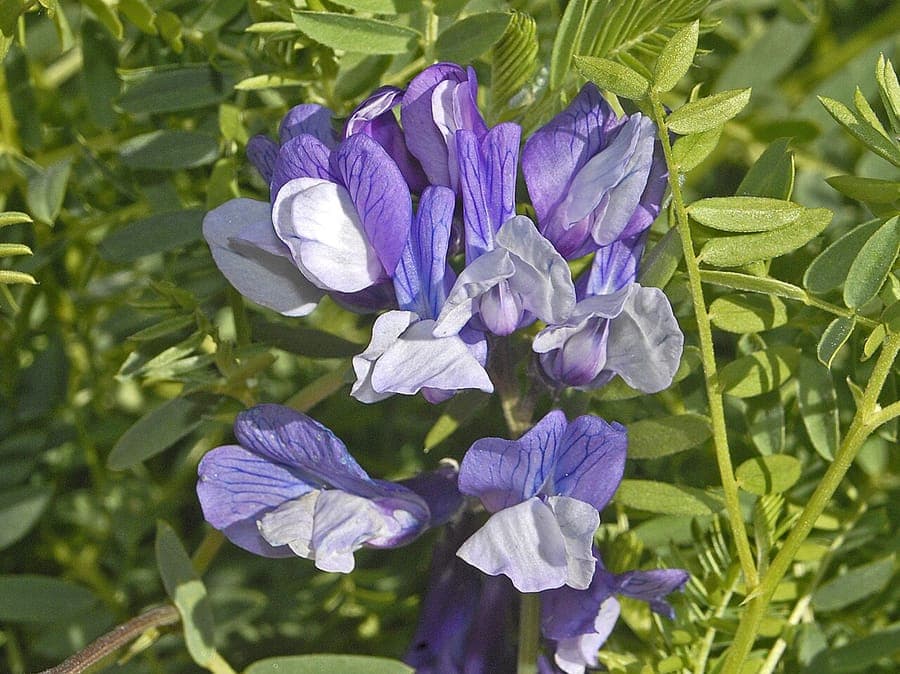
Hectonichus / CC BY-SA 3.0, via Wikimedia Commons
Great wood-vetch: complete guide
Vicia dumetorum
¿Quieres ver Great wood-vetch: complete guide en tu jardín?
1 minuto, sin tarjeta de crédito
Overview
Great wood-vetch (Vicia dumetorum), also called hedge-vetch, is an elegant, semi-tall climbing plant in the pea family, native to Central and Eastern European woodlands. This charming species grows naturally in shrubby margins, woodland edges, and partially shaded zones, producing white flowers occasionally tinged with pink or blue. Great wood-vetch offers refined structure for shade gardens and ecological climbing displays, preferring moister conditions than many vetch relatives.
Appearance and Bloom
Great wood-vetch develops well-branched, semi-climbing stems with feathery pinnate leaves and fine tendrils. The plant reaches 80-150 cm in height depending on available support. White flowers, occasionally with soft pink or blue-tinged wings, appear from June through July. Blooms are small but numerous, grouped in loose clusters. Following flowering, small brown seed pods develop containing seeds.
Ideal Location
Position great wood-vetch in partial to light shade, particularly beneath woodland edges or north-facing slopes. The plant thrives with 4-6 hours indirect sunlight daily. Full sun can cause leaf scorch in hot summers. Provide stable support via trellis or hedge framework. Sheltered locations prevent wind damage to delicate growth.
Soil
Great wood-vetch prefers moister, humus-rich soils that retain moisture without becoming waterlogged. Neutral to slightly acidic (pH 6.5-7.5) is optimal. Moderately fertile soils suit the plant; amend with compost or leaf mold. Good drainage prevents fungal issues while moisture retention is still important. Avoid pure sand or very dry soils.
Watering
Regular moisture during growing season is essential, particularly in dry spells. Keep soil consistently moist but not waterlogged. In shade, evaporation is slower, so monitor for excess moisture. Mulching beneath the plant aids moisture retention and prevents temperature fluctuations. Summer drought can limit flowering.
Diseño gratis
¿Quieres ver Great wood-vetch: complete guide en tu jardín? Crea un diseño gratis ahora.
Pruning
Prune great wood-vetch carefully due to relatively delicate growth. After flowering, remove spent flower clusters. Damaged stems should be cut at the base. Avoid heavy pruning; this plant recovers slowly from severe cutting. Instead, allow natural shrubby form to develop gradually.
Maintenance Calendar
Spring: Install sturdy support. Water regularly. Apply leaf mold mulch. Summer: Enjoy white blooms. Maintain consistent moisture. Deadhead spent flowers. Autumn: Reduce watering gradually. Leave seed heads for natural propagation. Winter: In frost zones, cut to 15 cm height; in milder regions, plant may persist as semi-evergreen structure.
Winter Hardiness
Vicia dumetorum shows moderate hardiness to approximately -10 degrees Celsius, suitable for temperate British and Northern European gardens. In harsh continental climates, top-growth often dies back but regrows vigorously from root crowns. Snow cover and mulch aid survival. The plant adapts well to European temperate mixed climates.
Companion Plants
Create harmonious combinations by pairing great wood-vetch with:
- Shade-loving geraniums and hellebores
- Ornamental grasses like Carex and Luzula
- Wild sedums and groundcovers
- Woodland plants like syringa and forsythia
- Primrose and cowslip
- Low-growing mahonia
- Native ferns and shade-loving perennials
Closing
Great wood-vetch deserves greater recognition in shaded gardens and natural climbing displays as a refined, structure-providing plant. White blooms attract insects; natural growth suits ecological landscapes. Seeds are challenging to source; obtain plants from specialty suppliers. Design complete shade gardens with gardenworld.app offering comprehensive woodland planting schemes. Discover more on gardenworld.app for detailed shaded garden guides.
¿Quieres ver Great wood-vetch: complete guide en tu jardín? Crea un diseño gratis ahora.
Sube una foto, elige un estilo y obtén un diseño fotorrealista con lista de plantas en menos de un minuto.
Más de 10.000 jardines diseñados
Sin tarjeta de crédito


Plantas similares
Bithynian vetch: complete guide
Vicia bithynica
Bithynian vetch is an elegant wildflower with delicate blue blooms for meadows. Learn cultivation, care, and companion planting for naturalistic gardens.
Cow vetch: complete guide
Vicia cracca
Cow vetch is a vigorous climbing herb with stunning purple flower clusters. Ideal for wildlife gardens. Learn cultivation and important ecological benefits.
Bitter vetch: complete guide
Vicia ervilia
Bitter vetch is a Mediterranean legume with elegant white flowers, historically used for grain and green manure. Perfect for warm organic garden systems.