
Ivar Leidus / CC BY-SA 4.0, via Wikimedia Commons
Common valerian: complete guide
Valeriana officinalis
¿Quieres ver Common valerian: complete guide en tu jardín?
1 minuto, sin tarjeta de crédito
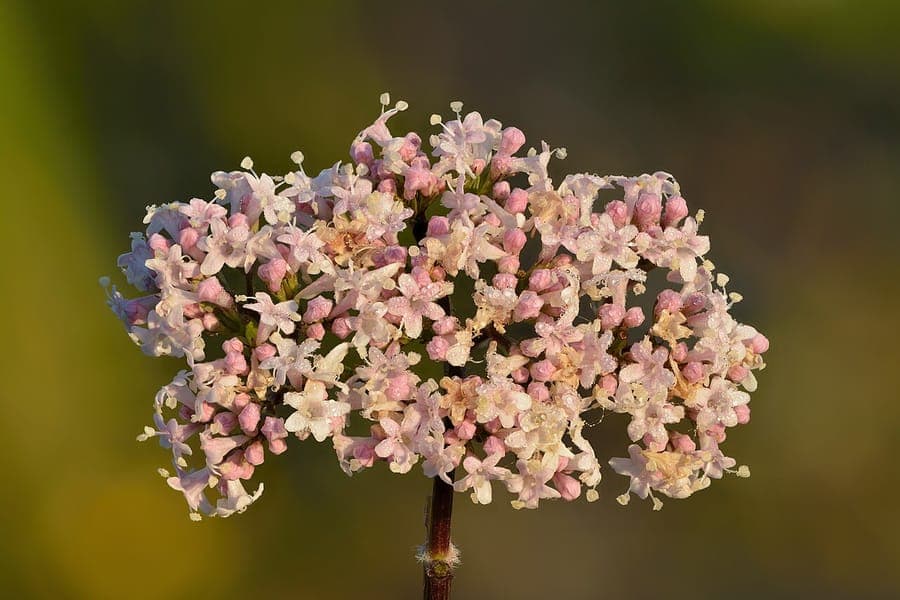
Common valerian (Valeriana officinalis) is a traditional herb garden plant from the Caprifoliaceae family. This impressive plant reaches 60-120 cm in height and has deep, complex root systems. The plant is known for its medicinal properties and has been used in herbal medicine for centuries. The foliage is compound, pinnate with fine teeth along the margins. From June to August, small pink to white flowers appear in dense umbels.
The root structure of common valerian is particularly noteworthy. The plant develops deep-reaching roots that draw nutrients from deeper soil levels. The roots contain essential oils and compounds used for medicinal purposes. The characteristic odor of the roots is very pronounced and serves as a warning to many animals.
The foliage of common valerian is complex and beautiful. It is deeply divided into several pairs of lobes, giving it a feathery appearance. The leaves are dark green and can grow densely throughout the growing season. In autumn, the foliage turns yellow and falls.
For optimal growth, common valerian needs well-drained soils with moderate nutrient content. The plant thrives best at pH values of 7 to 7.5. Full sun to partial shade are both suitable. The plant is very hardy and can tolerate considerable variation in moisture content.
Soil preparation must be done carefully. Common valerian thrives in heavily organic soil with good drainage. Sandy additions can help improve drainage in clayey soils. Organic bedding can be worked in for nutrients and structure.
Watering common valerian should be moderate. The plant must not remain waterlogged but should also not dry out completely. Once established, the plant can tolerate drought well. Mulching helps retain moisture during dry periods.
The maintenance calendar is simple. During the growing season, the plant can be watered regularly. After flowering, spent flowers can be removed. In autumn, the foliage falls and the plant can be cut back. In spring, new shoots appear.
Winter hardiness is not an issue. Common valerian is fully hardy in temperate climates. The underground roots remain vital under snow and ice.
Companion plants for common valerian include other herb plants. Well-matching plants are St. John's wort, feverfew, marjoram and oregano.
For harvesting common valerian, foliage can be harvested during the growing season. The roots can be dug for medicinal purposes after three years of growth. For garden design and plant advice, visit gardenworld.app.
¿Quieres ver Common valerian: complete guide en tu jardín? Crea un diseño gratis ahora.
Sube una foto, elige un estilo y obtén un diseño fotorrealista con lista de plantas en menos de un minuto.
Más de 10.000 jardines diseñados
Sin tarjeta de crédito


Plantas similares
Yellow honeysuckle (Lonicera tragophylla): complete guide
Lonicera tragophylla
Meet yellow honeysuckle (Lonicera tragophylla): a Chinese climber with large golden flowers that thrives in partial shade.
Lonicera korolkowii: complete guide
Lonicera korolkowii Stapf
Discover blueleaf honeysuckle, a vigorous shrub with beautiful flowers. Guide on growing, shaping and why this Asian climbing plant is perfect for gardens.
Lonicera oblongifolia: complete guide
Lonicera oblongifolia Hook.
Discover swamp fly honeysuckle, a North American woodland plant. Guide on growing, caring and why this native species is valuable for gardens.