
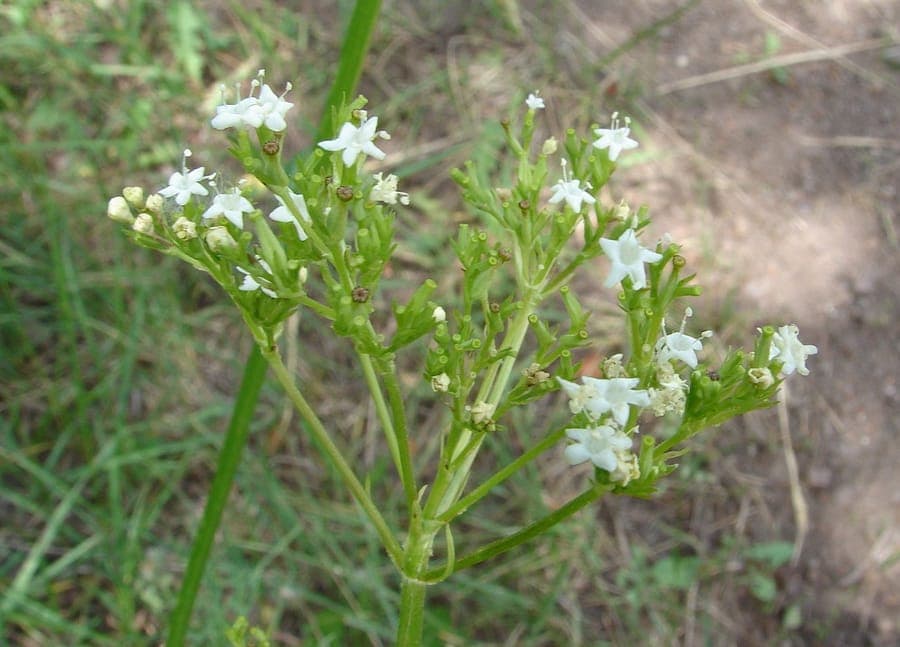
Sheri Hagwood / Public domain, via Wikimedia Commons
Western valerian: complete guide to Valeriana occidentalis
Valeriana occidentalis
¿Quieres ver Western valerian: complete guide to Valeriana occidentalis en tu jardín?
1 minuto, sin tarjeta de crédito
Overview
Valeriana occidentalis, known as western valerian, small-flower valerian, or western valeriana, is a rhizomatous perennial herb in the Caprifoliaceae family. It is native to a wide range across the western United States: Arizona, California, Colorado, Idaho, Montana, Nevada, New Mexico, Oregon, South Dakota, Utah, Washington, and Wyoming. The species was described in 1898 by American botanist Amos Arthur Heller.
This valerian is a cousin of the familiar garden valerian (Valeriana officinalis) but has smaller flowers and is adapted to the mountain meadows, stream margins, and open woodlands of the American West. It grows at moderate speed via rhizomes and over time forms spreading clumps. Gardenworld.app can show you how plants like western valerian work in a naturalistic front garden design.
The white flowers are valuable for bees, butterflies, and other pollinators. The foliage is attractive throughout the season, and the plant is well-behaved in the garden without being invasive.
Appearance and bloom
Leaves are pinnate to pinnatifid with medium texture, dark green, the basal leaves being larger than the stem leaves. Stems are upright, reaching 30 to 60 cm tall. The white flowers are small but numerous, gathered in flat to slightly dome-shaped corymbs at the tops of the stems. The flower display is conspicuous and held well above the foliage.
Blooming occurs in late spring to early summer. The fruits are white at maturity. After bloom, the drying seed heads add structural interest and feed birds. The overall effect is delicate and naturalistic.
Ideal location
Valeriana occidentalis is adaptable regarding light but prefers partial shade to full sun with adequate moisture. In its mountain habitat it grows in moist meadows, along streambanks, and in open woodland. In the garden, a position with morning sun and afternoon shade, or filtered light under open tree canopy, suits it very well.
The plant is less well suited to fully dry, exposed positions. It tolerates occasional waterlogging better than many perennials, making it useful for damp corners of the garden.
Soil
The pH tolerance runs from 6.0 to 7.8, meaning the plant grows in slightly acid to slightly alkaline soils. It prefers loamy, humus-rich soil with good moisture retention. Heavy clay soils can work if not permanently waterlogged. Organic matter in the soil is beneficial. In its mountain range, the plant benefits from spring snowmelt, so soils that are moist in spring and drier in late summer are ideal.
Watering
Moderate water needs. Unlike many drought-tolerant western American plants, western valerian prefers consistent moisture. Water during dry spells in summer, especially on sandy soils. A deep weekly watering during drought periods maintains the plant well. Mulching around the base with coarse compost or wood chips retains soil moisture and reduces the need for supplemental watering.
Pruning
Cut back flower stems after bloom if a neater appearance is wanted. Alternatively, leave the stems standing: they dry attractively and provide seeds for birds. The above-ground growth dies back naturally in autumn; remove the dead material then or in early spring before new shoots emerge from the rhizomes.
Maintenance calendar
- March: Remove dead stems from the previous year. New shoots emerge from rhizomes.
- April: Active growth. Water if soil is dry.
- May: Flower buds form. First white flowers may open in late May.
- June: Peak bloom. Leave undisturbed for pollinators.
- July: Seeds ripen. Leave for birds or harvest for propagation.
- August: Water once a week if extended drought.
- September/October: Stems die back. Remove or leave for winter structure.
- November to February: Dormant period. No action needed. Rhizomes survive reliably.
Diseño gratis
¿Quieres ver Western valerian: complete guide to Valeriana occidentalis en tu jardín? Crea un diseño gratis ahora.
Winter hardiness
Valeriana occidentalis is very cold-hardy, suited to USDA zones 4 to 8. Its Rocky Mountain and Sierra Nevada origins mean it is adapted to harsh mountain winters. The rhizomes survive deep freezes reliably. Above-ground parts die back in cold winters and return dependably in spring. In Western European climates, it is a trouble-free hardy perennial requiring no winter protection.
Companion plants
The white airy flower heads of Valeriana occidentalis combine beautifully with other meadow and woodland-edge plants. Aquilegia blooms slightly earlier and bridges the gap before valerian opens. Geranium pratense and Filipendula are excellent partners in a moist naturalistic border. Ferns provide textural contrast against the upright valerian stems.
For damp borders, Rodgersia makes a bold structural companion with its large paddle-shaped leaves and frothy flower plumes. Trollius europaeus, the globe flower, blooms at roughly the same time as the valerian and the yellow globes complement the white corymbs beautifully. Primula candelabra types - including Primula japonica and Primula bulleyana - are spectacular companions in moist, humus-rich soil, their tiered flowers rising alongside the valerian stems in May and June. The white flowers of western valerian also create a magical night garden effect: combine with pale-coloured Phlox paniculata and white Nicotiana alata for a planting that glows in the evening light and attracts moths as well as bees. On gardenworld.app you can have a garden design created that incorporates these themed plant combinations into a coherent border plan. For a pollinator garden, pair with Echinacea and Monarda for nectar succession from June through September.
Propagation
Valeriana occidentalis can be propagated by rhizome division and from seed. Divide established clumps in early spring as the first shoots become visible. Each section needs at least 2-3 rhizome fragments. Replant immediately in prepared, moist soil at around 5 cm depth. Seed propagation requires more patience: the seeds are short-lived and must be sown fresh, immediately after harvesting. Sow shallowly in a moist seed mix at 15-18 degrees C; germination takes 2-3 weeks. Specialist nurseries carrying native and wildflower plants are the best source in the UK and Europe. RHS-listed nurseries with a range of herbaceous perennials sometimes carry it, and online wildflower suppliers regularly stock seeds. Division in autumn is also possible but spring division gives quicker establishment.
Pests and diseases
Western valerian is generally healthy and rarely troubled by pests. In warm, dry summers powdery mildew can appear on the leaves; maintain adequate soil moisture and good air circulation as preventive measures. Slugs are the main pest: they readily eat young shoots in spring. Use iron phosphate pellets or copper barriers around vulnerable young plants. Aphids may appear on young flower stalks but rarely cause serious harm on otherwise healthy plants. The rhizomatous growth system gives the plant excellent resilience and recovery capacity after minor damage. Inspect in early spring and remove any damaged material before new growth gets fully underway.
Closing thoughts
Valeriana occidentalis is a versatile, reliable perennial with elegant white flowers and real ecological value. For naturalistic borders, damp garden areas, or wildlife-friendly plantings, it is a strong choice that earns its place every year. Visit gardenworld.app for garden designs that showcase native and near-native flowering perennials like this one at their best.
¿Quieres ver Western valerian: complete guide to Valeriana occidentalis en tu jardín? Crea un diseño gratis ahora.
Sube una foto, elige un estilo y obtén un diseño fotorrealista con lista de plantas en menos de un minuto.
Más de 10.000 jardines diseñados
Sin tarjeta de crédito


Plantas similares
Yellow honeysuckle (Lonicera tragophylla): complete guide
Lonicera tragophylla
Meet yellow honeysuckle (Lonicera tragophylla): a Chinese climber with large golden flowers that thrives in partial shade.
Lonicera korolkowii: complete guide
Lonicera korolkowii Stapf
Discover blueleaf honeysuckle, a vigorous shrub with beautiful flowers. Guide on growing, shaping and why this Asian climbing plant is perfect for gardens.
Lonicera oblongifolia: complete guide
Lonicera oblongifolia Hook.
Discover swamp fly honeysuckle, a North American woodland plant. Guide on growing, caring and why this native species is valuable for gardens.