
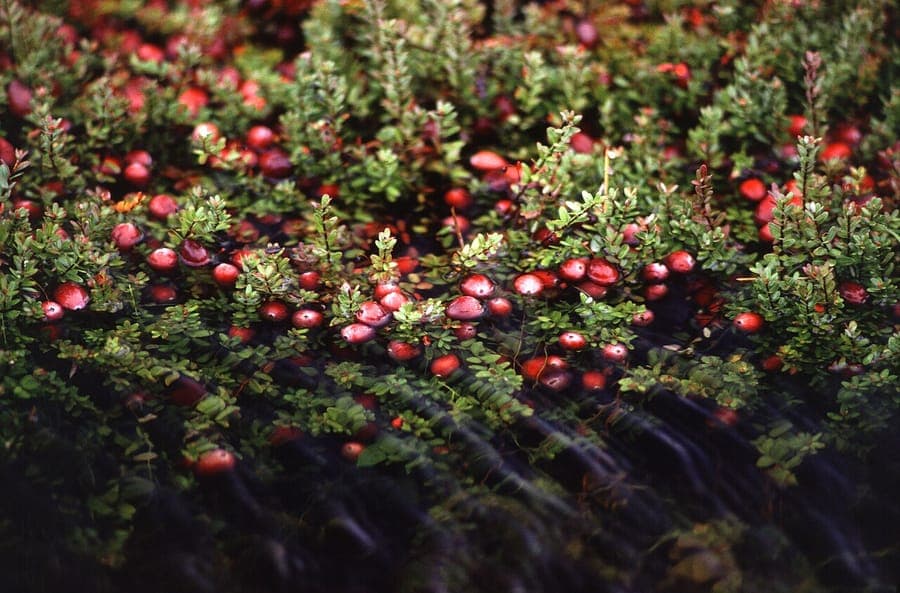
Photo by Keith Weller / Public domain, via Wikimedia Commons
Vaccinium macrocarpon: complete guide
Vaccinium macrocarpon
¿Quieres ver Vaccinium macrocarpon: complete guide en tu jardín?
1 minuto, sin tarjeta de crédito
Overview
Vaccinium macrocarpon, the American cranberry or large cranberry, is a low-growing wetland plant of the Ericaceae family. Native to eastern North America from Canada south to North Carolina, this commercially important species has been cultivated for millennia for its large, tart red fruits. The plant forms dense mats with trailing, wiry stems that can spread several feet in width.
With growth habit of 15-25 centimeters in height yet indefinite lateral spread, Vaccinium macrocarpon suits both wetland landscaping and commercial cultivation. Fruits mature in September-October and can remain on the plant through winter if not harvested, providing extended ornamental value.
Appearance and Bloom
Vaccinium macrocarpon develops dense, low-spreading growth with thin, trailing stems. Small, linear leaves remain predominantly evergreen. In May and June, delicate pink or white flowers appear at branch tips, creating subtle beauty before fruit development.
Fruits are substantially larger than related species, reaching 2 centimeters in diameter, and develop brilliant red coloration as they mature. These fruits are edible fresh, though tart-traditionally used for juices, sauces, preserves, and fermented beverages. One mature plant can yield 0.5-2 kilograms of fruit annually.
Ideal Location
American cranberry thrives in full sun, requiring minimum 6 hours direct sunlight daily for optimal fruit production. While the plant tolerates partial shade, fruit yield and flavor diminish considerably.
Plant in low-lying areas, constructed wetlands, and water margins. This species tolerates seasonal inundation and can even survive temporary submersion without injury, making it ideal for tidal wetlands and rain gardens.
Soil
Success requires strongly acidic soil with pH 4.0-5.0, enriched with organic matter. Sandy peat or sand-based mixes are ideal. Drainage and moisture retention must be carefully balanced-the plant adapts to seasonally wet conditions but requires adequate oxygen in root zones.
Amend heavy soils with sulfur (if pH exceeds 5.0) and peat moss. In commercial settings, specialized growing beds are constructed with precise layering of sand and peat.
Watering
Consistent, abundant moisture is essential throughout the growing season. Provide 2-3 centimeters of water weekly via irrigation if natural rainfall is inadequate. The plant tolerates waterlogged conditions and actually prefers seasonally flooded environments.
In commercial harvesting, beds are deliberately flooded to dislodge ripe berries. For home gardens, thorough regular watering during the growing season suffices. Mulch heavily to maintain consistent soil moisture.
Diseño gratis
¿Quieres ver Vaccinium macrocarpon: complete guide en tu jardín? Crea un diseño gratis ahora.
Pruning
Minimal pruning required. Remove dead stems in early spring. Established beds can be lightly raked or scalded (burning away old growth) during dormancy to rejuvenate production, though home gardeners rarely perform this intensive management.
Aim to maintain a dense but not matted growth structure. Pruning should maintain the creeping habit rather than forcing upright growth.
Maintenance Calendar
Spring (March-May): Inspect overwintered plants. Add compost for moisture retention. Begin regular watering as growth resumes. Watch for frost damage in late spring.
Summer (June-August): Maintain consistently high soil moisture. Monitor the May-June bloom period. Scout for fungal diseases in humid conditions. Begin fertilizing every 2-3 weeks with dilute, acidic fertilizer.
Autumn (September-November): Prepare for October harvest. Gradually reduce watering frequency. Pick fruits as they fully ripen. Allow some berries to remain for wildlife and ornament.
Winter (December-February): Minimal maintenance. Protect from heavy snow load if needed. Inspect for winter damage or disease. Plan for spring renovation if needed.
Winter Hardiness
Vaccinium macrocarpon tolerates cold to -30 degrees Celsius, though cultivar selection matters-some commercial varieties are less cold-hardy. The species is suitable for USDA zones 3-9.
Snow cover is beneficial, insulating both roots and exposed foliage from desiccating winter winds. In southern zones, even severe winter cold often increases fruit sweetness in subsequent seasons.
Companion Plants
Grows excellently alongside other acid-loving wetland species: Labrador tea (Ledum palustre), sundew (Drosera), and other Vaccinium species. Native sedges and rushes create natural ecosystem associations.
Combining multiple cranberry cultivars extends harvest and creates visual diversity through fruit color variation and ripening timing.
Closing Thoughts
Vaccinium macrocarpon offers both aesthetic and culinary rewards. With properly acidified soil and consistent moisture management, this species produces abundant nutritious fruits while maintaining ornamental appeal year-round. Whether grown for traditional harvest or landscape interest, American cranberry proves itself an exceptional perennial investment.
Available at specialty nurseries and through gardenworld.app. See gardenworld.app for personalized landscape design recommendations.
¿Quieres ver Vaccinium macrocarpon: complete guide en tu jardín? Crea un diseño gratis ahora.
Sube una foto, elige un estilo y obtén un diseño fotorrealista con lista de plantas en menos de un minuto.
Más de 10.000 jardines diseñados
Sin tarjeta de crédito


Plantas similares
Vaccinium microcarpum: complete guide
Vaccinium microcarpum
Small cranberry: a subarctic groundcover with delicate purple flowers and persistent red berries. Ideal for acidic wetland gardens and bog landscaping.
Vaccinium angustifolium: complete guide
Vaccinium angustifolium
Early lowbush blueberry: compact North American shrub with white flowers, blue berries, and brilliant fall color. Hardy, delicious fruit production.
Vaccinium ovalifolium: complete guide
Vaccinium ovalifolium
Early blueberry: circumboreal mountain shrub with distinctive oval leaves and blue berries. Excellent for northern gardens, hardy to -30 degrees Celsius.