
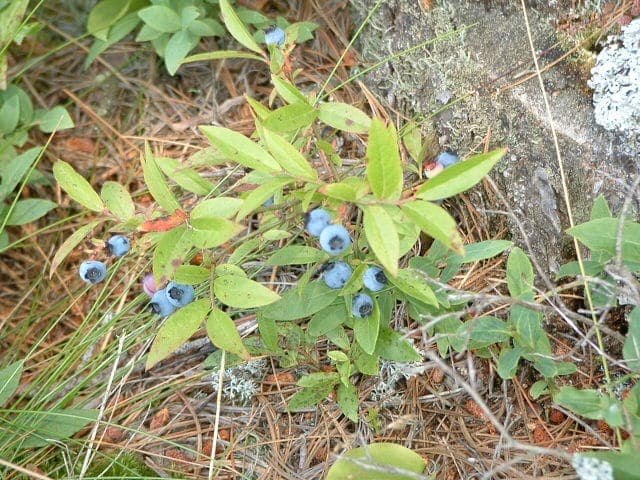
Wikimedia Commons / Public domain, via Wikimedia Commons
Vaccinium angustifolium: complete guide
Vaccinium angustifolium
¿Quieres ver Vaccinium angustifolium: complete guide en tu jardín?
1 minuto, sin tarjeta de crédito
Overview
Vaccinium angustifolium, the early lowbush blueberry or simply blueberry, is a compact forest understory shrub of the Ericaceae family. Native to central and eastern North America from Canada to North Carolina, this species flourishes wild in open woodlands, heathlands, and mountain meadows.
With a natural height of 30-60 centimeters and abundant deep blue fruits, Vaccinium angustifolium suits both ornamental landscape use and food production. The plant delivers charming white flowers in spring, luscious blue berries in summer, and spectacular red-purple fall coloration that rivals ornamental shrubs twice its size.
Appearance and Bloom
Vaccinium angustifolium grows as a low, airy shrub with fine linear leaves. Summer foliage is bright green; autumn transformation to red-purple provides outstanding seasonal interest. In May, delicate white bell-shaped flowers emerge in clusters at branch tips.
The resulting blue berries are deeply indigo and ripen in July-August. These fruits are distinctly sweet compared to cranberry relatives, making them ideal for fresh consumption or culinary processing. Each berry contains numerous tiny seeds.
Ideal Location
This species thrives in full sun, requiring minimum 6 hours direct sunlight daily. Adequate sunshine is essential for optimal fruiting and superior flavor development. Plants tolerate partial shade but yield significantly less fruit.
Plant in open areas, woodland edges, and windswept mountain meadows. Vaccinium angustifolium tolerates harsh conditions-cold wind, exposed locations, and nutrient-poor soils-where many ornamentals fail.
Soil
Acid soil is mandatory: pH 4.7-7.5 range is tolerable, but optimization occurs at pH 5.0-5.5. Incorporate peat moss, sulfur-amended compost, and acidic bark fines. For naturally alkaline soils, apply agricultural sulfur (2 pounds per 100 square feet).
Ensure excellent drainage while maintaining moisture retention. Avoid compaction and heavy clay; sandy-loam amended with peat is ideal.
Watering
Consistent moisture during growing and fruiting seasons is essential. Provide 2-3 centimeters water weekly if rainfall is insufficient. Maintain evenly moist (not waterlogged) conditions.
Apply 3-5 centimeters of acid-based mulch (shredded bark, pine needles) to conserve moisture and add organic matter over time.
Diseño gratis
¿Quieres ver Vaccinium angustifolium: complete guide en tu jardín? Crea un diseño gratis ahora.
Pruning
Moderate pruning encourages healthy production. In late winter, remove a few of the oldest canes to stimulate rejuvenation-this encourages lateral branching and improves fruit quality. Remove dead, diseased, or crossing branches immediately.
After 5-6 years, entire plants can be rejuvenated by cutting to the ground. Vigorous new growth emerges and maintains productivity.
Maintenance Calendar
Spring (March-May): Inspect plants for winter damage. Prune old canes in late winter. Apply acid compost. Begin regular watering. Enjoy emerging white flowers.
Summer (June-August): Monitor soil moisture closely. Provide frost protection if late frost threatens flowers. Scout for insect pests. Harvest ripe blue berries in July-August (they're ready when they easily detach).
Autumn (September-November): Enjoy brilliant red-purple fall color. Gradually reduce watering as growth slows. Clean up fallen leaves.
Winter (December-February): Minimal maintenance. Protect from heavy snow accumulation if needed. Plan pruning strategy for late winter.
Winter Hardiness
Vaccinium angustifolium exhibits excellent cold tolerance to -30 degrees Celsius. It thrives in USDA zones 3-8. The species flourishes in extremely cold regions where heat-loving plants struggle.
Snow cover provides insulation; however, intense winter sun on wet soil can cause damage in certain conditions. In zone 8, provide afternoon shade and supplemental summer irrigation.
Companion Plants
Pairs beautifully with other acid-loving woodland species: rhododendrons, azaleas, and other Vaccinium relatives create naturalistic forest understory scenes. Groundcovers like wintergreen and partridgeberry complete the composition.
Multiple blueberry plantings increase fruit production through cross-pollination, extending harvest and creating visual abundance.
Closing Thoughts
Vaccinium angustifolium delivers everything: refined flowers, delicious fruit, superb fall color, and exceptional hardiness. With acidic soil and consistent moisture management, this species produces healthy plants with decades of ornamental and edible interest. For beginning and experienced gardeners alike, this blueberry is an essential choice.
Available at specialty nurseries and through gardenworld.app. See gardenworld.app for complete landscape design consultation.
¿Quieres ver Vaccinium angustifolium: complete guide en tu jardín? Crea un diseño gratis ahora.
Sube una foto, elige un estilo y obtén un diseño fotorrealista con lista de plantas en menos de un minuto.
Más de 10.000 jardines diseñados
Sin tarjeta de crédito


Plantas similares
Vaccinium macrocarpon: complete guide
Vaccinium macrocarpon
American cranberry: large-fruited bog plant with bright red berries. Cultivation guide for fresh eating, juice, and ornamental interest.
Vaccinium microcarpum: complete guide
Vaccinium microcarpum
Small cranberry: a subarctic groundcover with delicate purple flowers and persistent red berries. Ideal for acidic wetland gardens and bog landscaping.
Vaccinium ovalifolium: complete guide
Vaccinium ovalifolium
Early blueberry: circumboreal mountain shrub with distinctive oval leaves and blue berries. Excellent for northern gardens, hardy to -30 degrees Celsius.