
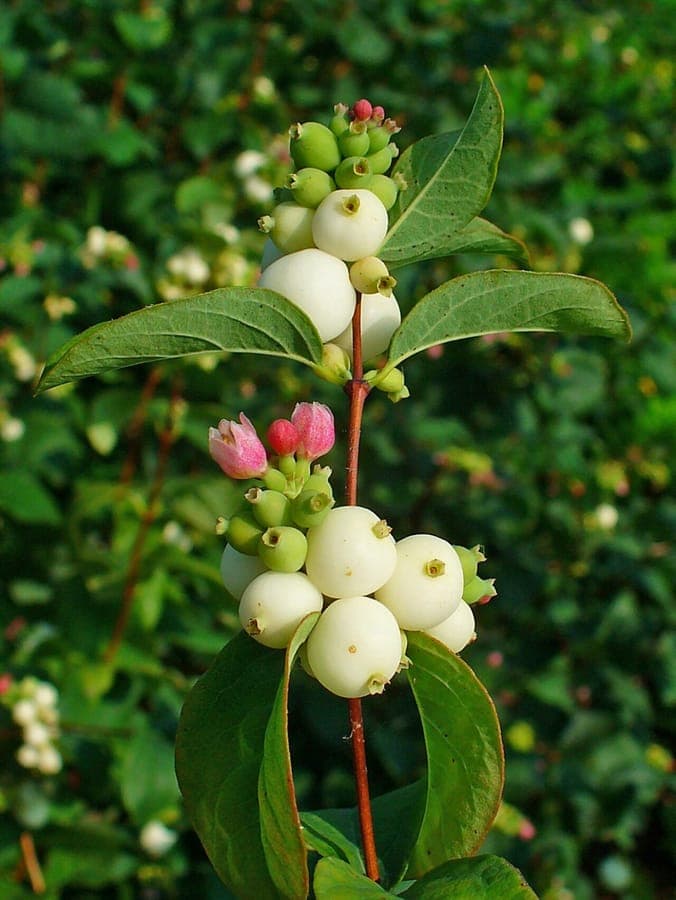
H. Zell / CC BY-SA 3.0, via Wikimedia Commons
Common snowberry: complete guide
Symphoricarpos albus
¿Quieres ver Common snowberry: complete guide en tu jardín?
1 minuto, sin tarjeta de crédito
Common Snowberry: Complete Guide
Overview
Common snowberry (Symphoricarpos albus) is a decorative hedging shrub from the Caprifoliaceae family. This North American shrub is known for bearing spectacular white berries that remain visible deep into winter. With its compact growth and bird-friendly properties, snowberry is an excellent choice for hedges, woodland edges, and ornamental borders in the garden.
Snowberry reaches a height of 1.5 to 2 meters and develops into a dense, full shrub with elegant arching branches. In autumn, the purple flowers transform into glossy white berries that persist through winter.
Appearance and Bloom
Common snowberry has a distinctive appearance with fine, oval leaves that remain attractive year-round. The foliage is soft green with a delicate texture. In summer, the plant produces small, purplish flowers that form densely along the branches.
After flowering, glossy white berries appear, which are the plant's main strength. These berries hang densely in clusters and provide visual interest from September through January. The berries are not suitable for human consumption but are beloved by birds, making the plant an excellent choice for bird-friendly gardens.
The plant retains its foliage late into the season, making it a good choice for seasonal interest.
Ideal Location
Common snowberry is very tolerant of location preferences and grows well in full sun to partial shade. Ideally, choose a location with:
- At least 4-6 hours of direct sunlight daily
- Good air circulation
- Protection from strong winds
- Open locations where white berries are well visible
Snowberry is also very suitable for urban environments and tolerates pollution better than many other hedging plants. This makes it perfect for city gardens.
Soil
Common snowberry is extremely flexible regarding soil requirements. This plant grows well on virtually all soil types, from sand to clay, and is tolerant of various pH values (6.0 to 7.8). For optimal growth, follow these recommendations:
- Well-draining soil
- Moderately nutrient-rich soil
- Tolerant of dry sites
- Functions even on poor soils
When planting, enrich the planting hole with organic material for better root establishment.
Diseño gratis
¿Quieres ver Common snowberry: complete guide en tu jardín? Crea un diseño gratis ahora.
Watering
Common snowberry is very drought-tolerant and requires limited watering after establishment. In the first growing year, water regularly to promote root development. After that, rainwater is usually sufficient.
Watering guidelines:
- Regular watering in first year
- Drought-tolerant after establishment
- Water especially during dry periods
- Avoid waterlogging
Snowberry is ideal for gardeners who have limited time for maintenance.
Pruning
Common snowberry requires minimal pruning. Pruning is best done in late winter or early spring. Cut out about one-third of the oldest wood to keep the shrub refreshed and compact.
Pruning tips:
- Prune in February-March
- Remove dead branches
- Thin out dense growth
- Maintain natural shape
Regular light pruning encourages better berry production.
Maintenance Calendar
Below you'll find a monthly maintenance guide:
- March: Pruning and soil preparation
- April-May: Growth check, weed control
- June-July: Regular watering during dry periods
- August: Flower development
- September-October: Berry formation
- November-February: Winter period, minimal care
Winter Hardiness
Common snowberry is extremely winter-hardy and grows well in USDA Hardiness Zone 3-8. The plant tolerates temperatures down to approximately -30 degrees Celsius. This makes it suitable for nearly all European climates.
The plant loses its leaves in winter, but the white berries remain visible and provide visual interest during the gray winter months.
Companion Plants
Common snowberry combines well with:
- Other hedging plants
- Winter-flowering shrubs
- Dark green evergreens
- Grass-like plants
- Autumn color displays
Avoid underplanting close to the shrub due to its suckering habit.
Closing Thoughts
Common snowberry is a beautiful and low-maintenance choice for any garden. With its white berries and bird-friendly properties, this is a plant that provides both visual and functional pleasure. Purchase quality plants from specialized nurseries and start your snowberry adventure today.
Want to learn more about hedging plants and ornamental shrubs? Visit gardenworld.app/nl and gardenworld.app/en for more inspiration.
¿Quieres ver Common snowberry: complete guide en tu jardín? Crea un diseño gratis ahora.
Sube una foto, elige un estilo y obtén un diseño fotorrealista con lista de plantas en menos de un minuto.
Más de 10.000 jardines diseñados
Sin tarjeta de crédito


Plantas similares
Yellow honeysuckle (Lonicera tragophylla): complete guide
Lonicera tragophylla
Meet yellow honeysuckle (Lonicera tragophylla): a Chinese climber with large golden flowers that thrives in partial shade.
Lonicera korolkowii: complete guide
Lonicera korolkowii Stapf
Discover blueleaf honeysuckle, a vigorous shrub with beautiful flowers. Guide on growing, shaping and why this Asian climbing plant is perfect for gardens.
Lonicera oblongifolia: complete guide
Lonicera oblongifolia Hook.
Discover swamp fly honeysuckle, a North American woodland plant. Guide on growing, caring and why this native species is valuable for gardens.