
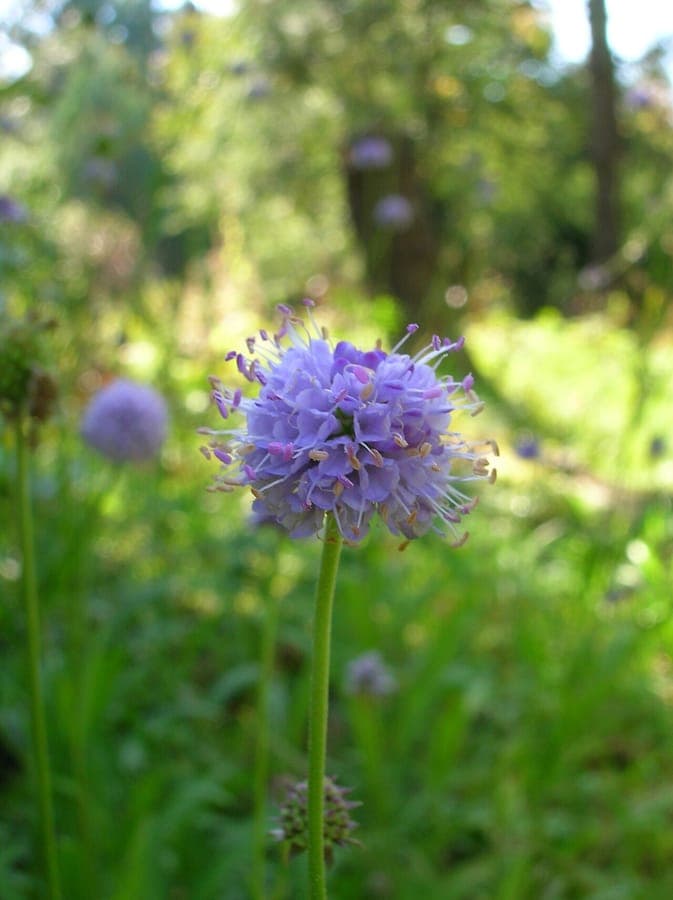
El Grafo / CC BY-SA 3.0, via Wikimedia Commons
Succisella inflexa: complete guide
Succisella inflexa
¿Quieres ver Succisella inflexa: complete guide en tu jardín?
1 minuto, sin tarjeta de crédito
Overview
Succisella inflexa, commonly known as southern succisella or frosted pearls, is a remarkable flowering plant native to Central and Eastern Europe. This adaptable plant thrives in moist meadows and wet grasslands, where it has evolved to handle variable moisture conditions. With its compact growth habit and numerous small purple flowers, Succisella inflexa creates a striking accent in semi-shaded gardens.
The plant belongs to the Caprifoliaceae family and is increasingly popular among gardeners who value native plants. Its extended flowering period from August to October makes it especially valuable for late-season blooms.
Appearance and bloom
Succisella inflexa reaches heights of 30 to 60 centimeters, depending on growing conditions. The plant features dark green, elongated leaves that grow densely, providing attractive contrast with delicate purple flowers. Blooms are small, approximately 2-3 millimeters, and grow in tight, spherical clusters reaching 15 millimeters in diameter.
The flowering period spans August to October, making it a valuable late-season accent. After flowering, bird-attractive fruits develop, adding extra visual interest. The texture of both foliage and blooms is refined and elegant.
Ideal location
Succisella inflexa thrives best in semi-shaded to fully shaded locations. In warmer climates, prefer shade under shrubs or trees. Full sun is possible but may cause drying out and reduced flowering, especially during dry summers.
The plant is excellent for damp borders, bog gardens, and low-lying wet areas. It also performs well beneath trees where soil moisture remains high. Ensure good drainage to prevent waterlogging, even though moisture is preferred.
Soil requirements
Ideal soil for Succisella inflexa is moisture-retentive yet well-draining. Add organic matter such as leaf mold or compost for improved water-holding capacity. A pH between 7.0 and 7.5 is optimal, though the plant tolerates variation.
Soil should be mineral-moderate in fertility. Heavy clay can be improved with sand and organic material. Ensure regular organic matter additions each spring with compost. This aids both moisture retention and nutrient supply.
Diseño gratis
¿Quieres ver Succisella inflexa: complete guide en tu jardín? Crea un diseño gratis ahora.
Watering
Watering is critical for success with Succisella inflexa. This plant loves staying consistently moist, especially during active growth and flowering periods. Avoid letting soil completely dry between waterings, but prevent waterlogging.
Water when the top 2-3 centimeters of soil feel dry. Mulching helps retain moisture. During flowering and hot summers, daily watering may be necessary. In winter, when the plant rests, significantly reduce watering.
Pruning
Extensive pruning is generally unnecessary for Succisella inflexa. Remove spent flowers after blooming to redirect energy away from seed production. This occasionally encourages a second, smaller bloom flush.
Remove dead foliage in spring for improved air circulation. No special feeding needed if you add organic material annually. The plant is extremely frost-hardy and low-maintenance once established.
Maintenance calendar
FEBRUARY-MARCH: Spring cleanup, remove dead stems, add organic matter. APRIL-MAY: Full growth period, regular watering, careful weeding. JUNE-JULY: Growth continues, water in dry spells, remove heavy foliage if needed. AUGUST-OCTOBER: Flowering period, regular watering, deadheading for extended blooms. NOVEMBER-JANUARY: Rest period, minimal watering, mulch for frost protection.
Winter hardiness
Succisella inflexa is fully hardy throughout northern European regions. The plant tolerates temperatures well below freezing. In very severe winters, some above-ground foliage may die back, but underground portions survive and reshoot in spring.
Mulch in very cold regions for extra protection. Good drainage becomes even more important in winter, as waterlogging can cause root rot.
Companion plants
Succisella inflexa combines excellently with other moisture-loving plants. Suitable companions include Carex species, sneezeweed, and mountain mint. These combinations create layered, seasonal interest.
In semi-shaded situations, combines well with ferns, helleborus, and epimedium. These create natural, woodland-like character in gardens.
Closing
Succisella inflexa is an underrated plant deserving far more attention in northern European gardens. With its low maintenance requirements, extended flowering period, and bird-feed value, it offers substantial benefits. Discover gardenworld.app for more inspiration on native plants and their garden uses.
¿Quieres ver Succisella inflexa: complete guide en tu jardín? Crea un diseño gratis ahora.
Sube una foto, elige un estilo y obtén un diseño fotorrealista con lista de plantas en menos de un minuto.
Más de 10.000 jardines diseñados
Sin tarjeta de crédito


Plantas similares
Yellow honeysuckle (Lonicera tragophylla): complete guide
Lonicera tragophylla
Meet yellow honeysuckle (Lonicera tragophylla): a Chinese climber with large golden flowers that thrives in partial shade.
Lonicera korolkowii: complete guide
Lonicera korolkowii Stapf
Discover blueleaf honeysuckle, a vigorous shrub with beautiful flowers. Guide on growing, shaping and why this Asian climbing plant is perfect for gardens.
Lonicera oblongifolia: complete guide
Lonicera oblongifolia Hook.
Discover swamp fly honeysuckle, a North American woodland plant. Guide on growing, caring and why this native species is valuable for gardens.